Architectural shingles are laminated asphalt roofing products designed to create more depth and visual variation than traditional flat three-tab shingles. They are widely considered by homeowners when replacing an aging roof, repairing storm damage, or updating a property’s exterior appearance.
For Overland Park properties, roofing decisions should consider more than color. Wind exposure, hail, heavy rain, freeze-thaw cycles, attic ventilation, roof slope, underlayment, flashing, drainage, installation quality, warranty terms, and local permitting can all affect performance.
Restoration Services KC is primarily a property-damage restoration company rather than a shingle manufacturer. Its relevance begins when storms, wind, hail, roof leaks, or failed roofing components allow water to enter a home or business. The company supports storm cleanup, water extraction, drying, damaged-material assessment, and restoration planning.
A roof may look intact from the ground while water is entering around flashing, penetrations, vents, valleys, damaged shingles, or exposed underlayment. Interior ceiling stains, damp attic insulation, musty odors, peeling paint, or unexplained wall moisture may indicate that roof damage has already affected the structure.
This guide explains shingle construction, local selection factors, installation considerations, storm risks, maintenance tips, and what to do when roofing damage causes interior water loss.
What Are Dimensional Shingles and Why Do They Matter in Overland Park?
Architectural or laminated shingles are manufactured with multiple layers or tabs that create a thicker, dimensional appearance. Product construction varies by manufacturer and line. Homeowners should compare published specifications rather than assuming every laminated shingle offers identical wind, impact, algae, or warranty performance.
Architectural products are usually selected for:
- Greater visual depth
- Varied shadow lines
- Multiple color blends
- Broader product choices
- Enhanced curb appeal
- Manufacturer-specific performance options
- Potential impact or wind classifications
Owens Corning describes its laminated products as offering dimensional appearance and publishes individual product information covering features, wind resistance, colors, and warranties.
Overland Park experiences severe-weather events capable of producing strong wind, hail, and heavy rainfall. A roofing system must work as a complete assembly. Shingles alone do not provide reliable protection if the deck, underlayment, flashing, ventilation, drip edge, fasteners, valleys, or penetrations are deficient.
Local construction requirements should also be checked before work begins. Overland Park reviews residential and commercial plans for work requiring permits and provides an online permitting system. Property owners should confirm current requirements with the city rather than relying on general advice.
A qualified roofing contractor should inspect the existing system, explain material choices, provide warranty details, and confirm whether damaged decking or flashing must be replaced.
Comparing Asphalt Roof Shingles for Local Properties
Architectural shingles should be compared according to the building, roof geometry, budget, exposure, and long-term ownership plans. Choosing solely by color or advertised warranty length can overlook important differences.
The table below summarizes common evaluation categories. Exact features and ratings vary by product and manufacturer.
| Selection factor | What to review | Why it matters |
| Product construction | Laminated design and material specifications | Affects appearance and published performance |
| Wind rating | Manufacturer requirements and installation method | Relevant during strong local winds |
| Impact classification | Tested product rating | May matter in hail-prone conditions |
| Warranty | Coverage, exclusions, transfer terms | Determines what is actually protected |
| Roof slope | Manufacturer and code limitations | Affects drainage and installation |
| Underlayment | Type and placement | Adds secondary water protection |
| Flashing | Valleys, walls, chimneys, vents | Common leak locations |
| Ventilation | Intake and exhaust balance | Helps control attic heat and moisture |
| Contractor workmanship | Credentials and documentation | Installation quality affects the full system |
Architectural shingles can provide a strong finished appearance, but product selection must be matched with correct installation. Manufacturers publish nailing zones, fastener requirements, underlayment directions, and warranty conditions. The roofing contractor should follow both local code and manufacturer instructions.
Impact ratings should also be interpreted carefully. An impact-resistant classification does not mean a roof is indestructible or that every hail event is covered by warranty. Owens Corning provides information on Class 4 impact-resistant roofing and explains how products receive impact ratings.
After a storm, avoid climbing onto the roof without proper training and equipment. Ground-level observations, attic checks, and professional inspection are safer. If water has entered indoors, contact a restoration provider immediately while the roofer addresses the exterior opening.
Why Choose Restoration Services KC After Roof and Shingle Damage?
Architectural shingles are installed and repaired by roofing professionals. Restoration Services KC supports the interior and structural recovery that may follow shingle failure, wind damage, hail damage, falling debris, or roof leaks.
The team may assist with:
- Storm-damage inspection support
- Water extraction from affected rooms
- Attic and ceiling moisture checks
- Structural drying
- Wet insulation and drywall assessment
- Damaged-content review
- Mold-prevention planning
- Repair and reconstruction coordination
Restoration Services KC describes its storm services as including inspection, emergency cleanup, damaged-material removal, water removal, drying, repair support, and insurance documentation assistance.
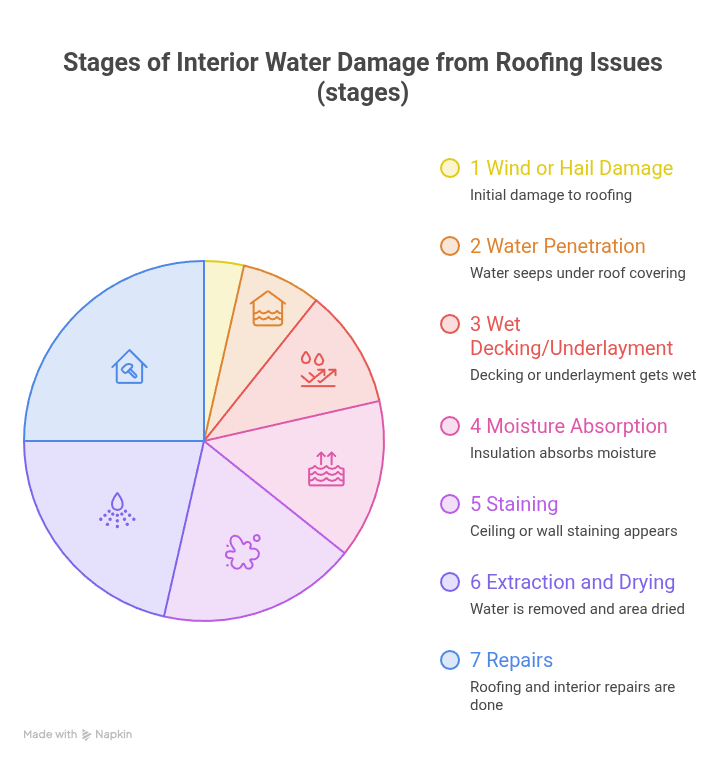
This combined perspective matters because roof damage can produce a chain of problems. A missing shingle allows water beneath the roof covering. Underlayment or flashing may fail to stop it. Insulation becomes wet, ceilings stain, paint bubbles, and wall cavities hold moisture.
Restoration should not begin with cosmetic paint before the leak and moisture are resolved. The exterior source must be controlled, affected materials inspected, and the structure dried.
How to Select an Architectural Roofing System
Architectural shingles should be selected as part of a full roofing system. Begin with a professional inspection of the deck, existing layers, flashing, ventilation, penetrations, drainage, and signs of prior leakage.
Ask the contractor for written details covering:
- Exact manufacturer and product line
- Color and style
- Wind-rating requirements
- Impact classification, when applicable
- Underlayment type
- Ice and water membrane locations
- Flashing replacement
- Ventilation changes
- Decking replacement price
- Tear-off and disposal
- Workmanship warranty
- Manufacturer warranty
- Permit responsibility
- Cleanup and magnetic nail collection
The lowest proposal may omit parts included in another contractor’s scope. Compare complete systems rather than final totals alone.
Homeowners should verify current city permit requirements. Overland Park’s official building and construction department provides permitting, inspection, and code resources.
Color selection also deserves attention. View actual samples outdoors at different times of day. Consider brick, siding, trim, gutters, neighboring properties, and resale appeal. Product images on screens may not precisely match installed appearance.
Owens Corning’s official roofing-shingle catalog can help property owners compare manufacturer-published features. A local contractor should confirm which products are available and suitable for the property.
Shingle Damage and Restoration Response Table
Architectural shingles can be affected by age, wind, hail, installation defects, foot traffic, flashing problems, and debris impact. Not every mark indicates functional failure, and not every leak is caused by the shingle field.
| Observation | Possible concern | Professional needed |
| Missing shingle | Wind damage and exposed underlayment | Roofer |
| Lifted tabs | Seal or wind issue | Roofer |
| Cracked shingle | Impact, age, or movement | Roofer |
| Granules in gutters | Aging or recent impact | Roofing assessment |
| Dented vents or flashing | Hail or debris impact | Roofer and insurer review |
| Ceiling stain | Active or previous water entry | Roofer and restoration team |
| Wet attic insulation | Roof leak or condensation | Roofing and moisture inspection |
| Sagging ceiling | Significant water accumulation | Emergency safety and restoration response |
Architectural shingles are only one potential leak source. Flashing around chimneys, walls, skylights, plumbing vents, and valleys can fail even when the surrounding shingles appear normal. Gutters and downspouts can also contribute to water overflow when blocked or poorly directed.
If indoor materials become wet, rapid response is important. The EPA advises drying wet materials quickly and maintaining gutters and drainage to support moisture control.
Restoration Services KC offers storm damage restoration support for properties affected by wind, hail, roof leakage, debris, and resulting water damage.
Roof and Shingle Maintenance Tips
Architectural shingles perform best when the entire roof and drainage system are monitored. Property owners should use qualified professionals for roof-level work.
Practical tips include:
- Inspect the roof after major storms
- Keep gutters and downspouts clear
- Trim hazardous branches through qualified tree professionals
- Watch for ceiling stains and attic moisture
- Replace damaged flashing and seals promptly
- Maintain balanced attic ventilation
- Keep roofing documents and warranty records
Do not pressure-wash asphalt shingles. Aggressive washing can damage the surface and remove protective granules. Avoid walking on the roof unnecessarily, especially during very hot, cold, wet, or icy conditions.
Attic observations can provide early warning. Look for dark decking, rusty nail points, compressed insulation, daylight around penetrations, damp odors, or staining. These signs require professional interpretation because condensation and roof leakage can appear similar.
After storms, photograph exterior conditions from a safe location. Do not allow unverified contractors to pressure you into immediate agreements. Review credentials, insurance, scope, warranty, and local permit responsibilities.
Restoration Services KC’s storm restoration company guide explains how property inspection, cleanup, drying, repair, and documentation fit together after severe weather.
What Happens After a Damaged Roof Leaks Indoors?
Architectural shingles may be repaired or replaced quickly, but hidden interior moisture can remain. Restoration begins after the opening is temporarily or permanently controlled.
Technicians inspect the attic, insulation, ceiling, walls, flooring, and contents. Moisture meters or other assessment tools help determine how far water traveled. Wet insulation may hold water against wood or drywall. Ceiling cavities can spread moisture beyond the visible stain.
Standing water is extracted where necessary. Air movers and dehumidifiers support drying, while moisture readings guide equipment adjustments. Some materials can dry in place; others require removal because of damage, contamination, delamination, or loss of structural integrity.
The team documents affected areas and explains repair needs. Restoration may include insulation replacement, drywall repair, texture matching, painting, flooring work, or content cleaning.
Insurance documentation should identify both the exterior source and the resulting interior damage. Keep roof inspection reports, photographs, invoices, temporary-covering receipts, and restoration records.
Contact Restoration Services KC for water, storm, mold, and related property-damage recovery. The company’s contact page provides a direct route to request an assessment.
Frequently Asked Questions About Architectural Shingles
Architectural shingles raise questions about cost, lifespan, wind, hail, permits, installation, and insurance. Exact answers depend on the selected product, roof design, contractor, and current local rules.
1. How much do architectural shingles cost?
Cost depends on roof size, slope, tear-off requirements, decking repairs, product line, underlayment, flashing, ventilation, labor, disposal, permits, and warranty options. Obtain multiple written scopes that describe the same work before comparing prices.
2. How long does roof replacement take?
Many straightforward residential roofs can be completed in a few working days, but weather, complexity, steep slopes, decking damage, material delivery, inspections, and larger structures can extend the timeline.
3. Are architectural shingles better than three-tab shingles?
They generally provide a more dimensional appearance and broader product options. Performance depends on the exact product and correct installation. Compare published ratings, warranty terms, system components, and contractor workmanship.
4. Are impact-resistant products hail-proof?
No. Impact classification does not mean the roof cannot be damaged. Hail size, wind, angle, roof age, product condition, and installation all influence performance. Have the roof inspected after a significant storm.
5. Does Overland Park require a roofing permit?
Permit requirements can change and depend on project scope. Property owners should verify current rules through the City of Overland Park’s permitting department before work begins.
6. What should I do when a roof leak appears?
Move valuables from the affected area, place a container beneath active dripping when safe, avoid sagging ceilings, photograph damage, call a roofer to control the source, and contact a restoration team for moisture inspection and drying.
7. Can Restoration Services KC install shingles?
The company’s published focus is restoration after water, mold, fire, and storm damage. Confirm roofing installation separately with a qualified roofing contractor. Restoration Services KC can assist with storm cleanup, water extraction, drying, damaged-material assessment, and recovery planning.
Contact Information
Restoration Services KC
Phone: (816) 286-5835
Email: service@restorationserviceskc.com
Website: Restoration Services KC
Serving Overland Park, KS, and the surrounding areas.