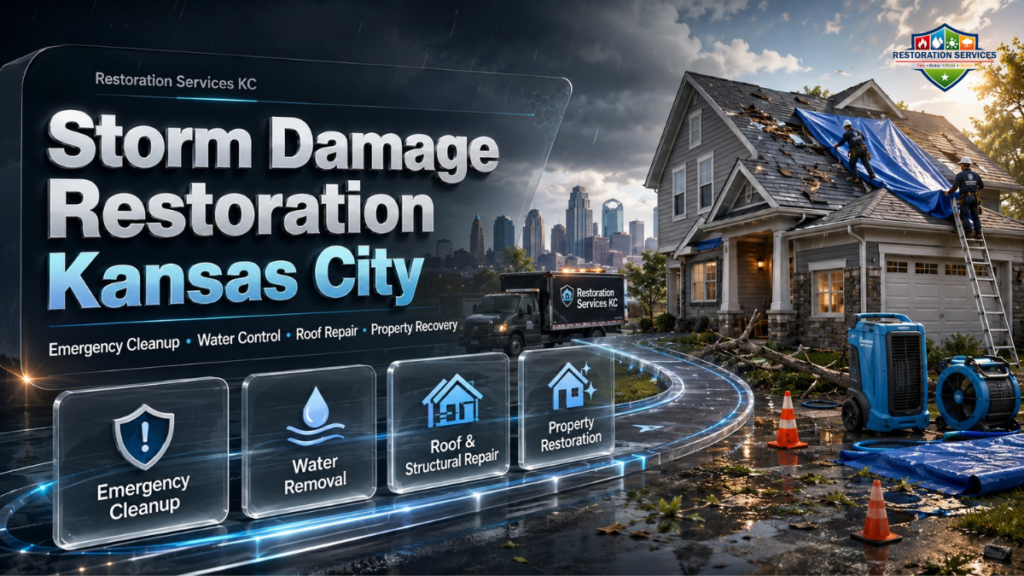
Storm damage can happen quickly in Kansas City. Strong wind, hail, heavy rain, roof leaks, fallen trees, and basement flooding can damage your home before you fully understand what happened. When water or wind enters the property, fast storm damage restoration in Kansas City can help reduce further damage.
At Restoration Services KC, we help homeowners and businesses respond after storm damage with emergency cleanup, water extraction, drying, debris removal, moisture inspection, mold prevention support, and repair guidance. Our team understands how Kansas City storms can affect roofs, basements, walls, flooring, insulation, windows, and structural materials.
This guide explains what to do after storm damage, how the restoration process works, what problems to watch for, and when to call a professional restoration company. It is written to help you stay safe, act quickly, and protect your property from long-term damage.
Why Storm Damage Restoration Kansas City Services Matter
Kansas City storms can bring wind, hail, heavy rain, flash flooding, and sudden roof leaks. Even when the storm passes quickly, the damage can continue inside the property. Water can move through ceilings, walls, flooring, insulation, and basement materials before the full problem becomes visible.
Professional storm damage restoration in Kansas City services help property owners respond before small damage becomes a larger repair issue. A trained restoration team can inspect the damage, remove water, dry affected areas, clean debris, and help identify hidden moisture that may lead to mold or structural problems.
Fast action is important because storm damage often involves more than one issue. A roof leak can lead to wet insulation. A flooded basement can create hidden moisture. Broken windows can allow rain into the floors and walls. A full inspection helps create a clear recovery plan.
Common Storm Damage Problems After Kansas City Storms
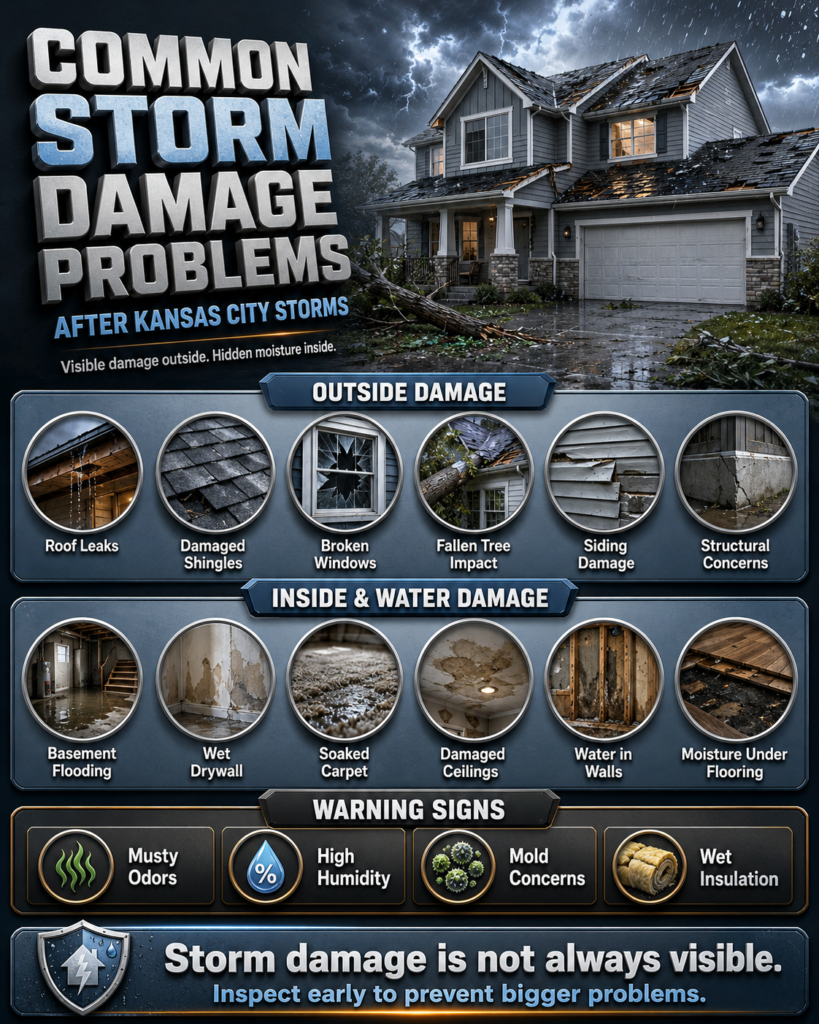
Storm damage can affect both the outside and inside of a property. Some damage is easy to see, such as broken windows or fallen limbs. Other damage may be hidden behind drywall, under flooring, inside insulation, or around the roof structure.
- Roof leaks, damaged shingles, broken windows, fallen tree impact, siding damage, and structural concerns can happen after strong winds or hail.
- Basement flooding, wet drywall, soaked carpet, damaged ceilings, water in walls, and moisture under flooring can happen after heavy rain.
- Musty odors, high humidity, mold concerns, and wet insulation may appear after stormwater enters the property.
Emergency Storm Damage Restoration Process
The table below shows the main steps involved in a professional storm damage restoration service.
| Restoration Step | What Happens | Why It Matters |
| Emergency Response | The property is checked after the storm, and urgent risks are identified | Helps reduce further damage |
| Damage Assessment | Roof, walls, floors, basement, windows, and moisture areas are inspected | Creates a clear restoration plan |
| Water Extraction | Standing water is removed from affected areas | Protects flooring, drywall, and structural materials |
| Drying & Moisture Control | Air movers and dehumidifiers help dry hidden moisture | Reduces mold and odor risk |
| Debris Cleanup | Fallen limbs, damaged materials, and unsafe debris are removed | Makes the property safer |
| Repair Planning | Damaged drywall, flooring, roofing, or materials are reviewed | Helps restore the property properly |
What To Do Immediately After Storm Damage
After a storm, safety comes first. Do not enter areas with loose wires, unstable ceilings, standing water near electricity, or visible structural damage. If your property has water intrusion, quick action can reduce the amount of damage.
- Check for safety risks before entering damaged areas, especially if there are wires, broken glass, fallen limbs, or standing water.
- Take photos and videos of roof leaks, flooding, broken windows, water damage, and damaged belongings before cleanup begins.
- Stop water if possible by placing a container under active leaks or covering small openings only when it is safe.
- Move valuables safely away from wet floors, dripping ceilings, and damaged rooms.
- Call a restoration company quickly for inspection, water extraction, drying, debris cleanup, and repair guidance.
Restoration Services KC can inspect affected areas, remove water, dry hidden moisture, and help protect the property after storm damage. If water entered your home, a related Water Damage Restoration service page should be internally linked from this section.
Roof Leaks and Water Intrusion After a Storm
Roof leaks are one of the most common storm damage problems in Kansas City. Wind can lift shingles, hail can damage roofing materials, and heavy rain can push water into weak areas around flashing, vents, gutters, or roof edges. A small roof leak can affect ceilings, walls, attic insulation, and flooring.
Water intrusion may not show immediately. Moisture can travel along rafters, drip behind walls, or collect inside insulation before a ceiling stain appears. This is why roof-related storm damage should be inspected quickly, even when the visible stain looks small.
If the roof leak has reached interior materials, drying is just as important as repair. Wet insulation, drywall, and wood materials can hold moisture after the storm ends. Restoration Services KC helps with moisture inspection, drying, and cleanup after roof leak water damage.
Basement Flooding and Stormwater Damage
Heavy rain can cause basement flooding when water collects around the foundation, enters through cracks, overwhelms drainage systems, or causes sump pump failure. In many Kansas City properties, basements and lower-level rooms are the first places to show stormwater damage.
Basement flooding can affect carpet, drywall, baseboards, stored items, insulation, and wood framing. Even after visible water is removed, hidden moisture can remain under flooring or behind finished walls. That moisture can create odors, mold concerns, and material damage if it is not dried properly.
A professional restoration team can remove water, check moisture levels, dry affected materials, and recommend the next repair steps. This section should internally link to Water Damage Restoration and Mold Testing & Remediation where relevant.
Storm Damage Cleanup and Debris Removal
Storm cleanup often includes more than water removal. Fallen branches, broken glass, damaged building materials, wet carpet, loose insulation, and debris may need to be removed before repairs can begin. Cleanup should be handled carefully to avoid injury and further damage.
Emergency storm damage cleanup helps make the property safer and easier to inspect. Once debris is removed, the restoration team can better see roof leaks, wall damage, flooring damage, and moisture problems. This helps create a more accurate restoration plan.
Restoration Services KC helps with storm damage cleanup, damaged material removal, water extraction, and drying support. The goal is to stabilize the property and reduce the chance of more serious damage after the storm.
Mold Risk After Storm Damage
Stormwater can create mold concerns when wet materials are not dried quickly. Drywall, carpet, insulation, wood framing, ceiling materials, and baseboards can all hold moisture after a storm. Mold risk increases when humidity stays high or hidden areas remain wet.
A room may look dry while moisture remains behind walls or under flooring. Musty odors, damp carpet, ceiling stains, and high humidity can be signs that storm damage needs further inspection. Fast drying and moisture checks help reduce the chance of mold growth.
If mold is suspected after storm damage, professional mold testing and remediation may be needed. This section should internally link to the Mold Testing & Remediation page so users can find the right help.
Storm Damage Repair and Restoration
After cleanup and drying, the next step is repair planning. Depending on the damage, your property may need drywall repair, flooring replacement, ceiling repair, insulation replacement, window repair, roof support, or structural restoration. The scope depends on how far the storm damage spreads.
A professional inspection helps identify what can be saved and what needs replacement. Some materials can dry safely, while others may be too damaged or contaminated. The goal is to restore the property without leaving hidden moisture behind.
Restoration Services KC helps property owners understand the repair process after storm damage. Our team focuses on practical restoration steps that help return your home or business to a safe and usable condition.
How to Choose a Storm Restoration Company in Kansas City
Choosing the right restoration company matters after a storm. You need a team that responds quickly, explains the process clearly, and understands Kansas City weather risks. Delays can allow moisture to spread and make repairs more complicated.
A reliable storm restoration company should provide inspection, cleanup, water extraction, drying, repair guidance, and insurance documentation support. The team should also understand roof leaks, basement flooding, stormwater damage, mold risk, and local property conditions.
Restoration Services KC gives homeowners and businesses local support after storm damage. When you need storm damage restoration in Kansas City, help from a local team can make the response faster and the process easier to understand.
Insurance Documentation After Storm Damage
Storm damage claims can feel stressful, especially when roof leaks, water damage, flooding, and structural issues happen at the same time. Documentation helps homeowners explain the damage clearly to their insurance company.
Take photos and videos before cleanup when it is safe. Keep records of damaged materials, affected rooms, emergency work, drying equipment, and repair recommendations. These details can help support the claim process and reduce confusion.
Restoration Services KC can help document the damage and explain the restoration steps. This does not replace your insurance provider’s decision, but it can help keep the recovery process organized.
Related Restoration Services
Storm damage often connects with other restoration needs. A roof leak may cause water damage. Flooded rooms may create mold concerns. Fire-related damage may also need cleanup after storm-related electrical issues.
- Link to Water Damage Restoration when discussing flooding, roof leaks, water extraction, and drying.
- Link to Mold Testing & Remediation when discussing musty odors, hidden moisture, and mold concerns.
- Link to Fire Damage Restoration when discussing electrical fire damage or fire-related cleanup.
- Link to Contact Restoration Services KC when users need inspection, cleanup, or emergency help.
These internal links should be placed naturally inside the body content. They should not appear only in the footer or as a simple service list.
Service Areas Around Kansas City
Restoration Services KC helps homeowners and businesses with storm damage restoration in Kansas City and nearby communities. Our service area includes Kansas City, Liberty, Overland Park, Leawood, Lenexa, Shawnee, Olathe, Lee’s Summit, and surrounding areas.
Local experience matters after a storm because Kansas City properties face wind, hail, heavy rain, roof leaks, basement flooding, and stormwater problems. A nearby team can respond faster and understand common property risks in the area.
If your home or business has roof leaks, flooding, fallen tree damage, wet drywall, damaged ceilings, or hidden moisture after a storm, early inspection can help reduce long-term repair problems.
Contact Restoration Services KC
Storm damage should not be ignored. Water can spread behind walls, under floors, into insulation, and around structural materials after the storm is over. Fast cleanup and drying can help protect the property.
For professional storm damage restoration in Kansas City, contact Restoration Services KC for emergency cleanup, water extraction, drying, moisture inspection, debris removal, and repair guidance.
Call Restoration Services KC at (816) 286-5835 for storm damage restoration in Kansas City and surrounding areas.
FAQs About Storm Damage Restoration in Kansas City
What should I do first after storm damage?
Check safety first and avoid areas with loose wires, standing water near electricity, broken glass, or unstable materials. Take photos when safe, then call a restoration company for inspection and cleanup.
Can storm damage cause hidden water problems?
Yes. Stormwater can move behind walls, under flooring, into ceilings, and inside insulation. Even if the surface looks dry, hidden moisture may remain and should be checked.
How fast should I call for storm damage restoration?
You should call as soon as it is safe after the storm. Fast response helps reduce water spread, mold risk, material damage, and repair costs.
Does stormwater damage cause mold?
Stormwater can increase mold risk when wet materials are not dried quickly. Moisture inspection, drying, and dehumidification help reduce this risk.
Will insurance cover storm damage restoration?
Many policies may cover sudden storm damage, but coverage depends on your policy and the cause of damage. Photos, documentation, and professional inspection notes can help with the claim process.
Why choose a local storm restoration company in Kansas City?
A local company understands Kansas City storms, roof leaks, basement flooding, hail damage, and common property risks. Local response also helps when emergency cleanup is needed quickly.
Official Contact Details
Emergency Phone: (816) 286-5835
Email: joe@restorationserviceskc.com
Website: restorationserviceskc.com
Service Area: Kansas City and surrounding areas