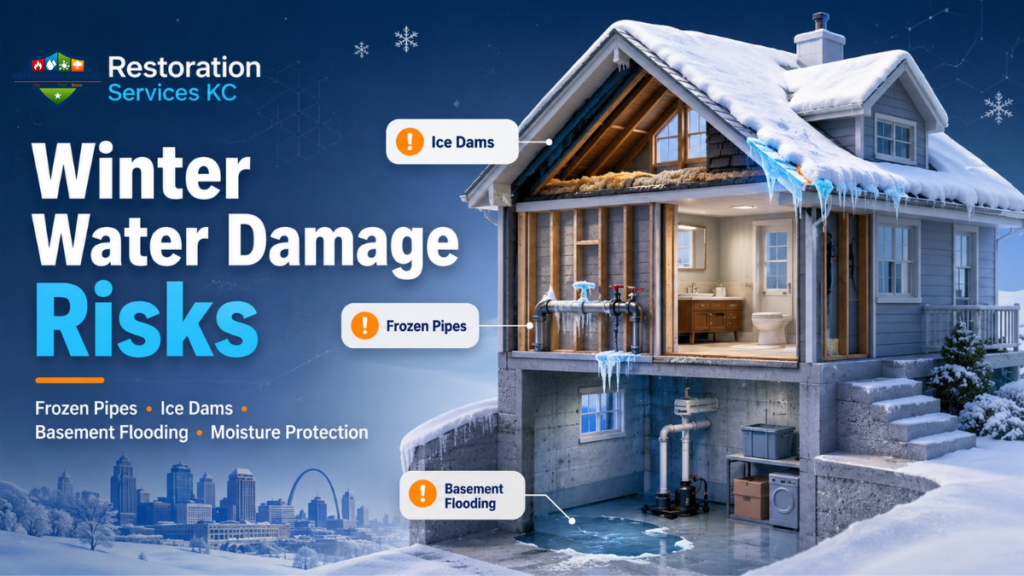
Winter water damage risks in Kansas City can become serious very quickly. Freezing temperatures, snow, ice, rapid thaws, frozen pipes, burst pipes, ice dams, basement flooding, snowmelt flooding, sump pump failure, roof leaks, and hidden moisture can all damage a home or business during the cold season.
For many Kansas City homeowners, winter water damage does not begin as a visible flood. A pipe may freeze inside an exterior wall. Snow may melt on the roof and refreeze near the gutter. Water may collect around the foundation after a fast thaw. A sump pump discharge line may freeze when the basement needs protection the most. By the time the damage becomes visible, water may already be inside walls, ceilings, floors, insulation, carpet, crawlspaces, or basement materials.
At Restoration Services KC, we help property owners respond quickly when winter water damage affects their property. Our team provides emergency water damage restoration, water extraction, moisture inspection, structural drying, dehumidification, mold prevention support, and cleanup after frozen pipes, burst pipes, ice dams, roof leaks, snowmelt flooding, and basement flooding.
This guide explains the most common winter water damage risks in Kansas City, why they happen, how to prevent them, and what to do when your home or business is affected.
Why Winter Water Damage Risks in Kansas City Are So Common
Kansas City winters can change fast. One day may bring freezing temperatures, snow, and ice. A few days later, the temperature may rise enough to create melting snow, roof runoff, and foundation drainage problems. This freeze-thaw cycle is one of the biggest reasons winter water damage is so common in the Kansas City area.
When water freezes, it expands. If water is trapped inside a pipe, gutter, roof edge, foundation crack, sump pump line, or drainage system, that expansion can create pressure. When the ice melts, hidden damage may suddenly appear as a leak, flood, ceiling stain, wet wall, or basement water problem.
Winter water damage is also dangerous because it is often hidden. A frozen pipe may crack behind drywall. An ice dam may send water into attic insulation before it reaches the ceiling. Snowmelt may seep through a foundation wall before the basement floor looks wet. This is why quick inspection and professional drying are important after any winter water damage event.
Key Winter Water Damage Risks to Watch For
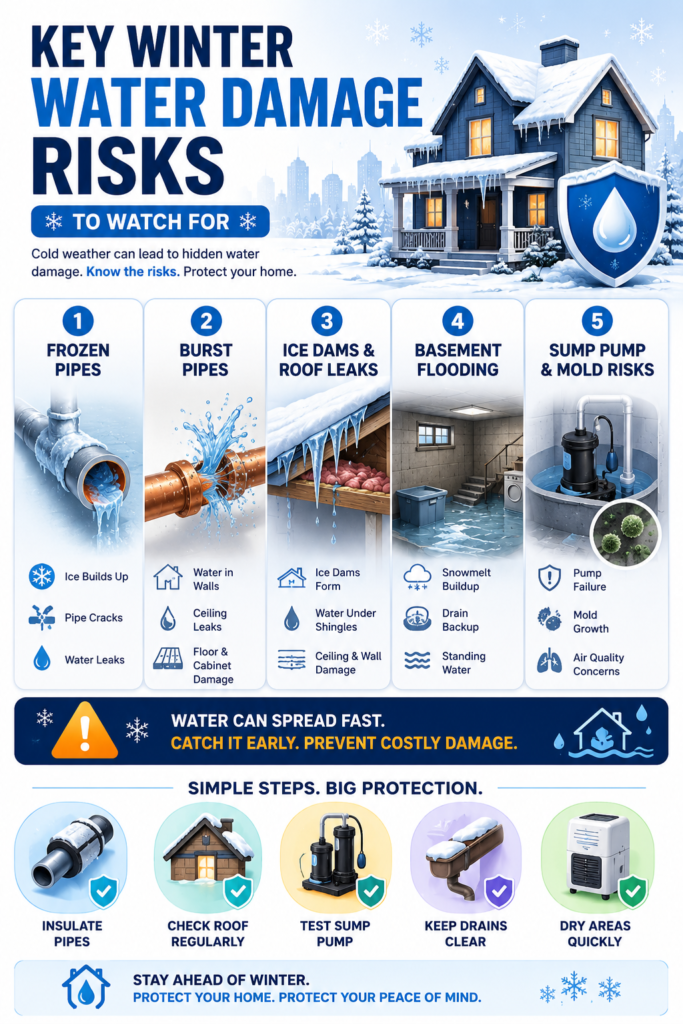
Kansas City homeowners should pay close attention to the most common cold-weather water damage problems before, during, and after freezing weather. Understanding these winter water damage risks in Kansas City can help you protect your home and respond faster when warning signs appear.
- Frozen pipes and burst pipes can send water into walls, ceilings, cabinets, floors, and basement areas once the ice begins to thaw.
- Ice dams and roof leaks can allow water to move under shingles and into attic insulation, ceilings, and wall cavities.
- Basement flooding, snowmelt flooding, sump pump failure, and mold concerns can develop when water is not drained, removed, or dried properly.
A Technical Breakdown of Winter Water Damage Risks
The table below shows the most common winter water damage risks in Kansas City and the type of restoration response usually needed.
| Winter Risk Factor | Main Cause | Possible Damage | Restoration Need |
| Frozen Pipes | Cold air reaches plumbing in exterior walls, crawlspaces, garages, attics, or basements | Burst pipes, wall leaks, ceiling leaks, wet insulation, floor damage | Water extraction, moisture inspection, structural drying |
| Ice Dams | Attic heat loss, poor ventilation, clogged gutters, and freezing roof edges | Water under shingles, ceiling stains, wet attic insulation, and wall damage | Attic drying, ceiling restoration, and moisture removal |
| Snowmelt Flooding | Rapid thaw, frozen soil, poor grading, or blocked drainage | Basement flooding, foundation seepage, wet carpet, damaged baseboards | Basement water removal, drying, and dehumidification |
| Sump Pump Failure | Frozen discharge line, pump overload, power issue, or mechanical failure | Lower-level flooding, standing water, and moisture damage | Water removal, sanitation, drying, and pump area cleanup |
| Roof Leaks | Ice buildup, damaged shingles, heavy snow, or poor drainage | Wet drywall, insulation damage, interior staining, and mold risk | Moisture detection, drying, restoration support |
What to Do Immediately After Winter Water Damage
Prompt action can reduce damage from frozen pipes, burst pipes, ice dams, roof leaks, snowmelt flooding, basement flooding, or sump pump failure. The first goal is to stop the water source if it is safe. The second goal is to protect people, belongings, and the structure.
- Shut off the main water valve if a pipe has burst or is leaking. This can help reduce the amount of water entering the property.
- Turn off electricity in affected areas if water is near outlets, appliances, electrical panels, or wiring.
- Move furniture, rugs, documents, and valuables away from standing water or wet areas when it is safe to do so.
- Take photos and videos before cleanup, so you have documentation for insurance and restoration records.
- Call the right professionals quickly. A plumber repairs the pipe or plumbing source, while a restoration company handles water extraction, moisture inspection, structural drying, dehumidification, and cleanup.
Restoration Services KC provides emergency water damage restoration for Kansas City homeowners and businesses when winter water damage affects floors, walls, ceilings, insulation, carpet, basements, crawlspaces, or structural materials.
Frozen Pipes: The Most Common Winter Water Damage Risk
Frozen pipes are one of the most serious winter water damage risks in Kansas City. Pipes are more likely to freeze when they are located in cold or poorly insulated areas. This includes crawlspaces, garages, exterior walls, attics, unheated basements, and under-sink cabinets near outside walls.
The biggest problem with frozen pipes is that the damage may not appear right away. A pipe can freeze, crack, or split while the water inside remains blocked by ice. When the temperature rises and the ice begins to thaw, water can escape through the damaged pipe and spread into walls, ceilings, floors, cabinets, and basement areas.
A burst pipe can damage more than the visible surface. Drywall can absorb water. Insulation can stay wet. Wood framing can hold moisture. Carpet and flooring can trap water underneath. If the area is not dried correctly, hidden moisture can lead to mold growth, wood damage, odor, and long-term restoration problems.
Restoration Services KC provides water extraction, moisture inspection, structural drying, and dehumidification after frozen pipe and burst pipe water damage in Kansas City.
Warning Signs of Frozen Pipe Damage
A frozen pipe does not always create an immediate flood. Homeowners should watch for low water pressure, no water from a faucet, frost on exposed pipes, unusual smells from drains, damp drywall, water stains, or sounds of dripping behind walls.
If you notice these signs during freezing weather, do not ignore them. A small frozen pipe issue can become a major water damage emergency when the pipe thaws. Quick action can help reduce damage to walls, floors, ceilings, cabinets, and basement areas.
Ice Dams and Roof Water Damage
Ice dams are another major winter water damage risk in Kansas City. An ice dam forms when snow melts on a warmer part of the roof and then refreezes near the colder roof edge. As more snow melts, water can collect behind the ice and move under shingles.
Once water moves under the roofing surface, it may enter the attic, insulation, ceiling, and wall cavities. This can lead to ceiling stains, sagging drywall, peeling paint, wet insulation, musty odors, and mold concerns.
Ice dams often happen when attic insulation, roof ventilation, gutter drainage, and heat control are not working properly together. Warm air escaping into the attic can heat the roof deck. That heat melts snow unevenly. When the melted water reaches the colder edge of the roof, it refreezes and creates ice buildup.
For homeowners, the damage may not be visible right away. Water can travel along rafters or insulation before showing up as a stain inside the home. If an ice dam causes interior water damage, the affected area should be inspected and dried properly.
Restoration Services KC helps with attic moisture inspection, ceiling drying, water damage cleanup, and structural drying after ice dam damage and winter roof leaks.
Basement Flooding During Winter Thaws
Basement flooding is not only caused by heavy rain. In Kansas City, winter thaws can also create basement water damage. When snow melts quickly, and the soil is frozen or saturated, water may not drain into the ground properly. Instead, it can move toward foundation walls, basement windows, window wells, and low areas around the property.
If the foundation has cracks, poor grading, clogged downspouts, or drainage issues, snowmelt can enter the basement. If the sump pump fails or the discharge line freezes, the risk becomes even higher.
Winter basement flooding can damage carpet, drywall, baseboards, wood framing, stored items, flooring, and lower-level living spaces. Even after standing water is removed, moisture can remain under floors, behind walls, and inside building materials.
This is why professional water damage restoration is important. Restoration Services KC can remove water, inspect hidden moisture, dry affected materials, and help reduce the risk of mold after basement flooding or snowmelt flooding.
Sump Pump Failure in Cold Weather
A sump pump is one of the most important systems for protecting a basement from water damage. During winter, the sump pump may fail because the discharge line freezes, the pump becomes overloaded, power is interrupted, or the system is not maintained before freezing weather.
When the sump pump cannot move water away from the property, water can rise quickly in the basement. This can lead to standing water, wet flooring, damaged drywall, moisture under baseboards, and hidden water damage.
Homeowners should test the sump pump before winter weather arrives. The discharge line should be clear, properly sloped, and directed away from the foundation. Snow and ice should not block the discharge area. A battery backup may also help reduce the risk of flooding during power loss.
If sump pump failure causes water damage, Restoration Services KC can help with basement water removal, drying, dehumidification, moisture inspection, and cleanup.
How Winter Water Damage Can Lead to Mold
Winter water damage can lead to mold when moisture remains inside building materials. Wet drywall, carpet, insulation, cabinets, baseboards, ceiling materials, and wood framing can hold moisture even after the visible water is gone.
Mold concerns can increase when affected materials are not dried quickly and completely. Heated indoor air can also make the situation worse because trapped moisture may stay active inside walls, floors, and insulation.
This is why a wet area should not be judged by appearance alone. A wall may feel dry on the surface while moisture remains behind it. Carpet may look dry while the padding underneath is wet. A ceiling stain may look small while attic insulation above it holds moisture.
Restoration Services KC uses moisture inspection and professional drying methods to help find hidden water damage. If moisture has remained too long or mold is suspected, mold testing and remediation may be needed.
How to Prevent Winter Water Damage
The best way to reduce winter water damage risks in Kansas City is to prepare before freezing weather arrives. Kansas City homeowners should focus on pipes, gutters, attic conditions, basement drainage, and sump pump performance.
Homeowners should insulate exposed pipes in crawlspaces, garages, attics, basements, and exterior walls. They should also disconnect outdoor hoses, cover exterior faucets, keep indoor temperatures stable, open cabinets below sinks near outside walls, clean gutters, and make sure downspouts move water away from the foundation.
Attic conditions should also be checked before winter. Poor attic insulation and ventilation can increase the risk of ice dams because warm air can escape into the attic and melt snow unevenly on the roof. When that water reaches the colder roof edge, it can refreeze and create ice buildup.
Basement and foundation areas should also be reviewed before winter. Small cracks, poor grading, clogged drains, and blocked sump pump discharge lines can become bigger problems during snowmelt. A small prevention step before winter can help avoid expensive restoration work later.
Plumber vs. Restoration Company: Who Should You Call?
After winter water damage, many homeowners are not sure whether to call a plumber or a restoration company. In many cases, both are needed.
A plumber should be called when the pipe, fixture, supply line, or plumbing system needs repair. This includes frozen pipes, cracked pipes, burst pipes, broken valves, leaking fixtures, and plumbing failures.
A restoration company should be called when water has entered the property. This includes wet drywall, wet carpet, basement flooding, ceiling leaks, wet insulation, standing water, moisture under flooring, mold concerns, and hidden structural moisture.
The plumber stops or repairs the water source. Restoration Services KC removes the water, dries the structure, checks hidden moisture, and helps restore affected areas.
How Restoration Services KC Helps After Winter Water Damage
When winter water damage happens, Restoration Services KC helps property owners respond quickly and restore affected areas. Our team handles frozen pipe water damage, burst pipe cleanup, ice dam damage, roof leak drying, basement flooding, snowmelt flooding, sump pump failure, and hidden moisture concerns.
Our restoration process focuses on finding both visible and hidden damage. Standing water is only one part of the problem. Moisture can remain behind drywall, under flooring, inside insulation, around baseboards, and near wood framing.
Restoration Services KC provides emergency assessment, water extraction, moisture inspection, structural drying, dehumidification, damaged material evaluation, odor control, mold prevention support, and restoration planning. The goal is to help reduce further damage, protect the structure, and restore safe, dry conditions.
Winter Water Damage Restoration Services in Kansas City
Restoration Services KC provides emergency water damage restoration for homeowners and businesses affected by winter weather. Our services are designed to help with frozen pipes, burst pipes, ice dams, basement flooding, snowmelt flooding, sump pump failure, roof leaks, and moisture damage.
Our winter restoration services include emergency water extraction, basement water removal, moisture inspection, structural drying, dehumidification, cleanup after winter leaks or floods, drying support for wet drywall, ceilings, floors, carpet, insulation, crawlspaces, basements, and lower-level living areas.
We also help with mold prevention support, damage documentation, restoration planning, and guidance for the next steps after winter water damage. Whether the damage is small or severe, a fast response can make a major difference.
Service Areas Around Kansas City
Restoration Services KC helps homeowners and businesses across Kansas City and nearby communities with winter water damage restoration. Our service area includes Kansas City, Liberty, Overland Park, Leawood, Lenexa, Shawnee, Olathe, Lee’s Summit, and surrounding areas.
If your property has frozen pipe damage, burst pipe water damage, ice dam damage, basement flooding, sump pump failure, snowmelt flooding, roof water damage, or hidden moisture after winter weather, our team can help with emergency water damage restoration and professional drying services.
Restore Your Property with Restoration Services KC
Winter water damage can spread quickly and affect more than the surface you can see. Frozen pipes, burst pipes, ice dams, basement flooding, snowmelt flooding, sump pump failure, and roof leaks can damage drywall, insulation, flooring, ceilings, wood framing, carpet, and lower-level living spaces.
If your Kansas City home or business has winter water damage, call Restoration Services KC for water extraction, moisture inspection, structural drying, dehumidification, cleanup, and restoration support. Our team is ready to help you protect your property and reduce the risk of long-term moisture damage.
Call Restoration Services KC at (816) 286-5835 for emergency help with winter water damage risks in Kansas City and surrounding areas.
Frequently Asked Questions: Winter Water Damage in Kansas City
What are the biggest winter water damage risks in Kansas City?
The biggest winter water damage risks in Kansas City include frozen pipes, burst pipes, ice dams, basement flooding, snowmelt flooding, sump pump failure, roof leaks, and hidden moisture inside walls, ceilings, floors, insulation, and basement areas.
How long does it take for mold to grow after a winter pipe burst?
Mold can become a concern when wet materials are not dried quickly and properly. After a winter pipe burst, water can soak into drywall, carpet, insulation, wood framing, and flooring materials. Fast water extraction, dehumidification, and moisture inspection help reduce the risk of mold and long-term moisture damage.
Does insurance cover damage from ice dams?
Many homeowners’ insurance policies may cover interior water damage caused by ice dams, but coverage depends on the policy and the cause of the damage. Homeowners should document the damage, take photos, contact their insurance provider, and request a professional inspection of affected areas.
Why is my basement flooding when there is no rain?
Basement flooding can happen during winter thaws when melting snow moves toward the foundation. If the ground is frozen or saturated, water may not drain into the soil properly. A frozen sump pump discharge line, poor grading, clogged gutters, or foundation cracks can also increase the risk of basement water damage.
Can a small frozen pipe leak cause serious damage?
Yes. A small frozen pipe leak can damage drywall, insulation, flooring, cabinets, baseboards, and wood framing if moisture is not removed. Hidden moisture can also increase the risk of mold, odor, wood damage, and long-term structural problems.
What should I do first if I find a frozen pipe?
Shut off the main water valve first. Then call a plumber if the pipe needs repair. If water has entered walls, floors, ceilings, carpet, insulation, cabinets, or basement areas, call Restoration Services KC for water extraction, moisture inspection, and structural drying.
Official Contact Details
- Emergency Phone: (816) 286-5835
- Email: joe@restorationserviceskc.com
- Website: restorationserviceskc.com