Winter Water Damage Risks: The Definitive Restoration Guide for Kansas City Homeowners
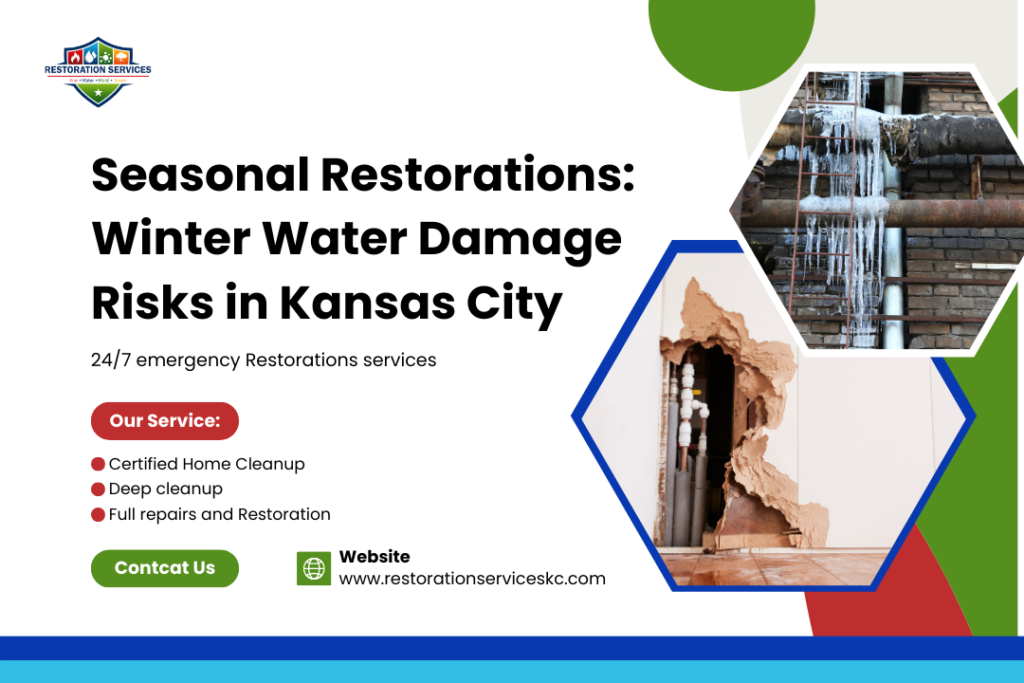
In the Midwest, the arrival of winter brings more than just snow; it introduces a series of complex environmental threats that can compromise the structural integrity of your property. Winter water damage risks in Kansas City are particularly high due to our extreme temperature fluctuations, where a “polar vortex” can be followed by a rapid thaw within 48 hours. At Restoration Services KC, we have spent over 30 years helping property owners navigate these seasonal crises. From our headquarters at 9202 Barton St, Overland Park, we deploy advanced mitigation technology to combat frozen pipes, ice dams, and basement flooding, ensuring that a seasonal mishap doesn’t turn into a permanent financial burden.
Why Cold-Weather Property Damage is Unique in Kansas City
The Kansas City metropolitan area sits in a unique climatic zone where moisture-rich air from the Gulf occasionally meets freezing Arctic fronts. This creates a “freeze-thaw” cycle that is incredibly destructive to residential and commercial infrastructure. When water inside a building’s envelope freezes, it expands by approximately 9% in volume, creating an internal pressure that most residential plumbing and roofing materials simply cannot withstand.
As a veteran in water damage restoration, I’ve seen how these physics-based events unfold in real-time. I recall an emergency call in Leawood where a small hairline crack in an exterior faucet led to a full-scale basement flood. The homeowner didn’t realize the pipe had frozen until the temperature rose above 32°F, at which point the ice melted and unleashed hundreds of gallons of water into their finished basement. By understanding these winter water damage risks, you can transition from being a reactive homeowner to a proactive protector of your property.
A Technical Breakdown of Winter Water Damage Risks
To help you prioritize your winter home maintenance, we have categorized the most frequent causes of property loss during the Kansas City winter season:
| Risk Factor | Primary Cause | Technical Consequence | Restoration Requirement |
| Frozen Pipes | Lack of insulation in exterior walls or unheated attics | Pipe wall failure leading to high-volume bursts | Industrial extraction & thermal moisture mapping |
| Ice Dams | Poor attic ventilation and “heat bleed” through the roof | Water backup under shingles and into the ceiling | Structural drying & mold-resistant treatment |
| Snowmelt Flooding | Rapid thaw on frozen or saturated ground | Hydrostatic pressure forces water through the foundations | Sump pump repair & foundation waterproofing |
| Sump Pump Failure | Frozen discharge lines or mechanical overload | Immediate lower-level flooding and sewage backup | Pump replacement & antimicrobial sanitation |
The Danger of Frozen and Burst Pipes: A Hidden Crisis
Frozen pipes are widely considered the “silent killer” of Kansas City homes because the damage is often invisible until it is catastrophic. When a pipe freezes, the blockage typically occurs between the frozen area and a closed faucet, causing a massive buildup of pressure that eventually causes the copper or PEX tubing to split wide open.
Vulnerable Areas: Pipes located in crawlspaces, garages, and unheated basements are at the highest risk. Even pipes inside your home can freeze if they are located within an exterior wall that lacks proper R-value insulation.
The Thawing Disaster: Contrary to popular belief, the “bursting” usually isn’t the messiest part—it’s the thawing. Once the ice plug melts, there is nothing to stop the pressurized water from flooding your home at a rate of up to 10–15 gallons per minute.
Professional Mitigation: At Restoration Services KC, we don’t just “dry the floor.” We use penetrating moisture meters to ensure the wall studs and insulation are completely dry, preventing the structural rot that often follows a burst pipe.
Ice Dams and Structural Infiltration: Protecting Your Roof
An ice dam is a ridge of ice that forms at the edge of a roof and prevents melting snow from draining off. The water that backs up behind the dam can leak into a home and cause damage to walls, ceilings, insulation, and other areas.
Heat Loss Analysis: Ice dams are usually a symptom of poor insulation in the attic. When heat escapes into the attic, it warms the roof deck, melting the snow above. As that water runs down to the cold eaves, it refreezes.
Internal Damage: Once the water penetrates the roof deck, it travels along rafters and eventually finds its way into your ceiling. This can lead to sagging drywall, ruined paint, and a significant mold remediation bill if not addressed immediately.
The Solution: We provide expert ceiling restoration and attic drying, ensuring that the moisture trapped in your insulation is fully removed before it can cause permanent structural decay.
Proactive Prevention: How to “Winterize” Your Kansas City Property
While our emergency water damage KC team is available 24/7, we believe that education is the first line of defense. Follow these strategic steps to minimize your risk:
Thermal Regulation: Keep your thermostat set to at least 55°F at all times, even if you are leaving for an extended winter vacation.
Pipe Insulation: Utilize foam sleeves or “heat tape” on any pipes located in vulnerable, unheated areas of the home.
Gutter Maintenance: Ensure your gutters are completely clear of fall leaves before the first freeze; clogged gutters are the #1 contributor to ice dam formation.
Sump Pump Inspection: Clear your sump pump’s discharge line of any obstructions and ensure it is sloped away from the house so water cannot freeze inside the pipe.
Frequently Asked Questions: Winter Restoration Expert Insights
How long does it take for mold to grow after a winter pipe burst?
In a heated indoor environment, mold spores can begin to colonize on wet drywall or carpet in as little as 24 to 48 hours. This is why immediate water extraction and professional drying are non-negotiable.
Does insurance cover damage from ice dams?
Most standard homeowner policies in Kansas City cover the interior damage caused by ice dams (like ceiling and wall repairs), but they may not cover the cost of the roof repair itself. We provide detailed insurance claim assistance to help you maximize your coverage.
Why is my basement flooding when there isn’t any rain?
This is often caused by “groundwater rise” during a winter thaw. If the ground is frozen, melting snow cannot seep into the soil and is instead forced against your foundation walls, finding any available crack to enter your home.
Can a small leak from a frozen pipe lead to structural failure?
Yes. Over time, consistent moisture leads to “wood rot,” which compromises the load-bearing capacity of your home’s framing. We use thermal imaging to find these slow, hidden leaks before they cause a collapse.
What should I do if I find a frozen pipe?
Immediately shut off your main water valve to prevent a flood if the pipe has already split. Then, call Restoration Services KC at (816) 286-5835 for a professional assessment.
Restore Your Property with the Experts at Restoration Services KC
When winter weather turns aggressive, you need a restoration partner that is faster than the freezing temperatures. At Restoration Services KC, we bring three decades of local Kansas City experience to every emergency. Our team is factory-trained, IICRC-certified, and committed to restoring your home to its original beauty with the care and clarity you deserve.
Contact us today for a free winter risk assessment or immediate 24/7 emergency restoration!
Official Contact Details
Emergency Hotline: (816) 286-5835
Office Address: 9202 Barton St, Overland Park, KS 66214, United States
Email: joemarshall339@gmail.com
Website: restorationserviceskc.com