
Water damage can happen quickly in Kansas City homes and businesses. Heavy rain, foundation seepage, clogged gutters, plumbing leaks, sump pump failure, roof leaks, and appliance problems can all allow moisture to enter the property. That is why water damage protection in Kansas City should be part of regular home maintenance.
A small moisture issue can become expensive when it is ignored. Water can move behind walls, under flooring, into insulation, around baseboards, and through basement materials before the damage becomes visible. Early prevention helps reduce mold risk, structural damage, odor, and emergency repair costs.
At Restoration Services KC, we help property owners understand how to prevent water damage and what to do when moisture problems appear. Our team provides water damage restoration, moisture inspection, structural drying, mold prevention support, and emergency cleanup for Kansas City and the surrounding areas.
Why Water Damage Protection in Kansas City Matters
Kansas City weather can be unpredictable. Heavy storms, freezing temperatures, rapid thaws, high humidity, and saturated soil can all create water problems around a property. Homes with basements, older plumbing, poor drainage, or aging roof materials may be at higher risk.
Water damage is not always visible right away. A clogged gutter can send water toward the foundation, a small pipe leak can wet the cabinet floor, and a roof leak can soak insulation before a ceiling stain appears. These hidden problems can become more serious when moisture stays trapped.
Good water damage protection in Kansas City focuses on prevention before a leak turns into a restoration emergency. By checking the exterior, plumbing, roof, sump pump, and basement regularly, homeowners can reduce many common water damage risks.
Common Water Damage Risks to Watch For
Before making a protection plan, homeowners should understand where water damage usually starts. Most problems begin with drainage failure, plumbing issues, roof leaks, or basement moisture. These areas should be checked before storm season, winter weather, and long periods of heavy rain.
- Clogged gutters, short downspouts, poor grading, and foundation cracks can push water toward the basement.
- Aging supply lines, leaking appliances, water heater problems, and hidden pipe leaks can damage floors, cabinets, and walls.
- Roof damage, attic moisture, sump pump failure, and high indoor humidity can increase the risk of mold and structural problems.
Water Damage Protection Checklist
The table below shows the main protection areas Kansas City homeowners should monitor.
| Protection Area | What to Check | Why It Matters |
| Foundation | Cracks, soil grading, basement seepage, and window wells | Helps reduce basement water and foundation moisture |
| Gutters & Downspouts | Leaves, blockages, loose gutters, and short downspouts | Moves rainwater away from the property |
| Roof & Attic | Missing shingles, roof stains, attic moisture, and ventilation | Helps prevent roof leaks and ceiling water damage |
| Plumbing | Supply lines, shutoff valves, water heater, appliance hoses | Reduces sudden leaks and hidden water damage |
| Sump Pump | Pump operation, discharge line, backup power, pit condition | Helps protect basements during heavy rain |
| Indoor Moisture | Musty odors, condensation, soft drywall, damp carpet | Helps catch hidden moisture before mold spreads |
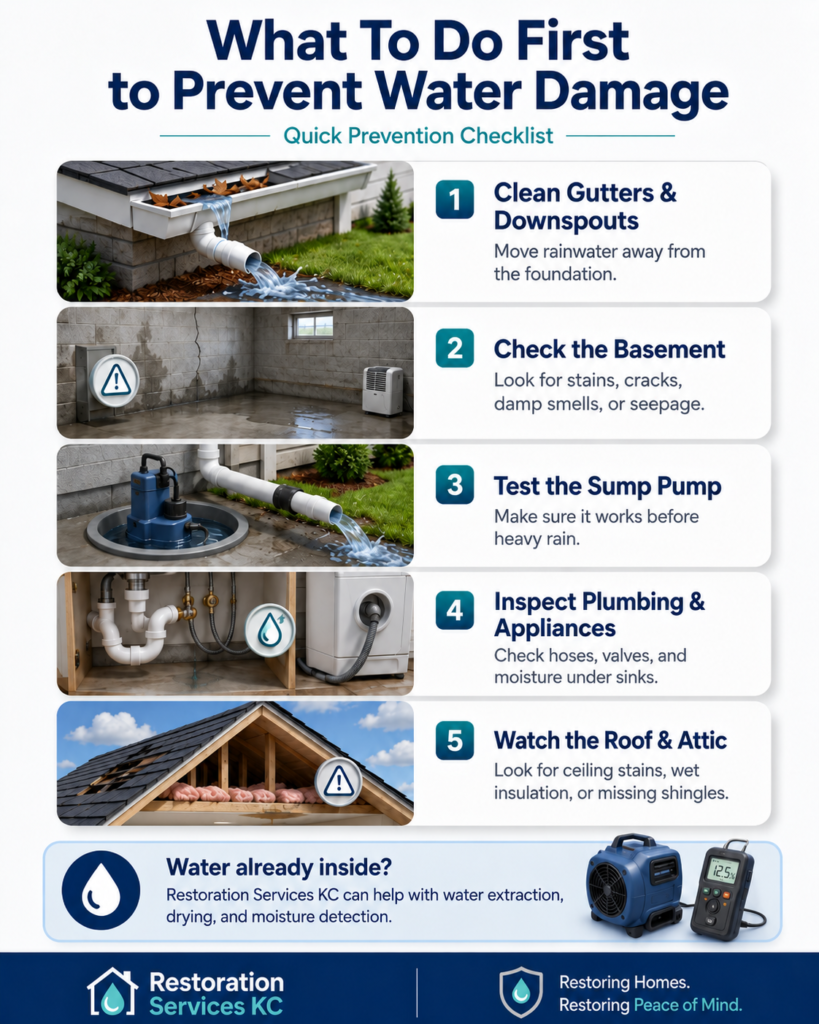
What To Do First to Prevent Water Damage
A good prevention plan does not need to be complicated. The most important step is to inspect the areas where water usually enters or collects. Regular checks can help you find small problems before they become expensive repairs.
- Clean gutters and downspouts so rainwater can move away from the home instead of pooling near the foundation.
- Check basement walls and floors for stains, cracks, damp smells, or signs of seepage after storms.
- Test the sump pump before heavy rain and make sure the discharge line sends water away from the foundation.
- Inspect plumbing and appliances for leaking hoses, corrosion, dripping valves, or moisture under sinks.
- Watch for roof and attic signs such as ceiling stains, wet insulation, missing shingles, or musty odors.
These steps help reduce the chance of water damage, but they do not replace professional inspection when moisture is already present. If water has entered the property, Restoration Services KC can help with water extraction, drying, and moisture detection.
Exterior Water Damage Protection
The outside of your property is the first defense against water damage. Rainwater should move away from the roof, siding, windows, doors, foundation, and basement areas. When drainage is weak, water can collect near the home and enter through cracks or low points.
Gutters should be cleaned before the heavy rain season. Downspouts should move water away from the foundation, and soil should slope away from the property where possible. Window wells should also be checked because blocked drains can allow water to collect near basement windows.
Small exterior gaps can also create problems. Sealing openings around windows, doors, utility lines, and siding edges can help reduce wind-driven rain intrusion. If water is already entering the basement, professional water damage restoration or foundation-related repair support may be needed.
Interior Plumbing and Appliance Protection
Interior leaks can cause serious damage because they often stay hidden. A slow leak under a sink, behind a refrigerator, near a water heater, or behind a washing machine can wet floors and walls before anyone notices. These problems can lead to mold, odor, and material damage.
Homeowners should inspect appliance supply lines, shutoff valves, water heaters, toilets, sinks, and visible plumbing. Any signs of corrosion, bulging hoses, dripping water, staining, or soft flooring should be addressed quickly. Knowing where the main water shutoff valve is located can also reduce damage during a burst pipe emergency.
Smart leak detectors can be helpful in high-risk areas. These devices can alert homeowners when moisture appears near water heaters, washing machines, sinks, or basement areas. For strong water damage protection in Kansas City, leak detection and fast response work together.
Basement and Sump Pump Protection
Basements are one of the most common areas for water damage in Kansas City properties. Heavy rain, saturated soil, poor grading, foundation cracks, and sump pump failure can all allow water into lower-level spaces. Even a small amount of basement moisture should be taken seriously.
A sump pump should be tested regularly, especially before storm season. The discharge line should be clear and directed away from the foundation. If the pump does not turn on, runs too often, or makes unusual sounds, the system should be checked before the next heavy rain.
Basement moisture can also hide behind walls, under flooring, and around baseboards. If a basement smells musty or shows staining after rain, professional moisture inspection can help identify the source before the issue becomes larger.
Roof, Attic, and Gutter Protection
Roof and attic problems can create water damage inside the home without an obvious leak. Missing shingles, damaged flashing, clogged gutters, poor attic ventilation, and ice buildup can all allow water to reach ceilings and walls. These problems are often noticed only after stains appear.
Homeowners should look for ceiling discoloration, peeling paint, attic moisture, damp insulation, and musty odors after storms. Gutters should also be checked because overflow can damage fascia, siding, and foundation areas. A roof leak should be addressed quickly to reduce interior water damage.
Storm damage restoration may be needed when wind, hail, or heavy rain affects the roof or exterior. If water has already reached ceilings or walls, drying and moisture inspection are important to prevent hidden damage.
Mold Prevention After Water Exposure
Mold prevention starts with moisture control. If water enters the property, drying should begin as soon as possible. Wet drywall, carpet, wood, insulation, and cabinets can hold moisture even after the surface looks dry.
This is why cleanup should go beyond visible water removal. Dehumidification, airflow, and moisture readings help confirm whether materials are drying correctly. If moisture remains trapped, mold concerns can grow, and indoor air quality may be affected.
Restoration Services KC helps with drying, moisture inspection, and mold prevention support after leaks, floods, and storm-related water damage. If mold is suspected, mold testing and remediation may be needed.
When to Call a Water Damage Professional
Some prevention tasks can be handled by homeowners, but active water damage should not be ignored. If water has reached walls, flooring, ceiling materials, insulation, carpet, or basement areas, professional help may be needed. Waiting too long can allow moisture to spread deeper.
Call a professional if you notice basement water, wet carpet, ceiling stains, musty odors, soft drywall, warped flooring, leaking appliances, or repeated moisture after storms. These signs often mean water is not limited to the surface. A proper inspection can help find hidden moisture and reduce further damage.
Restoration Services KC provides water damage restoration, moisture inspection, structural drying, cleanup, and restoration guidance. Our team helps homeowners and businesses respond quickly when prevention is no longer enough.
Related Protection and Restoration Services
Water damage prevention is connected to several other property services. A basement leak may need water damage restoration. A damp wall may need mold testing. A roof leak after a storm may need storm damage restoration. A property affected by fire may also have water damage from firefighting efforts.
For better user experience and SEO, this page should internally link to the main Water Damage Restoration service page, Mold Testing & Remediation page, Storm Damage Restoration page, and Contact page. These links should be placed naturally inside the article, not only in the footer.
Suggested internal link, anchors:
- Water damage restoration in Kansas City
- Mold testing and remediation
- Storm damage restoration
- Contact Restoration Services KC
Service Areas Around Kansas City
Restoration Services KC helps homeowners and businesses with water damage prevention guidance, moisture inspection, and restoration support across Kansas City and nearby communities. Our service area includes Kansas City, Liberty, Overland Park, Leawood, Lenexa, Shawnee, Olathe, Lee’s Summit, and surrounding areas.
Local experience matters because Kansas City properties face storms, basement moisture, freezing weather, and drainage problems throughout the year. A local restoration team understands these risks and can help property owners take the right next step.
If your home or business has water damage, hidden moisture, basement seepage, mold concerns, or storm-related leaks, fast action can help protect the property.
Contact Restoration Services KC
Water damage protection works best when small problems are handled early. Gutters, sump pumps, plumbing, roofing, grading, and indoor moisture should all be checked before they create larger repairs.
For help with water damage protection in Kansas City, moisture inspection, water extraction, drying, or restoration support, contact Restoration Services KC. Our team helps property owners protect their homes and recover when water damage happens.
Call Restoration Services KC at (816) 286-5835 for water damage restoration and prevention support in Kansas City and surrounding areas.
Frequently Asked Questions About Water Damage Protection in Kansas City
What is the best way to start water damage protection in Kansas City?
The best place to start is with drainage, plumbing, and basement checks. Clean gutters, test the sump pump, inspect appliance hoses, check basement walls, and make sure water moves away from the foundation.
How often should I check my sump pump?
You should test your sump pump before storm season and after long periods without use. If the pump does not turn on, drains slowly, or makes unusual sounds, it should be checked before heavy rain.
Can clogged gutters cause water damage?
Yes. Clogged gutters can send water over the edge of the roof and toward the foundation. This can increase the risk of basement seepage, siding damage, roof edge problems, and foundation moisture.
What are the early signs of hidden water damage?
Early signs include musty odors, damp carpet, bubbling paint, ceiling stains, soft drywall, warped flooring, swollen trim, and high indoor humidity. These signs should be inspected quickly.
Does water damage protection help prevent mold?
Yes. Mold prevention depends on moisture control. When leaks are fixed quickly and wet materials are dried properly, the risk of mold growth is reduced.
When should I call Restoration Services KC?
Call when water has entered floors, walls, ceilings, carpet, insulation, cabinets, basement areas, or crawlspaces. Professional drying and moisture inspection can help prevent hidden damage from getting worse.
Official Contact Details
Emergency Phone: (816) 286-5835
Email: joe@restorationserviceskc.com
Website: restorationserviceskc.com