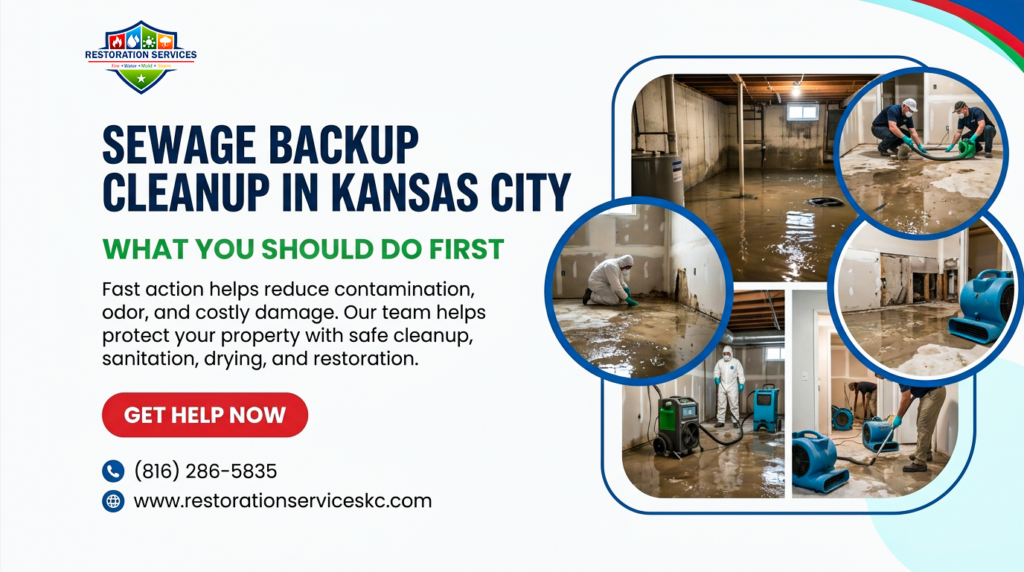
A sewage backup can spread germs, ruin floors, and make your home unsafe quickly.
When you act early, you reduce damage, odor, and cleanup costs.
This guide explains the first steps, the biggest risks, and the smartest next moves.
You will learn when to protect the area, when to document damage, and when to call for help.
If you need sewage backup cleanup in Kansas City, this article gives you practical answers you can use right away.
Why Fast Action Matters After a Sewage Backup
When sewage enters your home or business, you face more than a messy cleanup. You also deal with bacteria, strong odors, soaked materials, and hidden moisture that can damage walls, flooring, and insulation. In our experience, many Kansas City property owners lose more money when they wait too long. Sewage backup cleanup in Kansas City should always start with safety, fast containment, and a clear plan.
You need to treat sewage as hazardous water, not a simple spill. It can move under flooring, into baseboards, and behind drywall within hours. That is why emergency sewage backup cleanup in Kansas City often includes extraction, sanitation, drying, and removal of damaged materials. When you respond early, you protect your health, reduce repair costs, and make restoration easier.
What You Should Do First in the Affected Area
The first hour matters most when sewage backs up into your basement, bathroom, or utility area. We always tell property owners to stay calm, secure the space, and stop further exposure. If you try to clean it with normal water, you can spread contamination and make the damage worse. Use these steps right away:
- Keep children, pets, and guests away from the area
- Stop using toilets, sinks, and drains immediately
- Turn off the power near wet areas if you can do it safely
- Take photos and videos for insurance records
- Move clean, dry items away from the affected zone
- Call for sewer backup cleanup service in Kansas City before contamination spreads
These steps help you limit damage while you wait for professional help.
Health Risks, Property Damage, and What You Should Avoid
Sewage water is often called black water because it carries dangerous contaminants. It can contain bacteria, viruses, and waste that create serious health risks through skin contact, breathing, or accidental exposure. If you notice foul odor, dirty water, or drain overflow, treat it as an urgent problem.
The damage also reaches farther than most people expect. We often see soaked trim, ruined carpet pads, warped flooring, and wet framing after basement sewage cleanup in Kansas City jobs. Even when the surface looks manageable, hidden moisture can stay behind and create odor and mold issues.
You should also avoid common mistakes. Do not use household fans before assessment. Do not keep heavily contaminated porous items. Do not attempt a full black water cleanup in Kansas City with basic gloves and bleach alone.
| Issue | Why It Matters | Best Response |
| Dirty standing water | Spreads contamination fast | Isolate the area and call experts |
| Wet drywall or carpet | Traps bacteria and odor | Remove and sanitize as needed |
| Strong sewage smell | Signals active contamination | Start the cleanup and drying quickly |
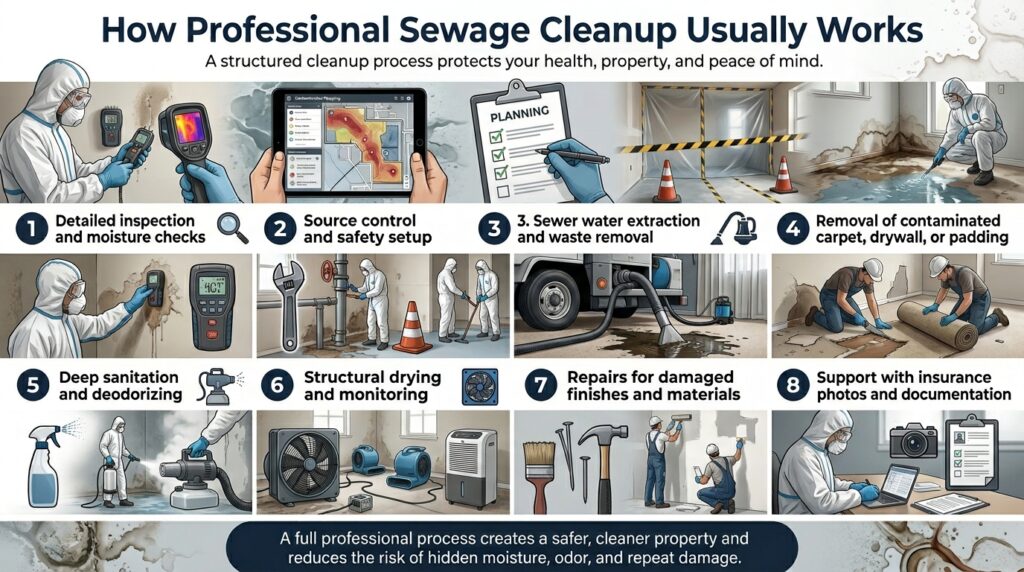
How Professional Sewage Cleanup Usually Works
When you hire a sewage cleanup company in Kansas City, you should expect a structured process, not guesswork. We begin with inspection, contamination mapping, and safety planning. Then we remove sewage, isolate affected zones, and check how far water traveled into floors, walls, and contents. This approach protects your health and helps you avoid damage.
Typical professional steps include:
- Detailed inspection and moisture checks
- Source control and safety setup
- Sewer water extraction in Kansas City and waste removal
- Removal of contaminated carpet, drywall, or padding
- Deep sanitation and deodorizing
- Structural drying and monitoring
- Repairs for damaged finishes and materials
- Support with insurance photos and documentation
That is why residential sewage removal, commercial sewage cleanup Kansas City, and contaminated water cleanup Kansas City should never rely on quick surface cleaning alone. A full process gives you a safer, cleaner property and lowers the risk of hidden moisture, odor, and repeat damage.
How to Prevent Future Sewage Backups and Lower the Cost
You cannot stop every backup, but you can reduce the risk with smart maintenance and quick action. In Kansas City, heavy rain, aging lines, grease buildup, and root intrusion often lead to sewer trouble. We suggest paying attention to slow drains, gurgling toilets, foul smells, and repeated clogs. Those early signs often show up before a major backup hits.
You also help yourself when you keep records and act fast. Save inspection reports, take damage photos, and ask your insurer whether your policy includes sewer backup coverage. If damage happens again, that paperwork can speed up claims and cleanup. When you need same-day sewage cleanup in Kansas City, early documentation and a clear timeline help you recover with less stress.
FAQs About Sewage Backup Cleanup
Is sewage backup water dangerous to touch?
Yes, it can expose you to harmful bacteria, viruses, and waste. You should avoid direct contact and keep people and pets out of the area.
Can you clean a sewage backup yourself?
Small splashes may be manageable, but a real backup usually needs professional cleanup. Most cases involve contamination, hidden moisture, and damaged materials that require proper sanitation and drying.
How fast should cleanup start after a backup?
You should start the response immediately. Fast action helps reduce odor, contamination, structural damage, and future mold growth.
Will insurance cover sewage backup cleanup?
Some policies do, but coverage depends on your plan and endorsements. You should document the damage right away and ask your insurer what sewer backup protection your policy includes.
What items usually need to be thrown away after sewage damage?
Heavily contaminated carpet padding, drywall, insulation, cardboard, and porous contents often need removal. A professional inspection helps you decide what can be cleaned and what should be replaced.
Get Trusted Help from Restoration Services KC
If you need reliable sewage backup cleanup in Kansas City, Restoration Services KC is ready to help you act fast and recover the right way. We serve homeowners and businesses across Kansas City and surrounding areas with more than 30 years of restoration experience. Our team handles cleanup, sanitation, drying, damage removal, and restoration with a clear plan from start to finish.
Call Restoration Services KC at (816) 286-5835, email joe@restorationserviceskc.com, or visit restorationserviceskc to get help now. You can also reach our team through the contact page for fast support. When sewage damage threatens your property, we help you protect your health, your structure, and your peace of mind.