A sewage backup is one of the most serious water damage problems a homeowner can face. Unlike a clean water leak from a pipe or appliance, sewage water is contaminated. It may contain bacteria, waste, chemicals, viruses, pathogens, and strong odors. Because of that, sewage backup cleanup cost is usually higher than normal water cleanup.
Sewage cleanup is not only about removing dirty water. It often requires protective equipment, black water extraction, removal of contaminated materials, sanitizing, deodorizing, structural drying, moisture checks, and sometimes repairs. If the sewage spreads into flooring, drywall, baseboards, cabinets, carpet, insulation, or stored belongings, the cleanup becomes more complex.
For Kansas City homeowners, the safest first step is to contact professionals immediately. Restoration Services KC provides emergency restoration support and 24/7 help for water, mold, fire, storm, and sewage-related cleanup needs. Their site highlights fast response, water extraction, drying, sanitizing, and restoration services for Kansas City and surrounding areas.
If sewage is actively backing up into your home, start with Emergency Sewage Cleanup Services or contact the team through Contact Us.
Why Sewage Cleanup Costs More Than Regular Water Cleanup
Sewage water is considered contaminated water, often called black water. Black water cleanup requires more safety control than clean water removal. A normal leak may require extraction and drying, but sewage cleanup usually requires sanitation, disposal of contaminated materials, odor control, and careful handling.
Sewage can soak into porous materials quickly. Carpet pad, drywall, insulation, wood, cardboard, upholstered furniture, and baseboards may hold contamination even after the surface looks dry. In many cases, these materials cannot be safely cleaned and must be removed.
Restoration Services KC’s water damage content explains that contaminated flood water creates bacterial and pathogen risks and requires intensive sanitization and debris removal. That is why sewer backup cleanup should never be treated like a simple mop-and-dry job.
What Affects Sewage Backup Cleanup Cost?
The first major cost factor is the size of the affected area. A small bathroom backup may cost less than a finished basement sewage cleanup project. If sewage spreads across multiple rooms or into a basement, cleanup requires more labor, more equipment, and more disposal.
The second factor is how long sewage sat before cleanup. The longer contaminated water remains, the deeper it can soak into materials. Delays can increase odor, bacteria exposure, material damage, and mold risk.
The third factor is what materials were affected. Hard surfaces may sometimes be cleaned and sanitized. Porous materials are more difficult. Carpet padding, insulation, drywall, cardboard, fabric items, and waterlogged belongings may need disposal.
Common sewage cleanup cost factors include:
Square footage affected.
Depth of sewage water.
Time before cleanup.
Contaminated materials.
Demolition needs.
Sanitizing and deodorizing.
Drying equipment.
Mold risk.
Contents disposal.
Repairs and reconstruction.
Basement access difficulty.
HVAC or air quality concerns.
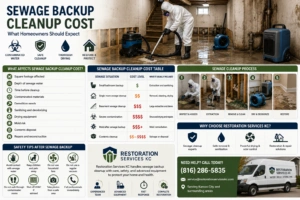
Sewage Backup Cleanup Cost Table
| Sewage Situation | Cost Level | What It Usually Includes |
| Small bathroom backup | Lower to moderate | Extraction and sanitizing |
| Single-room sewage cleanup | Moderate | Removal, cleaning, drying |
| Basement sewage cleanup | High | Large extraction and demolition |
| Severe contamination | Highest | Structural drying and repairs |
| Mold after sewage backup | Extra cost | Mold remediation |
| Contents cleanup | Varies | Salvage or disposal |
| Sewage under flooring | Moderate to high | Removal and drying |
| Multiple affected rooms | High | Containment, cleaning, repairs |
Basement Sewage Cleanup Costs
Basements are one of the most common places for sewage backups. A basement sewage cleanup project can cost more because sewage may spread over a large floor area, soak into finished materials, and affect stored belongings.
Finished basements often have carpet, drywall, insulation, trim, furniture, and storage boxes. These materials can trap moisture and contamination. If the basement has standing sewage water, professional extraction is needed quickly.
If sewage spreads into a basement, you may also need Water Damage Restoration to dry the structure and prevent further damage. Restoration Services KC notes that quick action helps prevent further damage, mold growth, and structural issues after water damage.
Mold Risk After Sewage Backup
Sewage backups create both contamination and moisture problems. If materials stay wet too long, mold can begin to develop. Mold risk increases when drywall, carpet pad, insulation, wood, or stored items remain damp.
If you smell musty odors after sewage cleanup or see visible growth, schedule Mold Testing & Remediation. Mold testing may help identify hidden contamination and confirm whether remediation is needed.
Safety Tips After Sewage Backup
Avoid contact with sewage water.
Keep children and pets away.
Do not use household fans.
Do not use a regular vacuum.
Do not walk through contaminated rooms.
Shut off HVAC if advised.
Take photos from a safe area.
Do not move contaminated items into clean rooms.
Call professionals immediately.
Household fans can spread contaminated particles and odors. A regular vacuum is not designed for sewage. Walking through affected areas can track contamination into clean parts of the home.
For more guidance, visit Restoration Services KC’s Sewage Backup Cleanup category and their page for Professional Sewage Backup Cleanup.
Can You Clean Sewage Yourself?
It is not recommended. Sewage cleanup is a health and safety issue. Black water cleanup can expose you to bacteria, viruses, waste, and harmful contaminants. Without proper equipment, it is difficult to remove contamination from hidden areas.
DIY cleanup may leave behind moisture or bacteria in porous materials. That can lead to odor, mold, and long-term damage. Professional sewer backup cleanup uses protective equipment, extraction tools, sanitizing products, drying equipment, and disposal procedures.
Does Insurance Cover Sewage Backup Cleanup?
Insurance coverage depends on your policy. Some homeowners policies do not automatically include sewer backup coverage. Many require a sewer backup endorsement or special coverage. If you have that endorsement, it may help pay for extraction, cleanup, damaged materials, and repairs.
You should document the damage with photos from a safe location, keep receipts, and contact your insurance provider quickly. Restoration Services KC’s website notes that they help with documentation and claim support for restoration work.
Why Choose Restoration Services KC?
Restoration Services KC handles contaminated water events with sewer backup cleanup, black water extraction, sanitation, drying, damaged material removal, deodorization, and restoration planning. Their water damage restoration service can also support areas affected by standing water beyond the sewage source.
The company provides emergency restoration services for water damage, mold removal, fire damage, storm damage, and related cleanup needs across Kansas City. Their homepage lists quick support, 24/7 emergency restoration availability, and contact information for homeowners needing fast help.
To learn more about the team, visit the About Restoration Services KC page. To request help now, visit Contact Us or call (816) 286-5835. You can also start from the Restoration Services KC Home.
FAQs About Sewage Backup Cleanup Cost
How much does sewage backup cleanup cost?
Sewage backup cleanup cost depends on the contamination level, affected square footage, depth of sewage water, materials damaged, drying time, disposal needs, and repair requirements.
Is sewage backup covered by insurance?
Sometimes. Many insurance policies require a sewer backup endorsement. Check your policy or call your insurance provider.
Can I clean sewage myself?
It is not recommended. Sewage is black water and can create serious health risks. Professional cleanup is safer.
What materials usually need removal?
Carpet pad, drywall, insulation, cardboard, upholstered items, and contaminated porous materials may need disposal.
What should I do first after sewage backup?
Stay out of contaminated areas, keep children and pets away, avoid using fans or vacuums, take photos from a safe area, and call professionals.
Who should I call in Kansas City?
Call Restoration Services KC at (816) 286-5835 or visit the Contact Us page for sewage cleanup in Kansas City and surrounding areas.
Get In Touch
Restoration Services KC
Phone: (816) 286-5835
Email: service@restorationserviceskc.com
Serving Kansas City and surrounding areas
Website: https://restorationserviceskc.com/