
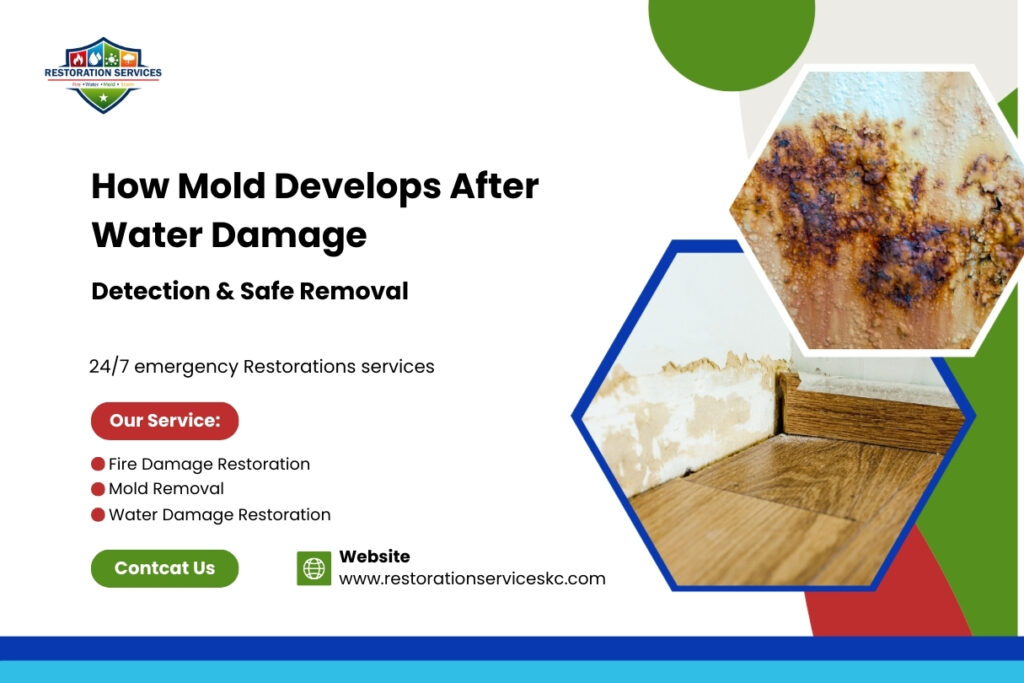
Fungal colonies require moisture, organic food sources, and warmth to thrive within your property’s structure. Understanding how Mold Develops After Water Damage is essential for preventing long-term structural decay and respiratory health issues. Quick action within the first forty-eight hours significantly reduces the likelihood of extensive microbial contamination.
Our professional remediation process involves specialized drying equipment, moisture mapping, and containment to ensure a safe living environment. Trust local Kansas City experts to identify hidden moisture pockets and provide certified removal services that protect your investment.
How Mold Develops After Water Damage — Detection & Safe Removal
You might think that a small leak in your Liberty home is just a minor nuisance, but water is a patient destroyer. We have spent over thirty years navigating the damp basements and humid attics of Kansas City, and we have seen how quickly a simple puddle transforms into a toxic forest. Understanding exactly How Mold Develops After Water Damage (Learn more) will help you make the right decisions for your family’s safety. Whether you faced a massive flood or a slow pipe drip, the biological clock starts ticking immediately. We are here to guide you through the science of fungal growth and the professional steps required to reclaim your clean, dry home.
The Biological Race Against Time
Microscopic spores are always floating in the air around us, waiting for a single invitation: moisture. We often hear homeowners ask, How long does it take for mold to grow after a leak, and the answer usually shocks them. Fungal colonies can establish a foothold in as little as 24 to 48 hours. If you leave a wet carpet or damp drywall alone for a weekend, you are essentially opening a buffet for mold.
We have walked into homes where the walls looked fine on the outside, but once we pulled back the baseboards, we found a thriving ecosystem. Your fast response is the only thing that stops this rapid colonization.
Comparing Remediation Readiness and Outcomes
We created this table to show you how different response times and methods impact your property’s health. Being proactive saves you money and stress in the long run.
| Scenario | Response Time | Likely Outcome | Professional Requirement |
| Small Sink Leak | Under 24 Hours | Surface drying, no mold | Moisture check only |
| Burst Pipe | 48 – 72 Hours | Visible mold growth after water damage | Sanitization & drying |
| Basement Flood | 1 Week+ | Deep structural contamination | Full mold remediation |
| Hidden Slow Leak | Months | Rotting wood & black mold removal cost | Demolition & Rebuild |
| Sewer Backup | Immediate | Category 3 biohazard risks | Specialized hazmat cleanup |
Identifying the Subtle Signs of Mold After Flooding
You cannot always trust your eyes when it comes to fungal growth. Often, the first signs of mold after flooding come from your nose. If you walk into a room and notice a musty, earthy, or “wet sock” odor, mold is likely hiding nearby. We also tell our clients to watch for “ghosting” or yellowish staining on their ceilings and walls. If your wallpaper starts to bubble or your paint begins to peel, moisture is trapped behind that surface. These visual cues are your house’s way of screaming for help before the problem becomes a full-blown health crisis.
The Danger of Hidden Mold After Water Damage
The most dangerous mold is the kind you cannot see. We frequently find hidden mold after water damage inside wall cavities, under subfloors, and within HVAC ductwork. During our decades of service in Kansas City, we have developed a “sixth sense” for these hiding spots. We use infrared thermal cameras to find cold spots in your walls that indicate trapped water. If we find moisture, we know mold is likely following close behind. Ignoring these hidden pockets leads to “Sick Building Syndrome,” where your home actually makes you feel ill every time you step through the door.
Why You Need a Mold Inspection After Water Damage
You might feel tempted to just spray some bleach and call it a day, but that is a major mistake. A professional mold inspection after water damage goes much deeper than a surface wipe. We use specialized tools to measure the humidity in your air and the moisture content in your wood studs. We want to ensure that the environment is truly “dry” according to industry standards. If we find active growth, we provide a clear roadmap for removal. Our goal is to give you a definitive answer so you don’t have to wonder if the problem is growing behind your back.
Breaking Down the Mold Remediation Process Steps
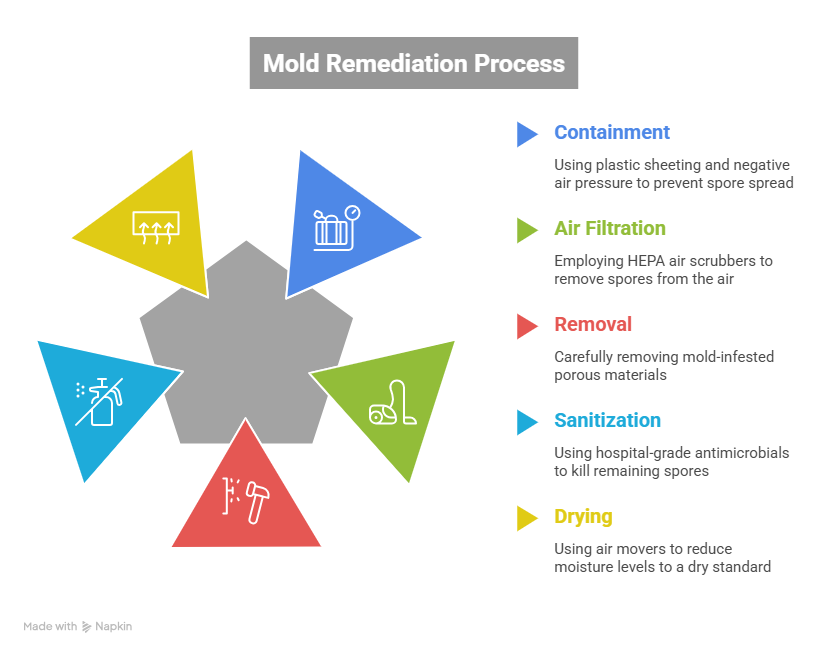
When we step in to fix a problem, we follow a strict, scientific mold remediation process steps protocol to keep your home safe.
- Containment: We use heavy-duty plastic sheeting and negative air pressure to stop spores from spreading to clean rooms.
- Air Filtration: Our industrial HEPA air scrubbers clear the spores out of your breathing zone.
- Removal: We carefully remove “porous” materials like drywall or insulation that mold has completely infested.
- Sanitization: We use hospital-grade antimicrobials to kill remaining spores on hard surfaces like wood framing or concrete.
- Drying: We leave high-velocity air movers in place until your moisture levels hit the “dry standard.”
Understanding the Health Risks of Mold Exposure
We take our job seriously because we know the health risks of mold exposure are real. For many people in our KC community, mold triggers severe allergies, asthma attacks, and skin irritation. We have worked in homes where residents suffered from chronic headaches and fatigue for months, only to have their symptoms vanish once we removed the mold. Young children and the elderly are especially vulnerable to these airborne toxins. Protecting your property’s structure is important, but protecting your family’s lungs is our absolute top priority.
Calculating the Black Mold Removal Cost
We believe in being honest about the financial side of restoration. The black mold removal cost can range from a few hundred dollars for a small spot to several thousand for a full basement. The price depends on how much demolition is needed and how long we must run our specialized drying equipment. We always tell our neighbors that the cheapest time to fix mold is right now. If you wait another month, the roots will dig deeper into your wood framing, and the cost will likely double as we move from simple cleaning to full reconstruction.
The Truth About DIY vs Professional Mold Removal
We understand the urge to save money, but the DIY vs professional mold removal debate has a clear winner. Homeowners who try to scrub mold often end up releasing millions of spores into the air, making the problem ten times worse. Bleach actually contains mostly water, which can feed the roots of mold inside porous wood. We have the protective gear, the chemicals, and the training to handle toxic species safely. When you hire us, you are buying the thirty years of experience it takes to ensure the mold doesn’t come back next season.
The Final Step: Mold Testing After Water Damage
Once we finish our cleanup, we don’t just take your word for it—we prove the air is clean. Mold testing after water damage involves taking air samples and surface swabs to send to an independent lab. We want a “clearance report” that shows the spore count in your home is normal. This document is incredibly valuable for your insurance company and for your future home resale value. It proves that you took the right steps to maintain a healthy environment. We stand by our work and ensure your Kansas City home is a place where you can breathe easy again.
Frequently Asked Questions
- How long does it take for mold to grow after a leak? Mold can start growing in as little as 24 to 48 hours if the conditions are right. You must dry out any wet area immediately to prevent a fungal outbreak.
- Does insurance cover mold remediation? In many cases, yes, if the mold resulted from a “sudden and accidental” water discharge like a burst pipe. We help our clients manage the insurance paperwork to maximize their coverage.
- Can I just use bleach to kill mold? We advise against it. Bleach is effective on non-porous surfaces like tile, but it cannot reach the roots of mold inside drywall or wood. It often leaves behind moisture that encourages the mold to return.
- What are the most common signs of mold after flooding? Watch for dark spots on walls, a persistent musty odor, and unexplained respiratory issues or allergies among your family members. Bubbling paint and warped wood are also major red flags.
- Is black mold more dangerous than other types? While all molds can cause health issues, certain “black” molds produce mycotoxins that are especially harmful. Regardless of the color, any significant mold growth in your home should be professionally removed.
Reclaim Your Healthy Home Today
Don’t let a water disaster turn into a permanent mold problem. At Restoration Services KC, we bring over thirty years of local expertise to every project. Whether you need an emergency water extraction or a deep mold cleanup, our team is ready to support you 24/7. We serve the entire Kansas City and Liberty area with fast, professional, and compassionate service.
Call us now to schedule your expert mold inspection!
- Phone: (816) 286-5835
- Email: joe@restorationserviceskc.com
- Address: 406 N Clayview Dr, Liberty, MO 64068
- Website: restorationserviceskc.com