A downspout carries rainwater from the gutter system toward the ground, a drainage connection, splash block, extension, or approved discharge area. Although it is a simple exterior component, its condition can affect basements, crawl spaces, foundations, siding, landscaping, walkways, and interior moisture.
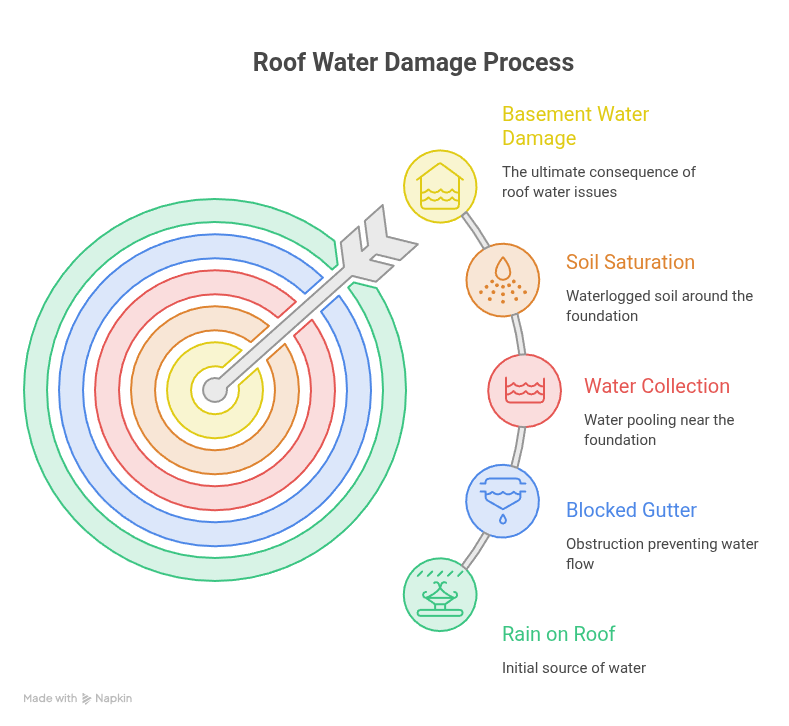
For Overland Park homes and businesses, roof drainage becomes especially important during periods of heavy rain and severe storms. A disconnected, clogged, crushed, undersized, or poorly directed outlet can concentrate hundreds of gallons of roof runoff beside the building.
Water near the foundation may enter through cracks, joints, window wells, wall penetrations, or low areas. It can also saturate soil, increase hydrostatic pressure, stain exterior materials, erode landscaping, and contribute to damp lower-level conditions.
Restoration Services KC does not need to replace the role of a gutter contractor or drainage specialist. Its role becomes important when drainage failure results in basement water, wet drywall, soaked carpet, mold concerns, or other property damage.
This guide explains roof-water movement, local risks, drainage options, inspection points, maintenance tips, and restoration steps after rainwater enters a building.
What Is Gutter Downspout Repair and Why Does It Matter Locally?
A gutter collects water from the roof edge. The outlet directs that water into a vertical conductor, which carries it downward. At ground level, the system must release water in a way that moves it away from the foundation without creating erosion, ice hazards, neighboring drainage problems, or prohibited connections.
Problems commonly include:
- Loose gutter outlet
- Separated elbow
- Crushed lower section
- Clogged conductor
- Missing extension
- Poor slope at the outlet
- Splash block facing the wrong direction
- Underground drain blockage
- Discharge beside a window well
- Water emptying onto a walkway
- Improper connection to another system
Overland Park’s stormwater requirements address how development and redevelopment manage runoff. Property owners planning significant drainage changes should verify current city requirements and avoid assuming roof water can be connected to any available pipe.
The University of Minnesota Extension notes that many basement-moisture problems can be improved by properly managing surface water with gutters, downspouts, extensions, splash blocks, and grading away from the foundation.
A functional system protects more than the basement. It helps reduce soil splash on siding, erosion around landscaping, water concentration at footings, and repeated saturation near structural walls.
Downspout Drainage Inspection and Problem Table
A downspout should be inspected during rain when it is safe to observe the system from the ground. Dry-weather inspection may show loose connections and debris, but active rainfall reveals overflowing gutters, leaking seams, blocked outlets, and poor discharge patterns.
| Observation | Likely problem | Recommended response |
| Gutter overflows above outlet | Clogged outlet or gutter | Clean and inspect safely |
| Water leaks from elbow | Loose or damaged connection | Reseal or replace component |
| Lower pipe is crushed | Restricted discharge | Replace damaged section |
| Water pools beside foundation | Inadequate extension or grading | Redirect discharge |
| Basement stain appears after rain | Exterior water entry | Inspect roof drainage and moisture |
| Underground line backs up | Buried drain restriction | Professional drainage evaluation |
| Water crosses walkway | Slip or ice concern | Change approved discharge route |
| Soil is eroding | Concentrated high-velocity flow | Add suitable outlet protection |
A downspout should not simply be extended without considering where the water will go. Moving discharge from one foundation corner to a low spot, neighboring property, or public walkway can create another problem.
Grading should direct surface water away from the structure. Soil settlement near foundations can form channels that return water toward the building even when the extension appears long enough.
The EPA recommends maintaining roof gutters and ensuring that ground slopes away from the foundation as part of moisture and mold control.
When rainwater has already entered the property, Restoration Services KC provides water damage restoration involving extraction, moisture inspection, drying, cleaning, and repair guidance.
Why Choose Restoration Services KC After Drainage-Related Water Entry?
A downspout problem can produce hidden water damage that extends beyond the foundation wall. Water may wet carpet edges, padding, baseboards, drywall, insulation, stored contents, subflooring, and framing.
Restoration Services KC can support recovery through:
- Basement water extraction
- Moisture mapping
- Structural drying
- Dehumidification
- Wet-material assessment
- Mold-risk evaluation
- Content relocation
- Cleaning and odor control
- Restoration planning
The company’s published services cover water extraction, drying, mold prevention, storm cleanup, and restoration across Kansas City-area communities.
The restoration team addresses indoor effects while a gutter, drainage, foundation, or landscaping contractor corrects the exterior source. Both steps are necessary. Drying a basement without redirecting roof runoff invites repeat damage. Extending the outlet without drying wet walls and flooring leaves existing moisture behind.
Choosing and Installing a Downspout Extension
A downspout extension moves discharge farther from the foundation. Common options include rigid sections, hinged extensions, flexible piping, splash blocks, surface channels, and properly designed underground drainage.
The correct choice depends on:
- Roof area and runoff volume
- Soil slope
- Landscaping
- Foundation height
- Walkways and driveways
- Property boundaries
- Existing stormwater controls
- Freeze conditions
- Maintenance access
- Local rules
Rigid extensions maintain a predictable route but may interfere with mowing or walking. Hinged products can be raised temporarily but must be returned to the drainage position. Flexible products are easy to route but can flatten, trap debris, or hold water.
Underground drains can improve appearance, but buried systems require correct slope, suitable pipe, accessible cleanouts, and a lawful outlet. If the line clogs, roof water may back up beside the building without being immediately visible.
A splash block should face away from the foundation and sit on a stable surface. The surrounding grade should continue moving water away rather than creating a basin.
Property owners making significant drainage changes can review the City of Overland Park’s stormwater resources and consult qualified local professionals.
Drainage Conditions and Restoration Priorities
A downspout failure can create different damage patterns depending on rainfall, soil, foundation design, basement finishes, and how long water remains present.
| Condition | Exterior correction | Interior response |
| Minor pooling with no entry | Extend outlet and correct grade | Monitor basement |
| Damp foundation wall | Inspect discharge and cracks | Moisture testing |
| Wet carpet edge | Redirect runoff | Extract and inspect padding |
| Water through window well | Correct drainage and well cover | Dry wall, flooring, and contents |
| Repeated basement seepage | Full drainage and foundation review | Mold and material assessment |
| Gutter overflow at roof edge | Clean gutter and outlet | Inspect walls and attic |
| Buried drain backup | Clear or redesign underground route | Check lower-level moisture |
A downspout correction should be tested during rainfall or with a controlled water test performed by an appropriate professional. The goal is to confirm that water moves continuously from the roof to the intended discharge location.
Interior drying should be measured rather than judged only by touch. Carpet surfaces can dry while padding remains wet. Painted drywall can feel normal while the lower gypsum core remains damp.
Restoration Services KC’s common water-damage causes guide provides additional information on roof leaks, storms, plumbing failures, basement flooding, and hidden moisture.
Roof-Drainage Maintenance Tips
A downspout system requires routine observation and maintenance. Small defects are easier to correct before the next major storm.
Use these practical tips:
- Clean gutters and outlets regularly
- Check every connection after strong wind
- Keep extensions attached and correctly positioned
- Remove leaves from discharge areas
- Watch for soil settlement near foundations
- Inspect window wells after heavy rain
- Repair erosion and splash patterns early
Use safe ladder practices or hire a qualified contractor. Wet roofs, unstable ladders, overhead electrical lines, and high gutters create serious hazards.
During winter, watch for ice at outlets and walkways. Discharge that crosses a path can freeze. A crushed extension may hold water and split. Underground lines can also become blocked or frozen under certain conditions.
Do not route water toward neighboring structures. Property drainage changes should respect boundaries, easements, and current municipal requirements.
Keep a simple storm log if the basement has recurring moisture. Record rainfall date, affected wall, water depth, gutter behavior, outlet condition, and photographs. Patterns can help contractors identify the source.
Restoring Basement Water Damage Caused by Roof Runoff
A downspout problem often causes repeated, localized water entry at one corner or wall. Restoration begins by controlling incoming water and moving contents away from the affected area.
Standing water is extracted. Technicians inspect carpet, padding, flooring, baseboards, drywall, insulation, and nearby contents. Moisture mapping helps define how far water moved.
Drying equipment is installed according to room size and material conditions. Dehumidifiers remove moisture from the air while air movement supports evaporation. Readings are monitored until appropriate drying goals are met.
If materials have remained damp, the team checks for deterioration or mold. The EPA emphasizes that moisture control is central to mold prevention and recommends prompt drying after leaks or water entry.
After drying, repairs may include drywall, insulation, flooring, trim, paint, or content restoration. Exterior drainage correction should be documented before final finishes are installed.
Restoration Services KC’s flood cleanup tips explain extraction, drying, documentation, and mold prevention after water enters a property. Emergency help can be requested through the company’s contact page.
Frequently Asked Questions About a Downspout
A downspout may appear simple, but its placement, capacity, condition, and discharge location can affect the entire property. These answers address common local search questions.
1. How far should roof water discharge from the foundation?
The correct distance depends on slope, soil, foundation, landscaping, and local conditions. The key is that water must continue moving away rather than pooling or returning. A drainage professional should evaluate sites with recurring seepage.
2. How much does repair or extension cost?
Cost depends on height, material, access, number of stories, gutter condition, underground piping, grading, and outlet design. A simple extension costs less than replacing vertical conductors or installing a buried drainage system.
3. Why does my basement get wet only during heavy rain?
Heavy rainfall may exceed the capacity of a clogged or poorly directed roof-drainage system. Saturated soil, low grading, foundation cracks, window wells, and buried drain failure can also contribute.
4. Can I connect roof drainage to the sanitary sewer?
Do not make this connection without official approval. Sanitary and stormwater systems serve different purposes. Verify current city and utility requirements before connecting any pipe.
5. How often should gutters and outlets be cleaned?
Inspect them at least seasonally and after major storms, with more frequent cleaning where trees produce heavy leaves, seeds, or debris. Safety conditions may require professional service.
6. Can a drainage problem cause mold?
It can contribute to indoor moisture. Mold risk increases when wet materials remain damp. Correct the drainage source and dry affected materials promptly.
7. When should I call Restoration Services KC?
Call when roof runoff has entered the basement, wet flooring or drywall, damaged contents, created musty odors, or produced hidden-moisture concerns. The team can provide extraction, drying, moisture inspection, and restoration guidance.
Contact Information
Restoration Services KC
Phone: (816) 286-5835
Email: service@restorationserviceskc.com
Website: Restoration Services KC
Serving Overland Park, KS, and the surrounding areas.