Common Causes of Water Damage: A Comprehensive Guide for Kansas City Property Owners
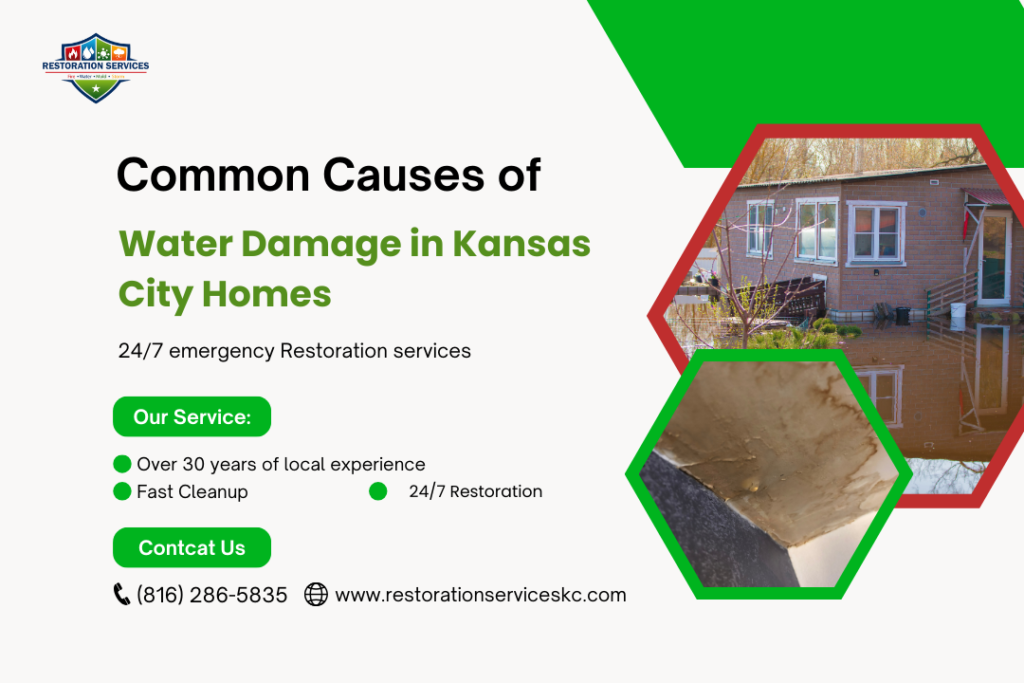
Understanding the common causes of water damage is the first line of defense in protecting your home from structural deterioration and expensive repair bills. In the Kansas City metropolitan area, water-related emergencies can stem from a variety of sources—ranging from severe Midwest thunderstorms to aging internal plumbing systems that fail without warning. At Restoration Services KC, our three decades of experience have taught us that even a minor leak can escalate into a catastrophic mold infestation if the root cause isn’t identified and mitigated immediately. From our headquarters at 9202 Barton St, Overland Park, we provide expert diagnostic and restoration services designed to address the unique hydraulic challenges of our local environment.
Why Identifying the Source of Water Damage is Critical
The primary reason why homeowners often struggle with recurring moisture issues is that they address the symptom (the wet floor) rather than the source (the hidden pipe leak or foundation crack). Water is naturally invasive, following the path of least resistance through floor joists, wall cavities, and electrical conduits.
Throughout my 30-year career in water damage restoration, I have managed countless projects where the “obvious” cause wasn’t the actual culprit. I recall a complex case in Leawood where a homeowner thought their basement was flooding due to heavy rain, but our thermal imaging revealed it was actually a slow-leaking refrigerator line on the first floor that had wiced down through the subflooring. By accurately identifying these common causes of water damage, we can implement a permanent fix that saves you thousands in future reconstruction costs.
A Technical Breakdown of Frequent Water Damage Sources
We have categorized the most prevalent causes of property saturation into three main sectors: internal plumbing, external environmental, and appliance failures.
| Source Category | Primary Cause | Technical Impact | Urgency Level |
| Plumbing Failure | Burst pipes, leaking joints, or corroded supply lines | Rapid saturation of wall cavities and insulation | Critical (Immediate Action) |
| Environmental | Heavy rain, snowmelt, or sewer backups | Foundation pressure and biological contamination | High (Storm-Related) |
| Appliance Issues | Washing machine hoses, dishwashers, or AC drain pans | Steady, slow leaks that often trigger mold growth | Moderate (Detection-Heavy) |
| Roofing Leaks | Damaged shingles, ice dams, or clogged gutters | Damage to attics, ceilings, and structural trusses | High (Weather-Dependent) |
Internal Plumbing: The Hidden Threat Within Your Walls
Internal plumbing failures remain the leading contributor to residential water damage because they are often hidden from plain sight until a major failure occurs.
Corroded Pipes: In many older Kansas City homes, galvanized or copper pipes eventually suffer from corrosion, leading to “pinhole leaks” that can drip for months before staining your ceiling.
Burst Pipes in Winter: As we have discussed in our winter water damage guide, extreme cold causes water to expand and pipes to split, often resulting in high-volume flooding once the ice thaws.
Sewer Backups: This is one of the most hazardous causes, as it introduces “Category 3” black water into your home, requiring specialized antimicrobial sanitation to ensure the space is safe for occupancy.
Environmental Factors: Kansas City’s Climate and Your Property
The local climate in Kansas City is notoriously aggressive toward residential foundations and drainage systems.
Heavy Storm Surge: Intense thunderstorms can overwhelm your gutters and downspouts, causing water to pool around your foundation and enter through basement window wells or foundation cracks.
Hydrostatic Pressure: When the clay-rich soil of Kansas City becomes saturated, it expands and exerts massive pressure on your basement walls, forcing moisture through the porous concrete.
Sump Pump Failure: During a heavy rain event, your sump pump is your last line of defense; if it fails due to mechanical age or a power outage, your basement can become submerged in a matter of hours.
The Danger of Slow Appliance Leaks
While a burst pipe is dramatic, a slow appliance leak is often more damaging because it goes unnoticed until mold remediation becomes necessary.
Washing Machine Hoses: Standard rubber hoses can become brittle and crack under constant pressure; we highly recommend upgrading to braided stainless steel hoses.
HVAC Drain Pans: In the humid Kansas City summers, your air conditioner removes gallons of water from the air. If the drain line is clogged with algae, that water will overflow into your attic or furnace closet.
Frequently Asked Questions: Understanding Water Damage
How do I know if my water damage is from a new leak or an old one?
A fresh leak will typically feel wet and the material may be slightly soft, whereas an old leak often has a yellowish-brown “water ring” stain and the drywall may feel dry but crumbly to the touch.
Does insurance cover all types of water damage?
Generally, insurance covers “sudden and accidental” damage like a burst pipe, but it may not cover damage caused by “gradual maintenance issues” or rising floodwaters unless you have a specific flood rider.
What is the first thing I should do if I find a leak?
Immediately turn off the main water shut-off valve to stop the flow and then contact Restoration Services KC at (816) 286-5835 for professional extraction and drying.
Can a small leak really lead to structural failure?
Yes. Consistent moisture leads to the degradation of cellulose in wood, which causes rot and weakens the load-bearing capacity of your floor joists and wall studs.
Why does water damage often happen in the basement?
Basements are the lowest point in the home, meaning gravity pulls all internal leaks downward. Additionally, basements are directly exposed to groundwater and hydrostatic pressure from the soil.
Trust the Experts at Restoration Services KC
When you are faced with property damage, you need a partner who understands both the mechanics of plumbing and the science of structural drying. At Restoration Services KC, we combine three decades of local experience with the most advanced moisture-detection technology available. Whether you are dealing with a catastrophic flood or a mysterious damp spot on your ceiling, our Overland Park team is ready to respond 24/7 to restore your property and your peace of mind.
Contact us today for a professional site assessment, and let us help you identify the common causes of water damage before they become a disaster!
Official Contact Details
Emergency Hotline: (816) 286-5835
Office Address: 9202 Barton St, Overland Park, KS 66214, United States
Email: joemarshall339@gmail.com
Website: restorationserviceskc.com