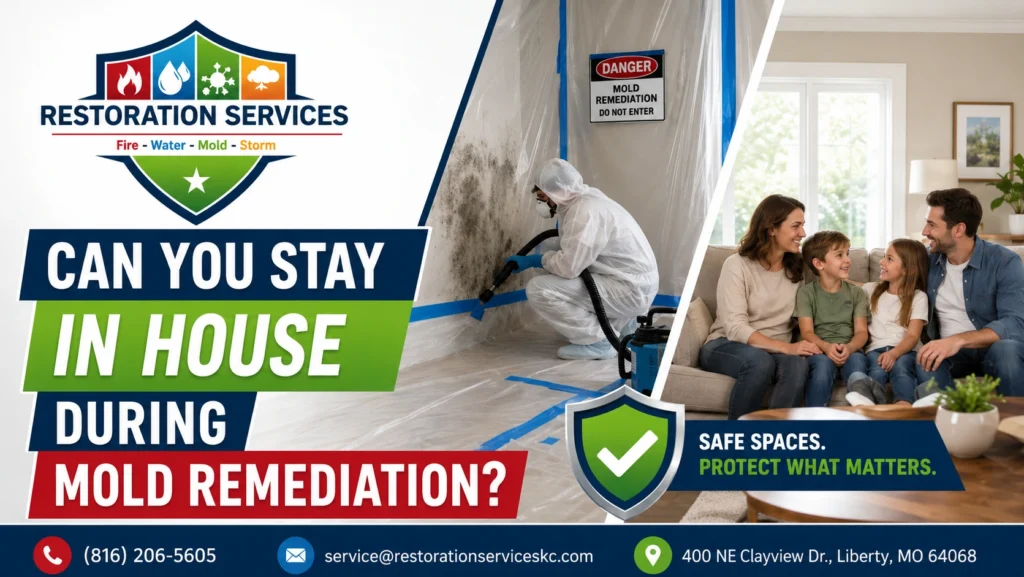
When homeowners discover mold, one of the first questions they ask is: can you stay in house during mold remediation? The answer depends on the size of the mold problem, the location of the affected area, the type of work being done, and the health condition of the people living in the home.
For a small, isolated mold issue, some homeowners may be able to stay in another part of the house while the work is completed. However, if the mold is widespread, if demolition is needed, if HVAC systems are involved, or if anyone in the home has asthma, allergies, immune concerns, or respiratory sensitivity, temporary relocation may be the safer choice.
Mold remediation is designed to remove contamination and reduce risk, but the process can involve containment, cleaning, air filtration, material removal, drying, and restoration. That is why it is important to have the area inspected by professionals before deciding whether to stay home during mold removal.
Restoration Services KC provides professional mold inspection, containment planning, remediation, drying guidance, and restoration support for Kansas City homeowners. To learn more about the company and services, visit the Restoration Services KC homepage.
Is Mold Remediation Safe?
Many homeowners ask, is mold remediation safe? Professional remediation is designed to be controlled and safe when proper steps are followed. The goal is to stop mold from spreading, protect clean areas, remove affected materials when needed, and restore healthy conditions.
The risk usually increases when mold is disturbed without containment. Cutting drywall, pulling carpet, scraping mold, or using fans near visible mold can spread particles into other areas. This is why DIY mold removal can sometimes make the problem worse.
Professional mold removal safety may include containment barriers, HEPA air filtration, controlled demolition, protective equipment, moisture readings, cleaning, sanitizing, and post-cleanup recommendations.
If you already see mold or smell musty odors, schedule professional mold testing and remediation before disturbing the affected area.
When It May Be Safe to Stay During Mold Remediation
You may be able to stay in the house during mold remediation if the affected area is small, isolated, and properly contained. For example, mold in one bathroom, one closet, or a limited wall area may not require the whole home to be empty.
However, the work area must be sealed off. You should not enter the containment zone. Children and pets should stay away. HVAC systems may need to be controlled or temporarily shut off to prevent air movement from spreading particles.
You may be able to stay if:
Mold is limited to one area.
The work area is properly sealed.
Containment barriers are installed.
Air scrubbers or filtration are used.
HVAC airflow is controlled.
No high-risk person is present.
The crew confirms safe access routes.
You avoid the work zone completely.
Even when staying is possible, you may need to adjust your daily routine. If the work area blocks a bathroom, bedroom, kitchen, or basement access, temporary relocation may still be more comfortable.
When You Should Leave During Mold Remediation
There are situations where staying home is not recommended. You may need to leave if the mold problem is large, if demolition is heavy, if the odor is strong, if mold is near HVAC pathways, or if the home has sensitive occupants.
Children, seniors, pregnant individuals, people with asthma, people with allergies, and immune-compromised individuals may be more vulnerable to mold exposure and airborne particles. In these situations, leaving during the work may be safer.
You should also consider leaving if sewage or contaminated water caused the mold risk. Sewage-related mold problems require stronger safety controls because bacteria and other contaminants may be present. If this applies to your home, review emergency sewage cleanup services and speak with the remediation team before entering affected areas.
Stay or Leave During Mold Remediation Table
| Situation | Can You Stay? | Best Action |
|---|---|---|
| Small contained bathroom mold | Possibly | Avoid the work zone |
| One contained bedroom | Depends | Ask the remediation team |
| Basement mold | Depends | Review the containment plan |
| HVAC involvement | Often no | Avoid air spread risk |
| Large demolition | Usually no | Relocate temporarily |
| Health-sensitive household | Better to leave | Prioritize safety |
| Sewage-related mold | No | Professional cleanup required |
| Strong musty odor throughout home | Usually no | Inspect air and moisture issues |
| Mold near living areas | Depends | Use containment and filtration |
Why Mold Remediation Containment Matters
Mold remediation containment is one of the most important parts of safe mold cleanup. Containment means separating the affected area from clean parts of the home. This may include plastic barriers, sealed doorways, negative air pressure, air scrubbers, and controlled access.
Without containment, mold particles can move into hallways, bedrooms, HVAC systems, furniture, clothing, and other clean areas. Good containment helps protect the rest of the home while remediation is in progress.
Containment is especially important when drywall, insulation, flooring, or other porous materials need to be removed. These materials can release dust and mold particles when disturbed.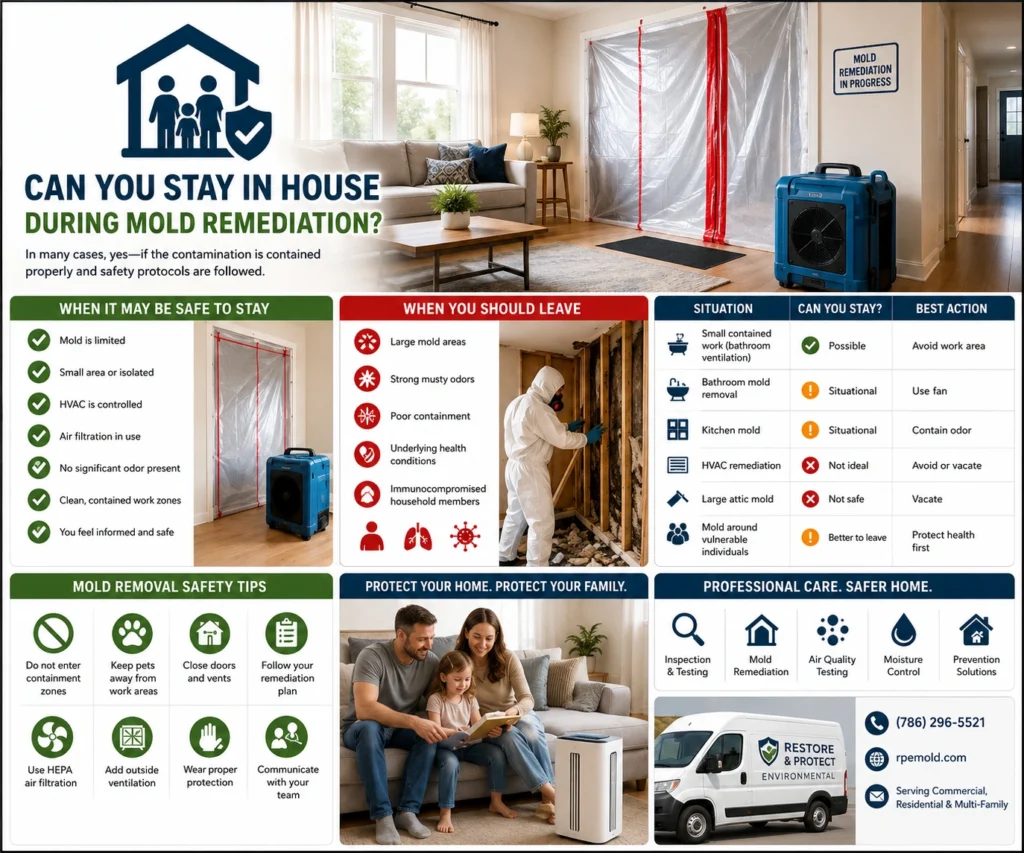
Mold Removal Safety Tips for Homeowners
Do not enter containment zones.
Keep pets and children away from the work area.
Do not move contaminated items into clean rooms.
Follow all re-entry instructions.
Turn off HVAC if the crew instructs you to.
Ask whether air scrubbers are being used.
Keep clean belongings sealed or away from the work area.
Tell the remediation team about allergies, asthma, or immune concerns early.
Do not use household fans on visible mold.
Do not paint over mold before remediation.
These steps help reduce cross-contamination and keep your household safer during the project.
What If Mold Came From Water Damage?
Mold is usually a moisture problem first. If your mold started after a leak, flood, roof issue, burst pipe, or basement water problem, the moisture source must be corrected. Otherwise, mold can return after cleanup.
For water-related mold issues, Restoration Services KC may connect remediation with water damage restoration to help dry affected materials and prevent repeat damage.
If severe weather caused roof leaks, flooding, or water intrusion, storm damage restoration may also be needed.
Can You Sleep at Home During Mold Remediation?
Sometimes, yes. If the mold is small, the work area is far from your bedroom, and containment is strong, you may be able to sleep at home. However, if the bedroom, hallway, HVAC system, or main living area is affected, sleeping at home may not be recommended.
If you notice strong odor, dust, coughing, headaches, allergy symptoms, or discomfort, leave the home and speak with the remediation team. Comfort and safety should come first.
Should Pets Stay During Mold Removal?
Pets should not be near the work area. Dogs, cats, birds, and other pets can be sensitive to dust, odor, equipment noise, and air quality changes. Pets may also walk into containment zones or move contaminated particles through the home.
For small contained jobs, pets may stay in a clean, closed-off area. For larger remediation work, temporary relocation is usually better.
Why Choose Restoration Services KC?
Restoration Services KC helps Kansas City homeowners with mold removal safety, inspection, containment planning, cleanup, affected material removal, drying guidance, and restoration recommendations. Their services include water damage restoration, mold testing and remediation, storm damage restoration, fire damage restoration, air duct cleaning, and dryer vent cleaning.
You can learn more about the team on the About Restoration Services KC page. For questions or scheduling, visit the Contact Us page or call (816) 286-5835.
For additional homeowner education, visit the Restoration Services KC blog.
FAQs About Staying Home During Mold Remediation
Can I sleep at home during mold remediation?
Sometimes. If the work is small, isolated, and properly contained, you may be able to sleep in another part of the home. Larger jobs may require temporary relocation.
Is mold remediation safe?
Professional mold remediation is designed to control spread and reduce risk. DIY disturbance without containment can spread mold to clean areas.
Should pets stay during mold removal?
Pets should stay away from the work area. For larger mold projects, temporary relocation may be safer.
Does containment matter?
Yes. Mold remediation containment helps prevent spores and dust from spreading into clean parts of the home.
Can I use my HVAC during mold remediation?
Only if the remediation team says it is safe. HVAC airflow can spread mold particles if the system is near the affected area.
Who should inspect the mold?
Call Restoration Services KC at (816) 286-5835 or visit the Contact Us page to schedule mold inspection and remediation help.
Get In Touch
Restoration Services KC
Phone: (816) 286-5835
Email: service@restorationserviceskc.com
Serving Kansas City and surrounding areas
Website: https://restorationserviceskc.com/