
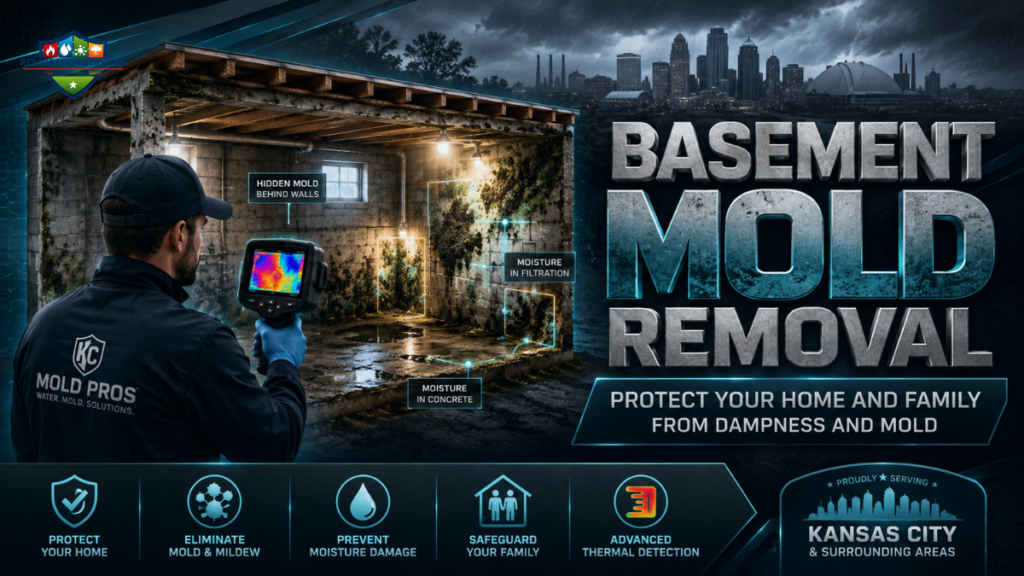
Basements in Kansas City can hold moisture after storms, plumbing leaks, sump pump problems, or foundation seepage. When damp air and wet materials stay inside the basement, mold can begin growing behind walls, under flooring, around baseboards, or near stored items. That is why basement mold removal in Kansas City matters for homes with musty odors, damp walls, or past flooding.
If you notice a musty smell, dark spots, soft drywall, wet carpet, or humidity that will not go away, your basement may need a professional inspection. Basement mold is not only a surface problem. It often connects to moisture, poor airflow, foundation leaks, or old water damage that needs to be corrected.
At Restoration Services KC, we help homeowners across Kansas City, Liberty, Overland Park, Leawood, Lenexa, Shawnee, Olathe, Lee’s Summit, and nearby areas deal with basement mold, moisture damage, and water-related restoration problems. With over 30 years of local restoration experience, we understand why KC basements get damp and how to help you take the right next step.
This guide explains what causes basement mold, when you need cleanup, how professional removal works, and how you can protect your home before mold spreads deeper into finished materials.
Why Basement Mold Happens in Kansas City Homes
Kansas City homes often deal with heavy rain, clay soil, basement seepage, sump pump failure, stormwater, and humidity. These conditions can allow moisture to collect in lower-level spaces. When moisture stays inside the basement, mold can grow on drywall, wood, carpet, insulation, boxes, furniture, and baseboards.
Many homeowners first notice an odor before they see mold. A basement may smell musty after rain or during humid weather. That smell often means moisture is trapped somewhere, even if the floor looks dry. In my experience, basements that smell damp usually need a moisture inspection before the problem becomes larger.
Professional basement mold removal in Kansas City helps you handle both the mold and the reason it started. If you only clean the visible area but ignore moisture, the mold can return. A good cleanup plan should include inspection, containment, removal, drying, and prevention guidance.
What Causes a Musty Smell in the Basement?
A musty smell in the basement usually comes from moisture, poor airflow, or mold growth. The odor may come from wet drywall, damp carpet, stored cardboard, crawlspace air, foundation seepage, or old water damage. You may smell it more after rain because the basement absorbs moisture from the soil or air.
If you ask, What causes a musty smell in the basement, the answer is usually hidden dampness. The smell does not always mean you have a major mold problem, but it does mean the basement needs attention. An odor that keeps returning is a warning sign.
A professional inspection can help find where the smell starts. It may come from a wall cavity, carpet pad, floor crack, sump area, or damp storage space. Once you know the source, you can choose the right cleanup and moisture-control plan.
Common Signs You Need Basement Mold Cleanup
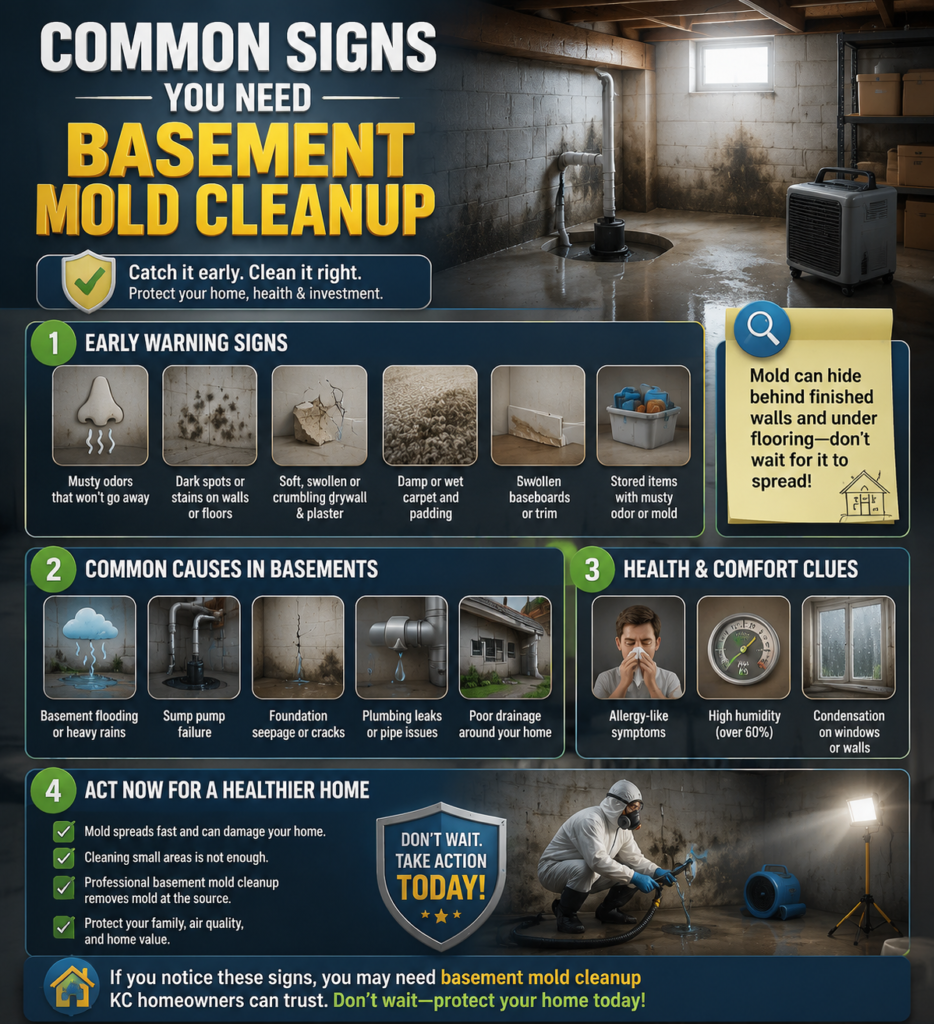
Basement mold can appear slowly. You may notice a smell, a stain, or soft materials before you see major growth. These signs matter because mold can spread behind finished walls and under flooring.
- Musty basement odors, damp walls, dark spots, soft drywall, wet carpet, or swollen baseboards can point to hidden mold.
- Basement flooding, sump pump failure, foundation seepage, plumbing leaks, and poor drainage can create mold-friendly conditions.
- Allergy-like symptoms, high basement humidity, condensation, or stored items with odor may mean the space needs inspection.
If these signs appear, you may need basement mold cleanup that KC homeowners can trust. You should not wait until the mold spreads to living areas or damages finished materials.
Basement Mold Removal Process
The table below explains the main steps used during professional basement mold cleanup.
| Cleanup Step | What Happens | Why It Matters |
| Inspection | The basement is checked for mold signs, moisture, leaks, and affected materials | Finds the source of the problem |
| Moisture Check | Walls, floors, baseboards, carpet, and hidden areas are reviewed | Helps locate trapped moisture |
| Containment | Affected areas may be isolated during cleanup | Helps reduce the spread during work |
| Mold Removal | Mold-affected materials are cleaned or removed based on condition | Removes damaged or contaminated areas |
| Drying | Dehumidifiers and airflow help reduce moisture | Helps prevent mold from returning |
| Prevention Guidance | Drainage, humidity, and repair needs are explained | Helps protect the basement long-term |
What To Do Before Basement Mold Removal
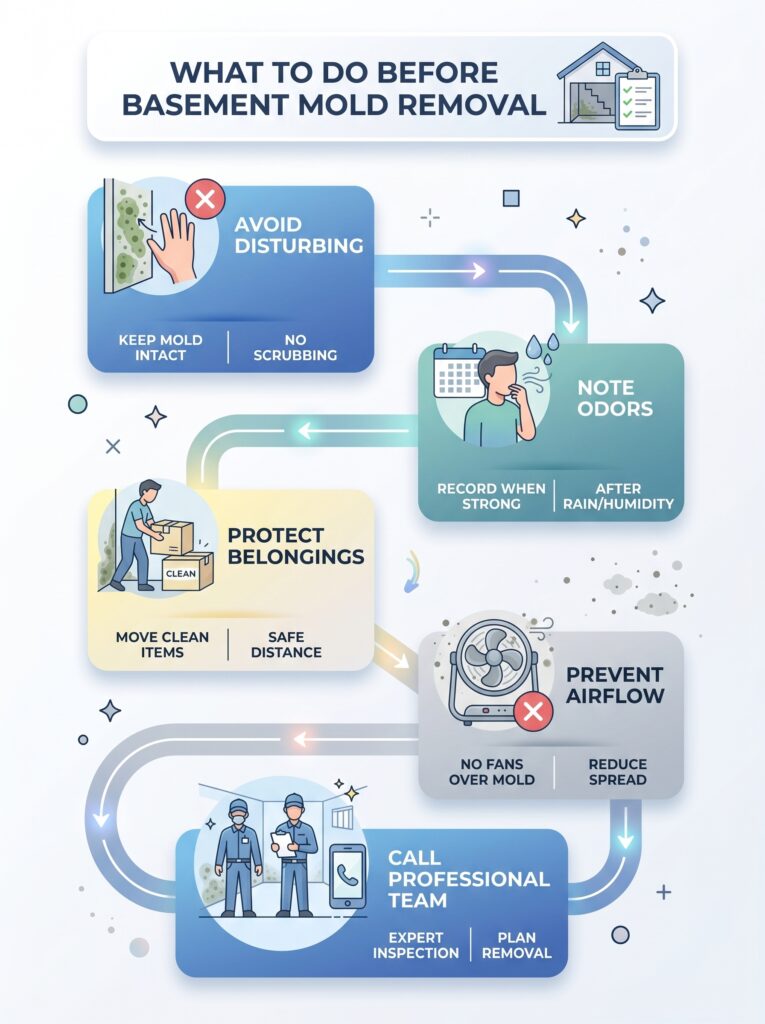
Before cleanup begins, you should avoid disturbing suspected mold areas. Scrubbing or tearing out materials without the right setup can spread particles into the air. You should also avoid covering the odor with sprays or air fresheners because that does not solve the moisture issue.
- Avoid touching moldy materials if you see visible growth on drywall, boxes, carpet, or wood.
- Write down when the odor appears and note whether it gets worse after rain, flooding, or humid days.
- Move clean belongings away from damp areas if you can do so safely without disturbing mold.
- Do not run fans across moldy areas because airflow can spread particles to other rooms.
- Call a professional cleanup team for inspection, containment, removal, drying, and prevention planning.
These steps help protect your home before professional cleanup starts. They also help the inspector understand whether the issue connects to flooding, seepage, humidity, or a plumbing leak.
How Do I Remove Mold From My Basement?
If you ask, How do I remove mold from my basement, the safest answer depends on the size of the mold area and the moisture source. Small surface spots may look easy to clean, but basement mold often grows because the area stays damp. If the water problem continues, the mold can return.
Professional basement mold remediation KC services focus on more than surface cleaning. The team checks moisture, contains affected areas, removes damaged materials when needed, dries the basement, and explains what caused the issue. This gives you a better chance of stopping repeat growth.
Basement mold becomes more serious after flooding. If your basement had standing water, you may need mold cleanup after basement flooding, along with drying and water damage restoration. Wet drywall, carpet padding, insulation, and wood materials can hold moisture longer than you think.
Wet Basement Mold Cleanup After Flooding
A wet basement can turn into a mold problem when water is not removed and dried quickly. Floodwater can soak carpet, drywall, baseboards, stored belongings, framing, and insulation. Even after visible water is gone, moisture may remain inside materials.
Professional wet basement mold cleanup helps identify what can be saved and what needs removal. A technician may check moisture behind walls, under flooring, and around the sump pump area. This is important because basement surfaces can look dry while hidden areas stay damp.
If the basement flooded from a storm, sump pump failure, or foundation seepage, the cleanup plan should include drying and moisture control. Restoration Services KC can help connect water damage restoration in Kansas City with mold cleanup when both issues affect the same space.
Why Professional Basement Mold Removal Near Me Matters
When you search for professional basement mold removal near me, you likely want fast local help and clear answers. A nearby team understands Kansas City basement issues, including stormwater, humidity, clay soil, sump pump failure, and foundation seepage.
Local experience matters because every basement is different. A finished basement in Overland Park may have carpet and drywall concerns. A Liberty home may have foundation seepage or storage-area moisture. A Kansas City basement may have older materials that need careful inspection.
Restoration Services KC helps homeowners find the source, clean affected areas, and reduce future risk. We do not treat basement mold as a simple stain. We look at the moisture pattern, affected materials, and what needs to change so the problem does not keep coming back.
How to Help Prevent Basement Mold
Prevention starts with moisture control. Your basement should stay dry, well-ventilated, and protected from water intrusion. If you already smell mold or see stains, prevention should begin after inspection and cleanup.
- Keep indoor humidity under control with proper dehumidification when needed.
- Make sure downspouts move water away from your foundation.
- Test your sump pump before heavy rain and after long dry periods.
- Check basement walls, window wells, and floor edges after storms.
- Avoid storing cardboard or fabric directly against damp walls or floors.
These steps do not replace professional cleanup when mold is already present. They help reduce the chance of repeat mold after the basement is cleaned and dried.
Related Services That May Help
Basement mold often connects with water damage, storm damage, foundation seepage, or sump pump failure. For better SEO and user experience, this content should use natural contextual internal links.
Use professional mold remediation services when discussing confirmed mold cleanup. Use water damage restoration in Kansas City when discussing basement flooding, wet drywall, or water extraction. Use storm damage restoration services when discussing rain intrusion or stormwater. Use the schedule a basement mold inspection with Restoration Services KC when inviting users to request help.
These anchors are more helpful than generic links. They guide users to the right service and help search engines understand how your restoration pages connect.
Recommended Schema Markup
Schema can help search engines understand your service, location, company, and FAQ content. It does not guarantee ranking, but it improves page clarity for Google and AI systems.
For this page, add Service schema for basement mold removal in Kansas City, LocalBusiness schema for Restoration Services KC, and FAQPage schema for the FAQ section. Keep your business name, phone, email, address, website, and service area consistent.
Also use one H1, clear H2 headings, crawlable internal links, optimized image alt text, and a self-referencing canonical tag. These details help avoid weak technical signals.
Service Areas Around Kansas City
Restoration Services KC helps homeowners with basement mold cleanup, moisture inspection, remediation support, and water damage restoration across Kansas City and nearby areas. Our service area includes Kansas City, Liberty, Overland Park, Leawood, Lenexa, Shawnee, Olathe, Lee’s Summit, and surrounding communities.
Local help matters because Kansas City basements face heavy rain, clay soil, stormwater, sump pump problems, and humidity. A local restoration team understands these risks and can give you more practical next steps.
If your basement smells musty, has visible mold, or stays wet after flooding, early cleanup can help protect your home, indoor comfort, and property value.
Contact Restoration Services KC
Basement mold can spread quietly when moisture stays behind walls, under floors, or around stored materials. A musty smell, wet carpet, or basement stain should not be ignored.
For professional basement mold removal in Kansas City, contact Restoration Services KC. We can inspect damp areas, explain your options, and help with mold cleanup, drying, and prevention support.
Protect your basement before mold spreads. Schedule help with Restoration Services KC today and get local expert support.
Top 5 FAQs About Basement Mold Removal in Kansas City
Why do basements get mold in Kansas City?
Basements get mold because they often collect moisture from heavy rain, foundation seepage, humidity, sump pump failure, or past flooding. Mold grows when damp materials stay wet.
What causes a musty smell in the basement?
A musty smell usually comes from hidden moisture, mold, damp carpet, wet drywall, or poor ventilation. If the smell keeps returning, you should schedule an inspection.
How do I remove mold from my basement?
You should start by finding the moisture source. Small spots may need cleaning, but larger or hidden mold often needs professional removal, drying, and prevention steps.
Do I need mold cleanup after basement flooding?
Yes, you may need mold cleanup if the basement stayed wet or materials were not dried properly. Flooding can leave moisture inside drywall, carpet, framing, and insulation.
When should I call Restoration Services KC?
Call when your basement has a musty smell, visible mold, damp walls, wet carpet, or mold after flooding. Fast cleanup can help reduce damage and repeat growth.
Official Contact Details
Phone: (816) 286-5835
Email: joe@restorationserviceskc.com
Website: https://restorationserviceskc.com
Headquarters: 406 N Clayview Dr, Liberty, MO 64068
Service Area: Kansas City and surrounding areas