Pro servicing in this guide means professional preventive property assessment, maintenance coordination, and restoration support. The phrase is broad rather than the name of one standardized trade. For Overland Park homeowners, landlords, facility managers, and business owners, it describes using qualified specialists to inspect and maintain the systems that protect a property from water, mold, fire, storm, ventilation, and structural damage.
A property contains connected systems. Roofing protects the attic and ceilings. Gutters direct rainwater. Plumbing carries clean water and wastewater. HVAC equipment moves conditioned air. Dryer vents release heat and lint. Drainage protects the foundation. Smoke alarms, electrical systems, and fire-resistant assemblies support occupant safety.
When one system fails, damage can spread into another. A roof defect leads to wet insulation. A plumbing leak damages flooring. A blocked dryer vent creates overheating concerns. A basement drainage problem creates persistent humidity. Preventive professional service helps identify these conditions before they become large restoration projects.
Restoration Services KC provides water, mold, fire, storm, air-duct, and dryer-vent related restoration support. The company can help property owners respond after damage and understand related prevention needs.
What Is Professional Property Maintenance and Why Does It Matter?
Professional property care uses qualified contractors to inspect, test, clean, repair, and document building systems. It does not mean hiring one company for every trade. Plumbing, electrical, roofing, HVAC, structural, and restoration work may each require different licenses, training, equipment, and permits.
The goal is to create a coordinated maintenance plan rather than reacting only when something breaks.
Overland Park properties experience seasonal temperature changes, thunderstorms, wind, hail, heavy rainfall, freezing conditions, humidity, and ordinary material aging. These conditions can expose weak roofing, drainage, plumbing, exterior sealing, and ventilation.
Rental properties also have specific local oversight. Overland Park requires rental licensing and uses an inspection program intended to support well-maintained housing.
Professional maintenance may include:
- Roof and flashing inspection
- Gutter and drainage cleaning
- Plumbing leak checks
- Water-heater review
- Sump-pump testing
- HVAC maintenance
- Air-duct assessment
- Dryer-vent cleaning
- Smoke and carbon-monoxide alarm checks
- Foundation moisture observation
- Exterior caulking and seal inspection
- Emergency contact planning
The owner should keep records of inspections, repairs, warranties, photographs, invoices, and permits. This information helps track recurring conditions and supports insurance or property-management communication after damage.
Preventive Maintenance Services Planning Table
Pro servicing works best when tasks are organized by frequency, season, and risk. The following schedule is a planning framework, not a substitute for manufacturer instructions, local code, or qualified inspection.
| Property area | Suggested review | Warning signs |
| Roof and attic | After major storms and periodically | Missing materials, stains, damp insulation |
| Gutters and outlets | Seasonally | Overflow, separation, foundation pooling |
| Plumbing fixtures | Regularly | Drips, corrosion, slow drainage |
| Water heater | Per manufacturer and contractor guidance | Rust, leaks, unusual sounds |
| Sump pump | Before wet seasons | Failure to activate, blocked discharge |
| HVAC system | Per equipment guidance | Odor, weak airflow, water at unit |
| Dryer vent | Based on use and condition | Long drying time, heat, lint accumulation |
| Basement or crawl space | After heavy rain | Damp odor, stains, standing water |
| Smoke alarms | Per manufacturer and safety guidance | Missing, damaged, or expired device |
| Exterior walls | Seasonally | Cracks, failed sealant, peeling finish |
Pro servicing should prioritize systems capable of causing rapid loss. A small supply-line leak can release significant water. A failed sump pump can flood a lower level. Roof leakage may remain hidden until a ceiling stain appears.
The City of Overland Park provides permitting, licensing, inspection, and construction resources for work that may require official review.
A maintenance plan should assign responsibility. Rental owners need a clear process for tenant reporting. Businesses need staff who know who can shut off water, secure an affected area, and contact emergency contractors.
Why Choose Restoration Services KC for Damage Assessment and Recovery?
Pro servicing should include a restoration partner before an emergency occurs. Restoration companies do not replace routine trade contractors, but they provide specialized support when property materials are damaged.
Restoration Services KC may help with:
- Emergency water extraction
- Structural drying
- Mold inspection and remediation support
- Fire and smoke cleanup
- Storm-damage recovery
- Moisture monitoring
- Air-duct cleaning
- Dryer-vent cleaning
- Damaged-material assessment
- Repair and reconstruction guidance
The company states that it provides local restoration support backed by more than 30 years of experience.
A preselected restoration contact reduces delay after a loss. Property owners already know who to call, where the water shutoff is, how to reach the insurer, and where important documents are stored.
Qualified restoration providers should explain the source, affected materials, drying plan, equipment, monitoring, expected timeline, and repair needs. They should distinguish between services they perform directly and work requiring another licensed trade.
Building a Practical Property-Service Plan
Pro servicing begins with a property inventory. List major systems, equipment age, previous damage, warranty information, and service contacts. Include the roof, water heater, HVAC, sump pump, plumbing supply lines, sewer lateral, appliances, drainage, alarms, electrical panel, ventilation, and exterior openings.
Next, identify high-risk areas. A finished basement with past seepage deserves more frequent review. A mature tree near a sewer lateral may justify periodic inspection. An older water heater may require closer observation. A complex roof with several valleys and penetrations may need professional storm checks.
Create a calendar based on seasons:
Spring
- Inspect winter roof damage
- Test sump pump
- Review grading and drainage
- Check basement moisture
Summer
- Service cooling equipment
- Inspect condensation drains
- Review storm damage
- Clean ventilation systems as needed
Fall
- Clear gutters
- Inspect roof and flashing
- Disconnect vulnerable exterior hoses
- Prepare for freezing temperatures
Winter
- Watch pipes in cold areas
- Monitor ice and roof drainage
- Keep heat consistent
- Inspect for condensation
Keep an emergency folder containing insurance information, utility shutoff instructions, contractor details, property photographs, inventories, and warranties.
The Restoration Services KC homepage provides access to the company’s water, mold, fire, storm, duct, and vent services.
Maintenance Priority and Contractor Table
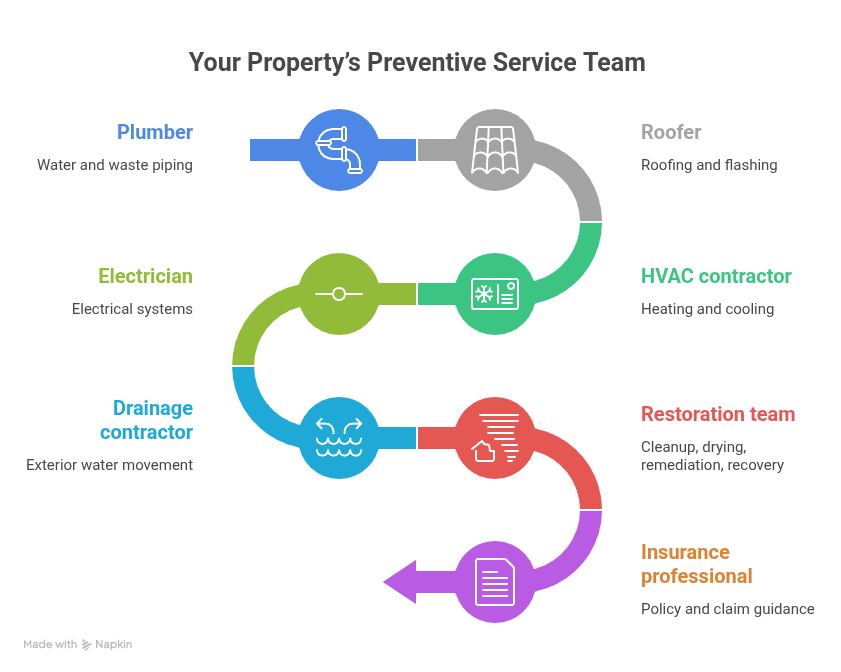
Pro servicing requires knowing which professional to call. Calling the wrong provider delays correction and may allow damage to spread.
| Condition | First contractor | Restoration involvement |
| Active supply-pipe leak | Plumber | Extract and dry affected materials |
| Sewer backup | Sewer professional | Contaminated-water cleanup |
| Roof leak | Roofer | Attic and interior drying |
| Failed sump pump | Plumber or pump specialist | Basement extraction |
| Visible mold | Moisture and remediation professional | Containment, removal, restoration |
| Fire or smoke | Emergency services, then restoration | Cleanup and repair |
| Storm opening | Roofer or emergency board-up team | Water and debris restoration |
| Weak HVAC airflow | HVAC contractor | Duct cleaning if appropriate |
| Dryer vent restriction | Qualified vent professional | Cleaning and damage review |
Pro servicing also includes permit awareness. Overland Park states that many construction permits can be managed through its ePLACE system, and work requiring permits is subject to code and inspection requirements.
Property owners should ask contractors for written scopes, insurance documentation, warranty terms, change-order procedures, and permit responsibility.
After property damage, avoid starting cosmetic repairs before the source is corrected and materials are dry. Painting wet drywall or installing flooring over a damp subfloor can hide the problem rather than solve it.
Tips for Working With Home Service Professionals
Pro servicing is more effective when the property owner communicates clearly and keeps organized records.
Use these tips:
- Describe symptoms and timing accurately
- Share photographs and previous repair history
- Ask who handles permits
- Request a written scope and price
- Verify insurance and qualifications
- Keep invoices and warranties
- Document completion with photographs
Avoid choosing solely by the fastest promise or lowest verbal price. Compare whether the proposals include the same materials, preparation, cleanup, testing, and warranty.
Ask contractors to explain uncertainty. A professional may need to open a small area, use diagnostic equipment, or complete testing before confirming the full scope.
For emergency restoration, speed matters, but documentation still matters. Photograph conditions when safe, preserve damaged items when instructed, and contact the insurer.
Restoration Services KC’s fire and water restoration guide explains how mitigation, drying, cleanup, documentation, and reconstruction connect after major property damage.
Restoration Maintenance After the Immediate Repair
Pro servicing continues after emergency cleanup. Once damaged materials are removed and the property is dry, the owner should confirm that the original failure has been permanently corrected.
For water damage, this means verifying the pipe, appliance, roof, drain, foundation, or drainage repair. For mold, it means resolving the moisture source. For fire, it means completing electrical, structural, and smoke-related repairs. For storm damage, it means restoring the exterior envelope and checking hidden moisture.
The restoration team should provide documentation of affected areas, drying progress, removed materials, and recommended repairs. Keep this with the property’s maintenance records.
Create a post-loss review:
- What failed?
- When was it first noticed?
- Could an inspection have found it earlier?
- Which emergency contacts responded well?
- Did shutoff access work?
- Were contents documented?
- Was insurance communication clear?
- What maintenance interval should change?
The goal is not to guarantee that damage never happens. It is to reduce preventable risk and improve response when an unexpected event occurs.
The company’s common causes of water damage article can support future inspection planning. Property owners can request help through the contact page.
Frequently Asked Questions About Pro Servicing
Pro servicing is not one fixed service package. It is a coordinated approach to professional inspections, maintenance, emergency planning, and restoration readiness.
1. How much does professional property servicing cost?
Cost depends on property size, systems inspected, contractor type, equipment, testing, maintenance frequency, and repairs found. Build a budget by separating routine inspections, annual servicing, emergency reserves, and capital replacements.
2. How often should a property be professionally inspected?
Follow manufacturer instructions and contractor recommendations. High-risk systems and properties with prior damage may require more frequent checks. Review the building seasonally and after severe storms.
3. What documents should property owners keep?
Keep purchase records, warranties, permits, inspection reports, service invoices, photographs, insurance documents, equipment model numbers, contractor contacts, and records of previous water, mold, fire, or storm damage.
4. Who should inspect a water leak?
A plumber identifies and repairs plumbing sources. A roofer handles roof leakage. A restoration professional evaluates affected materials, extraction, drying, and repair needs. More than one provider may be required.
5. Does preventive service guarantee there will be no damage?
No. It can reduce avoidable failures, identify warning signs, and improve emergency response, but storms, equipment failures, accidents, and concealed defects can still occur.
6. Does Restoration Services KC handle all maintenance trades?
Its published focus is restoration involving water, mold, fire, storm damage, air ducts, and dryer vents. Plumbing, electrical, HVAC repair, and roofing installation may require separate qualified contractors.
7. How do I request a restoration assessment?
Call (816) 286-5835, email service@restorationserviceskc.com, or use the company contact page. Explain the source, affected rooms, visible materials, and when the problem started.
Contact Information
Restoration Services KC
Phone: (816) 286-5835
Email: service@restorationserviceskc.com
Website: Restoration Services KC
Serving Overland Park, KS, and the surrounding areas.