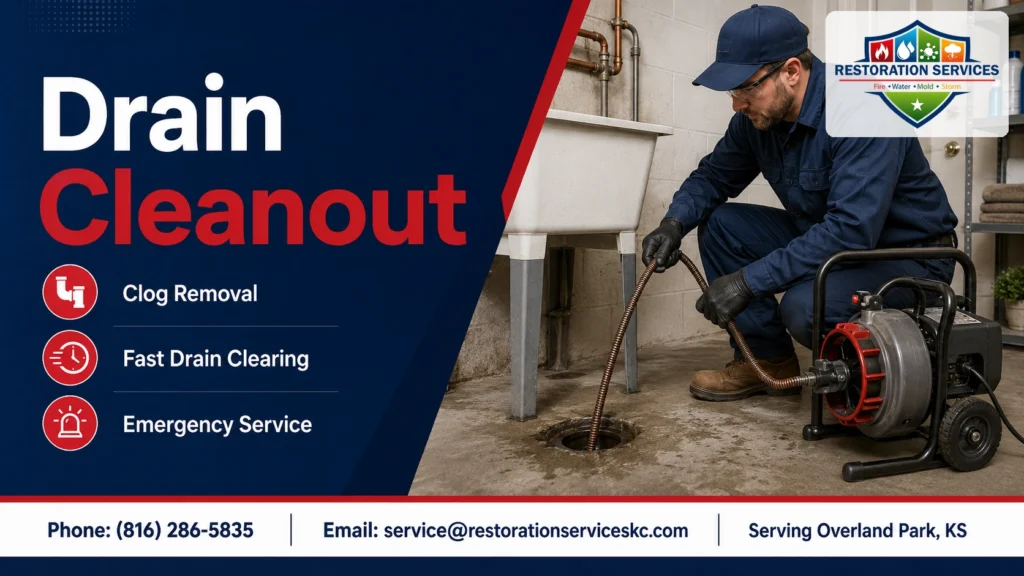
Drain cleanout access gives plumbers a direct entry point into a property’s drainage system, making it easier to inspect, clear, and maintain blocked pipes. For Overland Park homeowners, landlords, and commercial property managers, understanding this small plumbing component can prevent a minor drainage problem from turning into an indoor water emergency. Slow sinks, bubbling toilets, unpleasant drain odors, water backing up into a tub, and repeated clogs may all indicate that the problem is deeper than one fixture.
A cleanout is usually a capped pipe connected to a drain or sewer lateral. Its location depends on the property’s age, design, plumbing layout, and site conditions. It may appear in a basement, utility area, crawl space, garage, yard, or near the foundation. A licensed plumbing professional can use the opening to insert cleaning or inspection equipment without removing toilets or opening finished walls.
Restoration Services KC does not present plumbing cleanout work as its primary service. The company’s role becomes important when a clogged or overflowing drain releases water into flooring, drywall, cabinets, insulation, or lower-level rooms. In that situation, professional water damage restoration can help with extraction, moisture inspection, drying, cleaning, and recovery.
This guide explains how cleanouts work, why local properties need them, what warning signs matter, and when water-damage support may be required.
What Is Drain Cleaning Services Access and Why Does It Matter in Overland Park?
A plumbing cleanout is a service opening connected to a drainpipe. The removable cap allows a qualified technician to reach sections of piping that may be difficult to access through a sink, shower, floor drain, or toilet. Depending on the location and pipe layout, a cleanout can provide access to an individual branch line or the main lateral carrying wastewater away from the building.
This access matters because recurring drainage problems are not always located directly below the affected fixture. Grease, soap residue, hair, mineral buildup, foreign objects, damaged pipe sections, or tree-root intrusion may exist farther down the system. Simply plunging one fixture may temporarily move water without resolving the actual obstruction.
Overland Park contains single-family homes, townhomes, rental properties, offices, restaurants, and commercial buildings with different plumbing designs. Older properties may have piping that has experienced decades of wear. Newer buildings can still develop blockage problems through improper disposal, construction debris, damaged connections, or heavy use.
Seasonal conditions also matter. During periods of heavy rainfall, existing drainage or sewer weaknesses may become more noticeable. Johnson County Wastewater states that the private service lateral connecting a home to the public sanitary sewer main is generally the property owner’s responsibility. The county also regulates and inspects certain residential sewer connection installations, modifications, and repairs.
A cleanout does not prevent every blockage. It provides a practical access route for diagnosis and maintenance. Property owners should avoid opening a pressurized or overflowing cleanout without professional guidance because wastewater may escape suddenly.
Clogged Drain Repair Warning Signs and Inspection Table
Drain cleanout planning becomes more useful when property owners recognize patterns rather than treating every slow fixture as an isolated event. One slow sink may indicate a local trap or branch-line issue. Several slow fixtures, toilet bubbling, floor-drain backup, or wastewater appearing at the lowest point of the building may suggest a deeper obstruction.
The table below helps separate common observations from the type of response they may require. It is not a substitute for an on-site plumbing assessment. It gives homeowners and property managers a clearer way to describe the problem when calling a professional.
| Warning sign | Possible concern | Practical next step |
| One slow sink | Local trap or branch blockage | Stop adding chemical products and request inspection |
| Several slow fixtures | Main drain restriction | Locate cleanout and call a licensed plumber |
| Toilet bubbles when sink drains | Airflow or shared-line restriction | Limit water use until the line is checked |
| Water rises in a floor drain | Downstream blockage | Stop using connected fixtures |
| Sewage odor | Dry trap, leak, vent, or waste issue | Ventilate safely and request professional evaluation |
| Repeated clog returns | Deeper buildup or pipe damage | Consider camera inspection through cleanout |
| Water reaches flooring or walls | Indoor water damage | Begin extraction and moisture inspection quickly |
Drain cleanout access can shorten diagnostic work when it is correctly located and safely usable. A professional may use mechanical equipment, hydro-jetting where appropriate, or a sewer camera to identify the obstruction. The correct method depends on pipe material, condition, diameter, blockage type, and location.
After an overflow, clearing the pipe is only one part of recovery. Water may travel beneath flooring, behind baseboards, into wall cavities, or through ceiling assemblies. The visible puddle can disappear while hidden materials remain damp. The EPA advises acting quickly when indoor materials become wet and notes that rapid drying can reduce the likelihood of mold growth.
Restoration Services KC provides water extraction and drying support when plumbing failures affect building materials. Its fast water extraction resource explains why removal and structural drying should begin promptly after water spreads indoors.
Why Choose Restoration Services KC After a Drain Overflow in Overland Park?
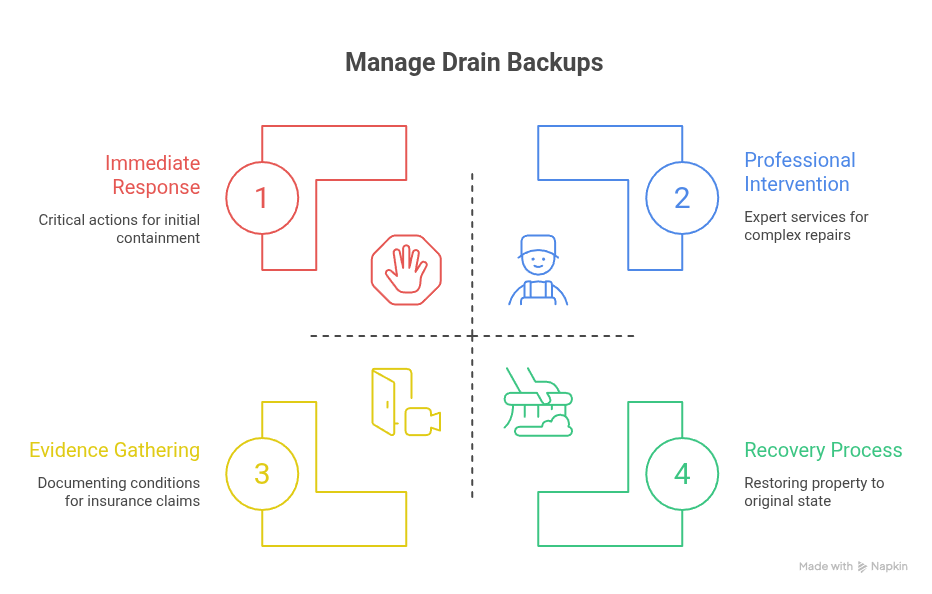
Drain cleanout work should normally be completed by a qualified plumbing professional. Restoration Services KC supports the next stage when the blockage causes water to escape into a home or business. That distinction protects the customer from receiving the wrong type of service.
A plumber focuses on restoring pipe flow and correcting the drainage defect. A restoration team focuses on removing released water, identifying affected materials, drying the structure, cleaning the area, documenting damage, and guiding repairs. Both roles may be necessary after a severe overflow.
Reasons property owners contact Restoration Services KC include:
- Fast response after an indoor overflow
- Water extraction from floors and lower levels
- Moisture checks around walls and cabinets
- Structural drying and dehumidification support
- Cleaning and sanitization based on water conditions
- Damaged-material assessment
- Mold-prevention and restoration guidance
Restoration Services KC presents more than 30 years of Kansas City-area restoration experience and offers support for water, mold, fire, and storm damage.
The team’s experience is especially useful when water has moved beyond the room where the drain backed up. Moisture can follow seams, gaps, underlayment, penetrations, and low points. A visual check alone may not show the full affected area. Restoration planning may include extraction equipment, air movement, dehumidification, moisture monitoring, content relocation, surface cleaning, and repair recommendations.
How Professional Plumbing Cleanout Access Is Used
Drain cleanout openings are designed to give professionals a safer and more direct path into the drainage system. Before removing a cap, the technician should evaluate whether the pipe may be holding water under pressure. A cap that is opened carelessly can release wastewater, debris, or trapped water.
The professional typically begins by reviewing which fixtures are affected. If only one sink is slow, the obstruction may be near that fixture. If toilets, tubs, and floor drains are reacting together, the problem may be farther downstream. The technician may then identify accessible cleanouts and determine which opening provides the best route.
Mechanical cable equipment can break through or retrieve certain blockages. Water-jetting may remove grease and buildup from suitable pipe systems. A camera can help locate roots, offsets, cracks, collapsed sections, or recurring buildup. Not every pipe is suitable for every method. Older or damaged piping may require a more cautious approach.
Johnson County Wastewater explains that lateral cleanouts provide access to private lateral lines and that the lateral connecting the property to the public system is generally the owner’s responsibility.
After flow is restored, the technician may recommend repair, replacement, routine cleaning, or changes in disposal habits. Property owners should request clear documentation about what was found rather than assuming the problem is permanently solved.
When the blockage caused interior water release, Restoration Services KC can assess the affected building materials. Extraction should be coordinated with drying because removing standing water does not automatically dry subfloors, wall cavities, carpet padding, or built-in cabinets.
Drain Problem, Water Category, and Restoration Response Table
Drain cleanout incidents can range from a minor sink overflow to a significant wastewater backup. The source and contamination level affect cleanup decisions. Clean water from a supply-line leak is different from water that has contacted sewage, waste, or heavily contaminated surfaces.
The following table offers general planning information. A professional should classify the actual loss after inspecting the source, materials, and exposure conditions.
| Situation | Primary professional | Restoration concern |
| Slow drain with no overflow | Plumber | Usually no building damage |
| Sink overflow caught immediately | Plumber, then cleanup as needed | Cabinet and floor moisture |
| Tub or toilet overflow | Plumber and restoration team | Flooring, subfloor, baseboard exposure |
| Floor-drain backup | Plumber and restoration team | Lower-level contamination and moisture |
| Sewage release | Plumbing and qualified contaminated-water cleanup | Health precautions, removal, cleaning, drying |
| Repeated hidden leak | Plumber and moisture specialist | Concealed deterioration or mold |
| Backup affecting multiple rooms | Emergency plumbing and restoration | Broad extraction and structural drying |
Drain cleanout access resolves the pipe-side investigation, but the restoration scope depends on where the escaped water traveled. Porous materials may absorb moisture quickly. Carpet padding, drywall, insulation, engineered wood products, and some cabinet materials can hold water even when the surface feels dry.
The EPA recommends professional assistance when water or mold damage involves sewage or other contaminated water. Property owners should avoid direct contact, keep children and pets away, and wait for professionals to determine safe cleanup procedures.
Restoration Services KC can document visible conditions, inspect moisture, remove water, establish drying equipment, and explain which materials may be cleaned or replaced. Contact can be started through the company’s damage-restoration contact page.
Practical Emergency Drain Cleaning Prevention Tips
Drain cleanout maintenance starts with reducing the materials entering the drainage system. No prevention plan removes every risk, especially when roots, pipe defects, ground movement, or aging materials are involved. However, consistent habits can reduce avoidable buildup and help property owners identify problems earlier.
Use these practical tips:
- Keep grease, oil, and food scraps out of sinks
- Use strainers in kitchen and bathroom drains
- Do not flush wipes, paper towels, or hygiene products
- Address repeated slow drainage instead of waiting
- Keep cleanout locations visible and accessible
- Schedule professional inspection for recurring blockages
- Check lower-level drains after heavy rain
Drain cleanout caps should remain secure and in serviceable condition. Do not cover an exterior cleanout permanently with concrete, landscaping structures, or heavy storage. Indoors, avoid building cabinets or finished walls that make the access point impossible to reach. A plumber may need that opening during an urgent backup.
Chemical drain products are not a reliable solution for every obstruction. They may not reach a deep blockage, can create hazardous conditions for technicians, and may affect some plumbing materials. Property owners should tell the plumber about any product already placed in the drain.
Preventive planning should also include knowing where the main water shutoff is, maintaining contact information for a licensed plumber, and having a restoration company available. A clear response plan reduces hesitation when water begins spreading.
Johnson County also operates a voluntary backup-prevention program for certain eligible homeowners who have experienced sanitary sewer backup concerns during extremely heavy rainfall. Property owners should review the official Johnson County backup-prevention information to understand eligibility and requirements.
What Happens When a Drain Backup Causes Water Damage?
Drain cleanout service may restore flow, but indoor recovery continues until affected materials are dry, clean, and stable. The restoration team first gathers information about the source, duration, affected rooms, visible water, and materials involved. Safety concerns such as electrical exposure, unstable ceilings, contaminated water, and slippery surfaces are considered before work begins.
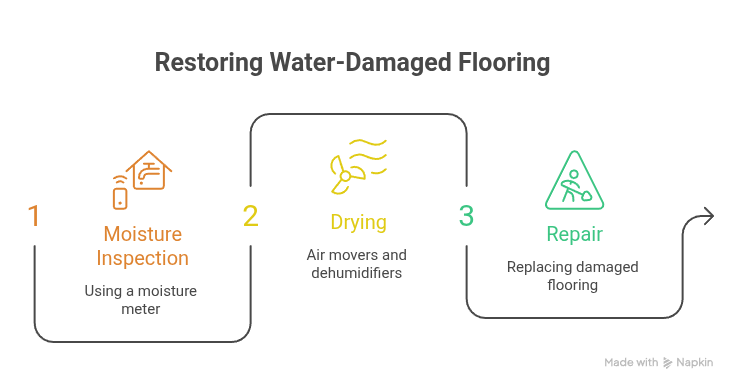
Standing water is extracted using equipment appropriate to the area. Carpet may require water removal from both the face material and padding. Hard flooring may need inspection at seams and perimeter edges. Built-in cabinets can absorb water at toe kicks, side panels, and unfinished edges.
The next stage is moisture mapping. Technicians inspect nearby walls, baseboards, subfloors, ceilings, and connected rooms. Air movers and dehumidifiers may be positioned to support evaporation and moisture removal. The equipment plan should be adjusted as readings change.
Cleaning requirements depend on the water source. A clean sink overflow is not handled the same way as a wastewater backup. Contaminated porous materials may require removal rather than simple drying. The restoration professional should explain why each material is being cleaned, dried, monitored, or discarded.
Documentation can include photographs, moisture readings, affected-room notes, equipment records, and repair recommendations. This information may help the property owner communicate with an insurer, plumber, tenant, building manager, or repair contractor.
Restoration Services KC’s flood cleanup guide provides additional information on extraction, drying, documentation, and professional recovery after indoor water events.
Frequently Asked Questions About Drain Cleanout Access
Drain cleanout questions often focus on cost, timing, location, and responsibility. Prices cannot be accurately set without understanding the blockage, access, pipe condition, equipment required, and whether property damage occurred. The answers below are designed for quick search results and AI-generated summaries while remaining clear about when professional inspection is necessary.
1. How much does drain cleanout service cost?
The cost depends on the cleanout location, blockage depth, pipe condition, equipment used, and whether camera inspection or repair is required. A simple accessible blockage generally costs less than root intrusion, collapsed piping, excavation, or repeated main-line problems. Request a written estimate from a licensed plumbing provider.
2. How long does a drain cleanout take?
A straightforward blockage may be cleared during one visit. Complex problems can take longer when the technician must locate the cleanout, inspect the line, remove roots, use specialized equipment, or plan repairs. Water-damage drying may continue for several days after the plumbing problem is corrected.
3. Where is a plumbing cleanout usually located?
It may be in a basement, crawl space, utility room, garage, yard, or near the foundation. Exterior cleanouts often appear as capped vertical pipes. The location depends on building design and plumbing configuration. A plumber can help locate an inaccessible or concealed opening.
4. Can I open a cleanout myself?
Opening a cleanout can release wastewater or pressurized water. It is safer to let a qualified professional assess the situation, especially when several fixtures are backed up or the lowest drain is overflowing.
5. Who is responsible for the sewer lateral in Johnson County?
Johnson County Wastewater states that the private service line connecting the property to the public sewer main is generally the homeowner’s responsibility for maintenance, repair, and replacement. Specific conditions should be confirmed with the county and a licensed contractor.
6. When should I call a restoration company?
Call when water has reached flooring, drywall, cabinets, insulation, carpet, ceilings, or multiple rooms. Restoration support is also important when the water is contaminated, has remained in place, or may have traveled into hidden building cavities.
7. Does clearing the blockage remove the water-damage risk?
No. Restoring pipe flow does not dry wet construction materials. Extraction, moisture inspection, structural drying, cleaning, and material assessment may still be required after the drain has been cleared.
Contact Information
Restoration Services KC
Phone: (816) 286-5835
Email: service@restorationserviceskc.com
Website: Restoration Services KC
Serving Overland Park, KS, and the surrounding areas.