
Mold inside a home is more than an appearance problem. It can affect indoor air quality, damage building materials, create musty odors, and make your living space feel unsafe. For many homeowners, the first question is simple: how much does mold remediation cost?
The answer depends on several factors, including how much mold is present, where it is growing, what materials are affected, whether containment is needed, and whether the moisture source is still active. A small bathroom mold issue may cost much less than mold hidden behind drywall, inside insulation, under flooring, in a basement, or near HVAC pathways.
For Kansas City homeowners, mold problems often begin after water damage, basement flooding, roof leaks, plumbing leaks, storm damage, humidity issues, or poor ventilation. Since mold usually starts with moisture, the first step is identifying and correcting the water source. If your home recently experienced a leak or flood, review professional water damage restoration before mold spreads further.
If mold is already visible or your home smells musty, Restoration Services KC provides professional mold testing and remediation to help identify the issue and restore affected areas safely.
What Is Mold Remediation?
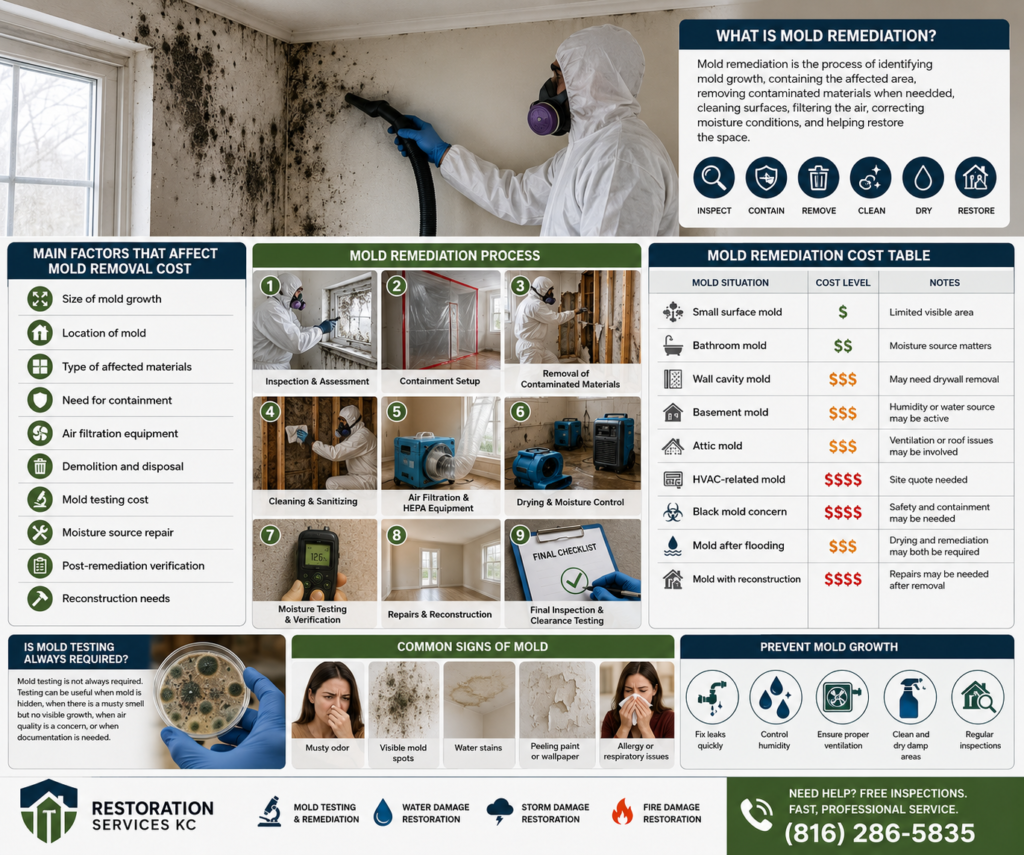
Mold remediation is the process of identifying mold growth, containing the affected area, removing contaminated materials when needed, cleaning surfaces, filtering the air, correcting moisture conditions, and helping restore the space.
Many people use the terms mold removal and mold remediation the same way. However, remediation is usually a more complete process. It does not only focus on removing visible mold. It also focuses on controlling the cause, reducing spread, and preventing repeat growth.
A professional mold remediation Kansas City service may include inspection, moisture readings, containment, air filtration, material removal, cleaning, sanitizing, drying, and repair planning.
Average Mold Remediation Cost: Why Prices Vary
Mold remediation cost is not one-size-fits-all. Every property is different. The cost depends on the size of the affected area, the location of mold, the type of material involved, and the level of safety control required.
A small surface mold issue on a non-porous area may be relatively simple. Mold behind walls, under floors, inside insulation, in basements, in attics, or around HVAC systems can require more work. These projects may need containment barriers, negative air machines, HEPA filtration, demolition, disposal, cleaning, drying, and reconstruction.
On its homepage, Restoration Services KC notes that mold removal cost can vary based on severity and affected area, and they provide free inspections to give accurate estimates. Their site also highlights emergency restoration support, mold testing, water damage restoration, storm damage restoration, and fire damage restoration services for Kansas City area homes.
Main Factors That Affect Mold Removal Cost
The biggest factor is the size of the mold growth. A small patch is usually easier to treat than mold spread across multiple rooms. Larger areas require more labor, containment, cleaning, equipment, and disposal.
Location also matters. Mold in a bathroom may be easier to access than mold inside a wall cavity or attic. Basement mold can be more complex because humidity, foundation seepage, flooding, or poor drainage may still be active. HVAC-related mold requires careful inspection because air movement can spread particles through the home.
Material type is another cost factor. Mold on hard surfaces may be cleaned in some cases. Mold inside drywall, insulation, carpet padding, wood materials, or porous belongings may require removal. If demolition is needed, the total project cost can increase.
Testing may also affect price. Mold testing cost may apply when mold is hidden, when air quality is a concern, when someone in the home has allergies or respiratory sensitivity, or when documentation is needed for insurance, real estate, or post-remediation verification.
Common Mold Remediation Cost Factors
Common cost factors include the size of mold growth, location of mold, type of affected materials, need for containment, air filtration equipment, demolition and disposal, mold testing cost, moisture source repair, post-remediation verification, and reconstruction needs.
If the mold started after a flood, leak, or storm, the project may involve both drying and remediation. In that case, Restoration Services KC’s storm damage restoration and water damage services may be relevant depending on the source of moisture.
Mold Remediation Cost Table
| Mold Situation | Cost Level | Notes |
|---|---|---|
| Small surface mold | Lower cost | Limited visible area |
| Bathroom mold | Low to moderate | Moisture source matters |
| Wall cavity mold | Moderate to high | May need drywall removal |
| Basement mold | Moderate to high | Humidity or water source may be active |
| Attic mold | Higher | Ventilation or roof issues may be involved |
| HVAC-related mold | Site quote needed | Air system concern |
| Black mold concern | Site quote needed | Safety and containment may be needed |
| Mold after flooding | Moderate to high | Drying and remediation may both be required |
| Mold with reconstruction | Higher | Repairs may be needed after removal |
Is Mold Testing Always Required?
Mold testing is not always required. If mold is clearly visible and the cause is obvious, a professional may be able to create a remediation plan based on inspection and moisture findings. However, testing can be useful when mold is hidden, when there is a musty smell but no visible growth, when air quality is a concern, or when documentation is needed.
Mold testing cost may include air samples, surface samples, lab analysis, or post-remediation verification. Testing can help confirm the scope of the problem and whether cleanup was successful.
If you are unsure whether testing is needed, visit the mold testing and remediation page or schedule an inspection through Contact Us.
What About Black Mold Remediation Cost?
Black mold remediation cost can be higher when the affected area is large, hidden, contaminated, or difficult to access. The term “black mold” often creates fear, but the important point is that any suspected mold growth should be handled carefully.
Do not disturb large mold areas yourself. Do not run fans directly on visible mold. Do not paint over mold. These actions can spread particles or hide the problem without fixing it.
Professional black mold remediation may require containment, protective equipment, air filtration, controlled removal, cleaning, drying, and verification. Because every situation is different, a site inspection is the best way to estimate the real cost.
Mold Remediation Tips for Homeowners
- Do not paint over mold. Paint may cover stains temporarily, but it does not remove contamination or fix moisture.
- Do not run household fans on visible mold. Air movement can spread spores or particles to clean areas.
- Fix the moisture source first. Mold will return if the leak, humidity, condensation, flooding, or drainage issue continues.
- Keep children, older adults, and sensitive people away from affected areas when possible.
- Avoid disturbing large mold areas. Cutting, scraping, or tearing out materials without containment can spread contamination.
- Take photos before cleanup. This may help with documentation.
- Schedule an inspection if mold is hidden, spreading, or connected to water damage.
- Ask whether containment is needed. Containment helps separate affected areas from clean areas during remediation.
Can You Remove Mold Yourself?
Small surface mold on a hard, non-porous area may be manageable for some homeowners. However, larger mold growth should be handled professionally. If the affected area is large, if mold is inside walls, if there is a musty smell, if water damage occurred, or if someone in the home has health sensitivities, professional help is safer.
DIY cleaning often misses hidden moisture. If drywall, insulation, carpet pad, subflooring, or framing remains damp, mold may return. Professional mold remediation Kansas City services use moisture detection, containment, filtration, and proper removal methods to reduce that risk.
Does Insurance Cover Mold Remediation?
Insurance coverage depends on the cause of the mold. If mold results from a sudden and covered water event, some policies may help cover cleanup. If mold is caused by long-term humidity, poor maintenance, slow leaks, or gradual seepage, coverage may be limited or excluded.
Restoration Services KC states that many policies cover sudden water damage and related cleanup, and their team helps with documentation and claim support.
Because policies vary, homeowners should review their insurance documents and speak with their carrier.
Why Choose Restoration Services KC?
Restoration Services KC helps Kansas City homeowners with mold testing, mold remediation, water damage restoration, storm damage restoration, fire damage restoration, air duct cleaning, and dryer vent cleaning. Their website describes them as all-in-one restoration specialists with certified mold pros, free mold inspections, and emergency restoration support.
The company focuses on restoring homes with care, clear communication, and long-lasting solutions. Their services include inspection, moisture checks, containment when needed, air cleaning, safe material replacement, drying, cleanup, and repair planning.
To learn more about the company, visit the About page. For emergency support or a free assessment, visit Contact Us or call (816) 286-5835. You can also start from the Restoration Services KC homepage to review all services.
FAQs About Mold Remediation Cost
How much does mold remediation cost?
Mold remediation cost depends on the size of the affected area, location, material type, containment needs, demolition, testing, and repairs. A professional inspection is the best way to get an accurate quote.
Is mold testing always required?
No. Mold testing is not always required, but it can help when mold is hidden, air quality is a concern, or documentation is needed.
What affects black mold remediation cost?
Black mold remediation cost depends on the amount of growth, where it is located, whether containment is needed, and whether affected materials must be removed.
Can I remove mold myself?
Small surface mold may be manageable, but larger areas, hidden mold, mold after water damage, or mold near HVAC systems should be handled professionally.
Does insurance cover mold remediation?
Sometimes. Coverage depends on whether the mold came from a covered water event. Gradual moisture issues may not be covered.
Who should I call for professional mold remediation Kansas City?
Call Restoration Services KC at (816) 286-5835 or visit the Contact Us page for inspection and remediation support.
Get In Touch
Restoration Services KC
Phone: (816) 286-5835
Email: service@restorationserviceskc.com
Serving Kansas City and surrounding areas
Website: https://restorationserviceskc.com/