
A flooded basement can create serious stress for any homeowner. Water on the floor may look like the main problem, but the real damage often goes much deeper. Floodwater can soak carpet, drywall, insulation, framing, baseboards, stored boxes, furniture, and hidden wall cavities. That is why knowing how to dry out basement after flooding is important.
If your basement has standing water, wet walls, damp carpet, or a musty smell, quick action matters. Moisture that stays trapped can lead to structural damage, poor indoor air quality, and mold growth. For Kansas City homeowners, basement flooding can happen after heavy rain, sump pump failure, sewer backup, foundation seepage, broken pipes, or storm damage.
Restoration Services KC helps homeowners and businesses with fast water extraction, drying, moisture checks, cleanup, and repair planning. You can visit the Restoration Services KC homepage to learn more about their emergency restoration support.
Why Basement Flooding Needs Fast Action
Basement flooding should never be ignored. Even a few inches of water can move into porous materials and hidden spaces. Carpet padding can hold water underneath the surface. Drywall can wick moisture upward. Wood framing can stay damp behind finished walls. Stored cardboard boxes can become a mold source quickly.
The first goal is to stop the water from spreading. The second goal is to remove standing water. The third goal is to dry the structure completely. This is where professional flooded basement cleanup and basement water removal are important.
If the flooding came from rain, a failed sump pump, or a plumbing issue, you may need professional water damage restoration to remove water and control moisture before secondary damage begins.
Common Causes of Basement Flooding in Kansas City
Kansas City homes can experience basement flooding for several reasons. Heavy rain can overwhelm drainage systems. Older foundations may allow seepage. Sump pumps may fail during storms. Sewer backups can push contaminated water into lower levels. Broken water lines, appliance leaks, and water heater failures can also flood basement areas.
Storm-related flooding can also create roof leaks, exterior drainage issues, and structural exposure. If flooding happened during severe weather, you may also need storm damage restoration to address the cause of the water intrusion.
Understanding the source matters because clean water, stormwater, and sewage require different cleanup steps.
Step 1: Make Sure the Basement Is Safe
Before entering a flooded basement, think about safety first. Do not walk into standing water if electricity may still be active. Water and electrical systems are a dangerous combination. If the water level is high, if outlets are underwater, or if the breaker panel is in the affected area, stay out and call qualified help.
Also avoid contact if sewage may be involved. Sewer backup water can contain bacteria and harmful contaminants. In that situation, do not use household fans or try to clean everything yourself. Professional cleanup and sanitizing are needed.
Safety should always come before cleanup.
Step 2: Stop the Water Source
If the water came from a broken pipe, shut off the main water supply if you can do it safely. If the flooding came from a sump pump failure, avoid touching electrical equipment in wet conditions. If the water came from outside during a storm, wait until the active water intrusion slows before major drying begins.
Stopping the source helps prevent more damage. Without source control, water removal may only provide temporary relief.
Step 3: Remove Standing Water
The next step in how to dry out basement after flooding is removing standing water. Small clean-water spots may be handled with a wet/dry vacuum, but a true basement flood usually needs commercial extraction equipment.
Professional extraction removes water faster and more thoroughly than household tools. This helps reduce moisture exposure to flooring, walls, trim, and contents. Fast basement water removal also helps reduce the risk of mold.
For emergency extraction and drying support, contact Restoration Services KC or call (816) 286-5835.
Step 4: Remove Wet Porous Materials
After water extraction, wet porous materials may need to be removed. Carpet padding often holds water and contamination. Drywall may need to be cut out if moisture has moved behind the wall. Insulation can stay wet inside wall cavities. Cardboard boxes, paper items, and upholstered furniture can also hold moisture.
Materials that cannot be fully dried or sanitized may create odor and mold risk. This is especially important after sewer backups or stormwater flooding.
Common items that may need removal include:
- Wet carpet pad
- Soaked cardboard
- Contaminated fabric items
- Damaged drywall
- Wet insulation
- Swollen baseboards
- Waterlogged stored belongings
The goal is not just to make the basement look dry. The goal is to make sure hidden materials are actually dry.
Step 5: Use Air Movers and Dehumidifiers
A basement drying service uses professional air movers and dehumidifiers to dry the structure. Air movers increase airflow across wet surfaces. Dehumidifiers pull moisture out of the air. Together, they help dry walls, floors, framing, and remaining materials.
Household fans are usually not enough for major basement flooding. They may move air, but they do not remove enough moisture from the space. In some cases, fans can also spread contaminants if mold or sewage is present.
Professional drying is controlled, measured, and adjusted based on moisture readings.
Step 6: Check Hidden Moisture
A basement can look dry while still holding moisture behind walls or under flooring. That is why moisture meters are important. Professionals use moisture readings to find wet spots that are not visible.
Hidden moisture may stay in:
- Wall cavities
- Carpet padding
- Subflooring
- Wood framing
- Behind baseboards
- Under cabinets
- Around foundation walls
Moisture readings help confirm whether drying is working. They also help prevent mold after basement flood damage.
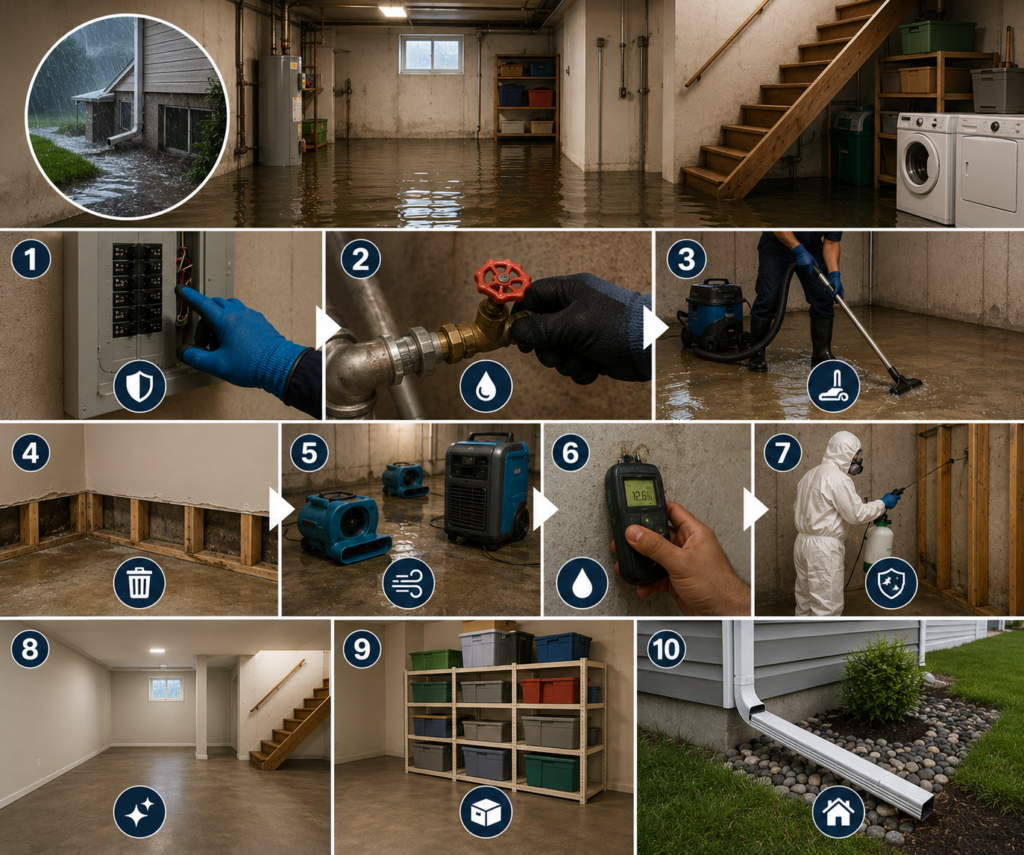
Basement Drying Table
| Step | What Happens | Why It Matters |
| Safety check | Electrical and contamination risks are reviewed | Helps prevent injury |
| Water extraction | Standing water is pumped or vacuumed out | Stops water spread |
| Material removal | Wet porous materials are removed if needed | Reduces mold risk |
| Air movement | Air movers circulate controlled airflow | Speeds drying |
| Dehumidification | Moisture is removed from the air | Controls humidity |
| Moisture readings | Hidden wet areas are checked | Confirms drying progress |
| Sanitizing | Affected areas are cleaned | Reduces contamination |
| Repairs | Damaged areas are restored | Returns basement to use |
How to Prevent Mold After Basement Flood
Mold prevention starts with fast drying. Mold needs moisture, organic material, and time. A flooded basement often provides all three. The best way to prevent mold after basement flood damage is to remove water quickly, dry hidden areas, and monitor humidity.
Here are practical mold prevention steps:
Remove standing water as soon as possible. Pull wet carpet padding if it cannot be dried. Throw away soaked cardboard and paper materials. Keep basement humidity low with dehumidification. Open wall cavities when moisture is trapped. Sanitize hard surfaces after cleanup. Use professional moisture meters to confirm drying. Watch for musty smells after the basement appears dry.
If you already smell mustiness, see visible growth, or suspect hidden contamination, schedule mold testing and remediation before the issue spreads deeper into the basement.
When DIY Basement Drying Is Not Enough
DIY cleanup may work for a small clean-water spill. It is usually not enough for a flooded basement. If water reached drywall, carpet pad, insulation, finished flooring, or stored belongings, professional drying is the safer choice.
You should call a basement drying service when:
The water covers a large area. Water sat for several hours or longer. The basement has a musty smell. Sewage or stormwater is involved. Drywall or insulation is wet. You cannot locate the water source. Mold is visible. The basement keeps feeling humid after cleanup.
Professional restoration helps reduce long-term damage and gives you a clearer drying plan.
Why Choose Restoration Services KC?
Restoration Services KC provides local support for water, fire, mold, and storm-related property damage in Kansas City and surrounding areas. Their team helps with extraction, drying, dehumidification, cleaning, moisture checks, and repair planning.
Homeowners choose Restoration Services KC because the company offers clear communication, fast support, and complete restoration help. You can learn more about the company on the About page and explore their full services from the homepage.
If you need fast help now, visit the Contact Us page or call (816) 286-5835.
FAQs About How to Dry Out Basement After Flooding
How long does it take to dry a flooded basement?
Minor flooding may dry in a few days. Larger flooding can take longer depending on how much water entered, what materials were affected, and whether hidden moisture remains behind walls or under flooring.
Can I use fans to dry my basement?
Household fans may help with small surface moisture, but they are not enough for wet drywall, carpet pad, insulation, or hidden moisture. Professional air movers and dehumidifiers are usually needed after basement flooding.
What should I remove after basement flooding?
Wet carpet pad, soaked cardboard, contaminated porous items, damaged drywall, wet insulation, and waterlogged belongings may need removal. The exact decision depends on water type and material condition.
How do I prevent mold after basement flood damage?
Start drying immediately, remove wet porous materials, keep humidity low, sanitize affected surfaces, and use moisture readings to confirm hidden areas are dry.
Who should I call for flooded basement cleanup?
Call Restoration Services KC at (816) 286-5835 for flooded basement cleanup, basement water removal, drying, and mold prevention support in Kansas City and nearby areas.
Get In Touch
Restoration Services KC
Phone: (816) 286-5835
Email: service@restorationserviceskc.com
Serving Kansas City and surrounding areas
Website: https://restorationserviceskc.com/