
What to do when a pipe bursts in your house starts with one urgent goal: stop the water as quickly and safely as possible. A burst pipe can release a large amount of water into your home in a very short time. The water may spread across floors, soak into drywall, run under cabinets, damage ceilings, enter basements, and reach electrical areas before you fully understand how serious the problem is.
When a pipe bursts, you are not only dealing with visible water. You may also be dealing with hidden moisture inside wall cavities, flooring systems, insulation, baseboards, trim, carpet padding, and rooms below the leak. That is why a burst pipe should be handled as a water damage emergency, not only as a plumbing repair.
A plumber repairs the broken pipe. A restoration company handles the water damage. Both matter. If water has spread through the home, professional drying, moisture inspection, extraction, and cleanup can help reduce long-term damage. For local help, Restoration Services KC provides emergency restoration services for Kansas City homeowners and surrounding areas. You can learn more about the company’s restoration support through their emergency restoration services in Kansas City.
This guide explains what to do immediately, what to avoid, when to call professionals, how burst pipe cleanup works, and why fast action matters after pipe burst water damage.
What to Do When a Pipe Bursts in Your House First
The first thing to do when a pipe bursts in your house is shut off the water supply. If the pipe is still spraying or leaking heavily, every minute matters. Find the main water shutoff valve and turn it off. In many homes, the main shutoff may be located in the basement, crawl space, utility room, garage, near the water heater, or where the main water line enters the property.
If the broken pipe is connected to a sink, toilet, washing machine, dishwasher, or water heater, there may also be a local shutoff valve near that fixture. Turning off the local valve may stop water from that specific area, but if you are not sure, use the main shutoff valve.
Do not spend too much time searching alone if water is spreading fast. Call for help while you look. Ask a family member, neighbor, plumber, or restoration team for guidance. If the leak is severe, shutting off the water is more important than saving belongings in the first few minutes.
After the water is off, open faucets in the home to relieve pressure from the plumbing system. This may help drain remaining water from the lines. If the burst happened because of freezing weather, do not rush to heat pipes aggressively with open flames or unsafe heat sources. Focus on safety and professional help.
What to Do When a Pipe Bursts in Your House and Water Is Near Electricity
Electrical safety is one of the most important parts of burst pipe cleanup. If water is near outlets, power strips, appliances, light fixtures, the breaker panel, or plugged-in electronics, do not walk through standing water. Water and electricity can create a serious shock risk.
If you can safely reach the breaker panel without stepping into water, you may turn off power to the affected area. If the panel is wet, surrounded by water, or in a flooded basement, do not touch it. Wait for emergency professionals or the utility company.
Do not unplug electronics while standing in water. Do not use a wet/dry vacuum in standing water if there is any chance electricity is active in the area. Do not use household fans near wet electrical outlets or wet cords. Safety comes before cleanup.
Pipe burst water damage often spreads beyond the first visible room. Water may travel under walls, through floors, and into the ceiling below. If you see water dripping from light fixtures, ceiling fans, smoke detectors, or recessed lights, treat the situation as urgent and avoid the area.
What to Do When a Pipe Bursts in Your House Before Help Arrives
After the water source is stopped and electrical danger is avoided, begin reducing damage only if it is safe. Start by moving dry belongings away from the wet area. Lift rugs, shoes, boxes, furniture, books, documents, and electronics from the floor. If furniture legs are sitting on wet carpet or hardwood, place foil, plastic, or blocks under the legs until professionals arrive.
Take photos and videos before moving too much. Insurance companies often need clear documentation. Capture wide shots of each affected room and close-up photos of damaged flooring, walls, ceilings, cabinets, furniture, and personal items. Keep receipts for emergency repairs, plumbing work, drying services, and temporary lodging if needed.
If there is standing water and it is safe to enter the area, you can begin removing small amounts with towels, a mop, or a wet/dry vacuum. However, do not rely only on towels when water has reached drywall, carpet padding, cabinets, or subflooring. Surface cleanup does not mean the structure is dry.
The biggest mistake many homeowners make is thinking the problem is solved once the visible water is gone. Moisture can remain trapped behind baseboards, under vinyl, inside carpet padding, beneath hardwood, and inside insulation. That hidden moisture can lead to musty odors, material swelling, stains, and mold concerns.
Burst Pipe Cleanup Table
| Step | What to Do | Why It Matters |
| Shut off water | Turn off the main valve or local fixture valve | Stops more water from entering the home |
| Avoid electricity | Stay away from wet outlets, cords, panels, and appliances | Reduces shock and fire risk |
| Take photos | Document rooms, belongings, walls, ceilings, and flooring | Helps support an insurance claim |
| Move dry items | Relocate valuables, rugs, electronics, and furniture | Reduces additional property loss |
| Call a plumber | Repair or replace the broken pipe | Stops the plumbing source |
| Call restoration | Extract water, dry materials, and inspect moisture | Helps prevent hidden water damage |
| Monitor moisture | Watch for stains, musty smells, soft drywall, or warped floors | Helps catch secondary damage early |
| Ask about mold | Request moisture readings and mold-risk guidance | Helps prevent repeat problems |
What to Do When a Pipe Bursts in Your House in Kansas City
Kansas City homes can experience pipe bursts for several reasons. Freezing weather can cause water inside pipes to expand. Older pipes may weaken over time. High water pressure can stress plumbing lines. Corrosion can create hidden weak spots. Poor insulation in crawl spaces, exterior walls, garages, and basements can make pipes more vulnerable during cold weather.
Homes with finished basements may face additional problems because water can spread under carpet, into drywall, behind trim, and around stored belongings. If the water reaches a lower level, cleanup becomes more complicated because moisture may be trapped in materials that dry slowly.
If your Kansas City home has pipe burst water damage, Restoration Services KC can help with extraction, drying, dehumidification, moisture checks, sanitizing, and cleanup planning. Their water damage restoration in Kansas City page explains how professional water damage response helps stop damage, dry the property, and restore safety.
A local restoration company is important because timing matters. The faster the moisture is controlled, the easier it may be to reduce damage to drywall, flooring, cabinets, trim, insulation, and belongings.
Emergency Water Damage Restoration After a Burst Pipe
Emergency water damage restoration begins after the water source is controlled. The goal is not only to remove visible water but also to dry the affected structure correctly. A professional team may inspect the property, identify the affected rooms, remove standing water, set drying equipment, measure moisture levels, and create a cleanup plan.
Professional restoration equipment is different from household fans. Restoration companies use commercial extraction tools, air movers, dehumidifiers, moisture meters, and sometimes thermal imaging or mapping tools to locate hidden moisture. This helps determine whether materials can be dried or need removal.
For example, wet carpet may look dry on top while the padding underneath remains soaked. Drywall may feel normal but hold moisture behind the paint. Cabinets may absorb water through the toe-kick area. Hardwood may cup or warp if moisture remains below the surface. A ceiling leak may create staining first, then sagging later.
Emergency restoration also helps with documentation. Photos, moisture readings, job notes, drying logs, and repair recommendations may support an insurance claim. If the damage is significant, proper documentation can make the claim process easier and clearer.
Pipe Burst Water Damage: What Can Be Affected?
Pipe burst water damage can affect many parts of a home. The most obvious damage may be wet floors and visible puddles, but the hidden damage is often more serious. Water can move quickly through building materials and reach areas that are difficult to see.
Drywall can absorb water upward from the floor. This is called wicking. Baseboards may swell or detach. Paint may bubble. Laminate flooring may separate. Hardwood may cup, crown, or stain. Carpet padding can hold moisture and odor. Insulation can become wet behind walls or above ceilings. Cabinets can swell, delaminate, or grow musty. Subflooring can remain damp even after the surface looks dry.
Water may also move into adjacent rooms. A pipe burst in a bathroom can affect the hallway. A kitchen leak can reach the basement ceiling. A second-floor pipe burst can damage the floor above and the ceiling below. A laundry room leak can travel under appliances and into wall cavities.
This is why homeowners should not judge the damage only by what they can see. Professional moisture readings can identify affected areas more accurately and help prevent long-term issues.
Burst Pipe Cleanup Mistakes to Avoid
After a burst pipe, many homeowners try to clean everything quickly with household tools. That is understandable, but some actions can make the damage worse.
Do not use household fans on wet walls if the area may be contaminated or if mold is already present. Fans can spread particles and may only dry the surface while moisture remains hidden. Do not pull up flooring aggressively without knowing what materials are affected. Do not throw away damaged items before taking photos. Do not paint over water stains before the area is dry. Do not assume the room is safe if electrical components got wet.
Do not wait several days to call for restoration support. Time matters after water damage. Moisture that sits inside materials can cause swelling, odors, staining, and mold risk. Even a clean-water pipe burst can become a larger restoration issue if the affected materials stay wet too long.
Do not rely only on smell. A musty odor is a warning sign, but hidden moisture may exist before you smell anything. Moisture meters and professional inspection tools provide better information than guesswork.
Water Damage Cleanup Kansas City: When to Call Professionals
You should call a professional water damage cleanup Kansas City team when water spreads beyond a small, contained area. If water reaches drywall, flooring, carpet, cabinets, ceilings, insulation, or a basement, professional help is usually the safer choice.
Call immediately if you notice standing water, wet carpet, water under flooring, dripping ceilings, wet electrical areas, musty odors, soft drywall, sagging ceiling materials, or water moving into rooms below the leak. Also call if the burst happened while you were away and water may have been running for hours.
Restoration Services KC helps with burst pipes, flooding, storm leaks, wet basements, and other water damage emergencies. If the burst pipe caused basement water problems, you can also review their flood cleanup tips for Kansas City homeowners for additional safety and cleanup guidance.
Professional help is especially important when you are unsure how far the water traveled. A restoration team can inspect affected areas and explain whether materials can be dried or whether removal is recommended.
What to Do When a Pipe Bursts in Your House and Mold Is a Concern
Mold becomes a concern when moisture remains in building materials. A burst pipe can create the perfect conditions for mold if drywall, carpet, insulation, wood, or cabinets stay damp. Mold concerns are more likely when water damage is not dried properly or when the leak goes unnoticed.
Watch for musty smells, visible spots, dark stains, damp walls, soft materials, allergy-like reactions, or recurring moisture. Mold may appear on walls, baseboards, ceiling areas, carpet, stored boxes, or behind furniture. However, visible mold is not the only concern. Hidden moisture can support growth behind surfaces.
If you notice musty odors or signs of mold after a burst pipe, do not simply spray bleach and assume the issue is gone. Mold connected to water damage usually requires source control, drying, removal of affected materials when needed, and prevention steps. Restoration Services KC offers mold testing and remediation support for situations where water damage may have created mold concerns.
The key is to address the moisture first. Mold cleanup without moisture control may only create a temporary improvement. A complete plan looks at both the water damage and the mold risk.
Should You Call a Plumber or Restoration Company First?
In most burst pipe situations, you should call both. A plumber and a restoration company solve different problems.
The plumber repairs the broken pipe. This may include replacing a section of pipe, fixing a joint, repairing a supply line, dealing with frozen pipe damage, or correcting pressure issues. Without the plumbing repair, water may continue to leak.
The restoration company handles the water damage. This includes water extraction, drying, moisture inspection, dehumidification, sanitizing, damaged material removal, and restoration planning. Without proper drying, the home may still have moisture even after the pipe is repaired.
If water is actively spreading, shut off the water first, then call the plumber and restoration team. If the pipe is repaired but the home is still wet, do not wait to begin drying. The repair stops the source, but cleanup and drying protect the structure.
What to Do When a Pipe Bursts in Your House for Insurance
Insurance documentation should begin as soon as it is safe. Take photos before cleanup, during cleanup, and after emergency work begins. Photograph the broken pipe if visible, the affected rooms, standing water, damaged flooring, soaked belongings, wet ceilings, and any damaged furniture.
Keep notes about when you discovered the leak, what you did first, when you shut off the water, who you called, and what services were performed. Save receipts from the plumber, restoration company, materials, emergency repairs, and temporary expenses.
Contact your insurance company if damage is significant. Many policies may cover sudden and accidental water damage, but coverage depends on your policy, the cause of the leak, maintenance issues, exclusions, and the type of water involved. Your insurance provider can explain your specific coverage.
A restoration company can often help organize documentation, provide moisture readings, take photos, and explain the scope of damage. Clear records help reduce confusion during the claim process.
Professional Burst Pipe Cleanup Process
A professional burst pipe cleanup process usually starts with inspection. The restoration team identifies the source area, checks affected rooms, looks for water migration, and determines what materials are wet. They may use moisture meters to check drywall, floors, trim, cabinets, and ceilings.
Next, standing water is extracted. If carpet is affected, the team may evaluate whether it can be saved. Carpet padding is often harder to dry and may need removal depending on the situation. Wet baseboards may be removed to allow airflow into wall cavities. Severely damaged drywall may need flood cuts or selective removal.
After extraction, drying equipment is placed. Air movers help move air across wet surfaces, while dehumidifiers remove moisture from the air. The drying process is monitored with moisture readings. Equipment may run for several days depending on the severity of the damage.
Once dry, cleaning and sanitizing may be completed. If materials were removed, repair planning begins. The final goal is to return the property to a safe, dry, stable condition.
What to Do When a Pipe Bursts in Your House in a Basement
A basement pipe burst can be especially stressful because basements often contain storage, mechanical systems, flooring, drywall, and personal belongings. Water can spread across the slab, under walls, into carpet padding, and around boxes or furniture.
If your basement floods from a burst pipe, do not enter if there is any electrical risk. If it is safe, shut off the water and move dry belongings to a higher area. Take photos of stored items before discarding anything. Wet cardboard boxes should be opened and contents separated quickly because cardboard holds moisture and can develop odors.
Finished basements need professional attention because water can hide behind finished walls and under flooring. If the basement has carpet, padding, baseboards, or drywall, drying may require more than surface cleanup. Dehumidification is usually important because basements naturally hold moisture longer than upper floors.
If water reached HVAC equipment, water heaters, electrical panels, or appliances, request professional inspection before using them again.
What to Do When a Pipe Bursts in Your House While You Are Away
If you come home and discover a burst pipe, assume the water may have been running longer than it appears. Start with safety. Do not rush into standing water if electricity may be involved. Shut off the water supply if you can do so safely. Call a plumber and restoration company immediately.
Because the water may have spread for hours, the damage may extend into multiple rooms or levels. Check rooms below the leak. Look at ceilings, closets, baseboards, and flooring. Open cabinet doors if the area is safe so you can see whether water collected under sinks or inside vanities.
Take detailed photos before moving items. If the damage is widespread, call your insurance company. Avoid turning on heating, air conditioning, fans, or appliances if water may have reached electrical systems or HVAC components.
A longer leak often means a more detailed drying plan is needed. Professional moisture mapping can help identify all affected materials instead of focusing only on the room where the pipe burst.
Why Choose Restoration Services KC for Burst Pipe Cleanup?
Restoration Services KC provides water damage cleanup Kansas City support for homeowners and businesses dealing with burst pipes, water leaks, flooding, storm damage, mold concerns, and property restoration needs. When water spreads through a home, you need a team that understands both emergency response and proper drying.
The company can help with water extraction, structural drying, dehumidification, sanitizing, moisture checks, mold-risk guidance, and repair planning. This type of support is important because pipe burst water damage can affect both visible and hidden areas.
Choosing one local team for restoration support can also make the process easier. You get guidance on what needs immediate attention, what can be dried, what may need removal, and what should be documented for insurance. If you need help now, you can reach the team through the Restoration Services KC Contact Us page.
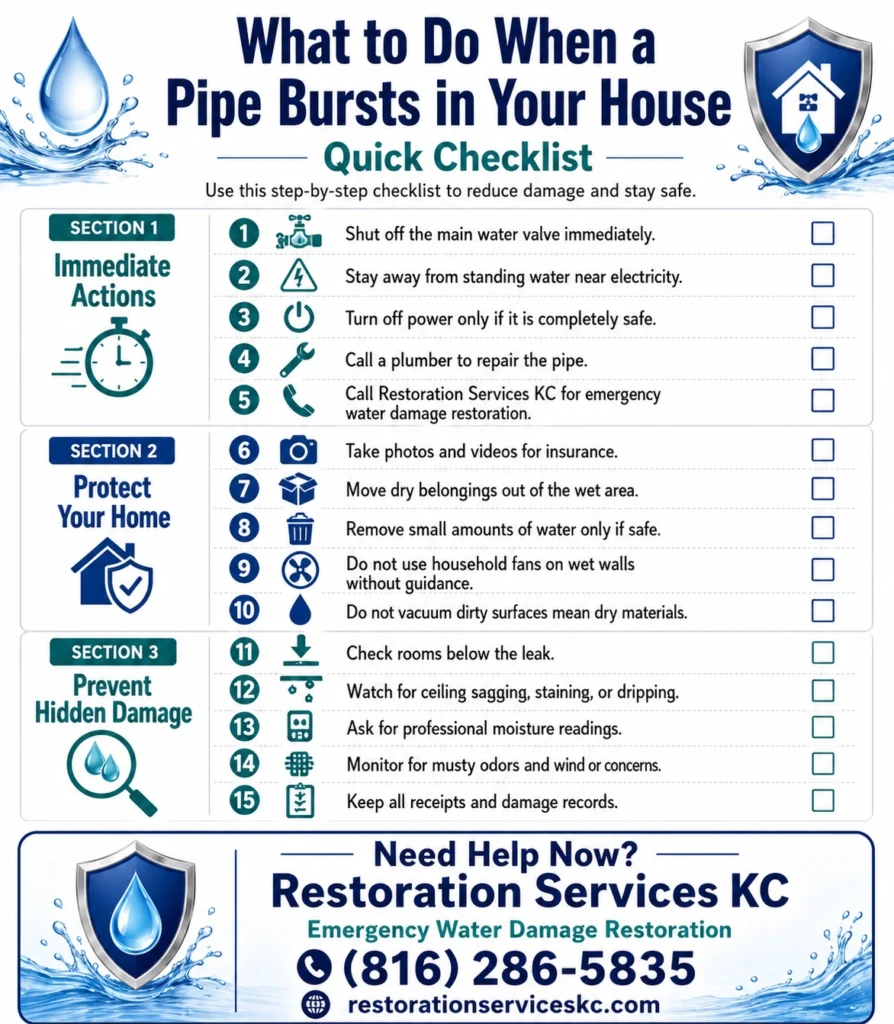
What to Do When a Pipe Bursts in Your House: Quick Checklist
Use this checklist when a pipe bursts:
Shut off the main water valve immediately.
Stay away from standing water near electricity.
Turn off power only if it is completely safe.
Call a plumber to repair the pipe.
Call Restoration Services KC for emergency water damage restoration.
Take photos and videos for insurance.
Move dry belongings out of the wet area.
Remove small amounts of water only if safe.
Do not use household fans on wet walls without guidance.
Do not assume dry surfaces mean dry materials.
Check rooms below the leak.
Watch for ceiling sagging, staining, or dripping.
Ask for professional moisture readings.
Monitor for musty odors and mold concerns.
Keep all receipts and cleanup records.
FAQs About What to Do When a Pipe Bursts in Your House
What is the first thing to do when a pipe bursts?
The first thing to do is shut off the water supply. Use the main water shutoff valve if you cannot stop the leak with a local fixture valve. After that, avoid electrical hazards, document the damage, and call professional help.
Should I call a plumber or a restoration company first?
You should call both. The plumber fixes the broken pipe. The restoration company removes water, dries the structure, checks moisture, and helps prevent hidden water damage. If water is spreading, shut off the water first, then call for emergency help.
Can pipe burst water damage cause mold?
Yes. Mold can become a concern if wet materials are not dried properly. Drywall, carpet padding, cabinets, insulation, and wood can hold moisture after a burst pipe. If you notice musty smells or visible spots, request professional inspection.
Can I clean up burst pipe water damage myself?
You may be able to clean a very small, clean-water spill if it is contained and dries quickly. However, if water reaches walls, floors, ceilings, carpet, cabinets, insulation, or lower rooms, professional restoration is recommended. Hidden moisture is difficult to remove with household tools.
How long does burst pipe cleanup take?
The timeline depends on how much water escaped, how long it sat, what materials were affected, and how far the water traveled. Minor drying may take a short time, while larger projects may require several days of extraction, dehumidification, monitoring, cleaning, and repairs.
Should I file an insurance claim for a burst pipe?
If the damage is significant, contact your insurance company and explain what happened. Take photos, save receipts, and keep notes. Coverage depends on your policy and the cause of the damage.
Who should I call in Kansas City after a pipe bursts?
Call Restoration Services KC at (816) 286-5835 for water damage cleanup Kansas City support. You can also contact the team online through the Contact Us page for fast help with burst pipe cleanup, drying, and restoration planning.
Get Emergency Help After a Burst Pipe
A burst pipe can damage your home quickly, but fast action can reduce the loss. Shut off the water, stay safe around electricity, document the damage, move dry belongings, and call the right professionals. Do not wait until musty odors, stains, warped floors, or mold concerns appear.
Restoration Services KC helps Kansas City homeowners recover from burst pipes, flooding, storm leaks, wet basements, and related water damage. If your home has standing water, wet flooring, damp drywall, ceiling leaks, or hidden moisture, call for emergency water damage restoration today.
Get in touch with Restoration Services KC:
Phone: (816) 286-5835
Email: service@restorationserviceskc.com
Service Area: Kansas City and surrounding areas
Website: https://restorationserviceskc.com/