Does homeowners insurance cover water damage? This is one of the most common questions homeowners ask after a burst pipe, ceiling leak, appliance overflow, water heater failure, or flooded room. Water damage can happen fast. One small leak can spread across flooring, soak drywall, damage cabinets, and create hidden moisture inside walls.
In many cases, homeowners insurance may cover sudden and accidental water damage. However, coverage depends on the source of the water, your policy details, how quickly you respond, and whether the insurance company considers the damage preventable.
For example, a sudden pipe burst may be covered. A washing machine hose that breaks unexpectedly may be covered. A toilet overflow may be covered depending on the policy. A sudden water heater failure may also qualify in some cases. But gradual leaks, poor maintenance, foundation seepage, and outside flooding are often excluded.
That is why quick action and proper documentation matter. If you are dealing with active water damage, contact Restoration Services KC through their water damage restoration service before the damage spreads. Their team can help with water extraction, drying, moisture checks, cleanup, and documentation that may support your water damage insurance claim.
Does Homeowners Insurance Cover Water Damage in Kansas City?
Does homeowners insurance cover water damage in Kansas City? The answer depends on what caused the damage. Most homeowners insurance policies focus on whether the water damage was sudden and accidental. If the damage happened unexpectedly, your policy may help cover cleanup and repairs.
A sudden plumbing failure, appliance overflow, or covered storm-related roof leak may qualify for coverage. But if the damage came from a slow leak, ignored maintenance issue, or outside floodwater, the insurance company may deny the claim.
Kansas City homeowners should act quickly after water damage. Stop the water source if possible, take photos and videos, call your insurance provider, and contact a professional restoration company. Fast mitigation can reduce damage and help protect your claim.
Restoration Services KC helps homeowners with emergency drying, moisture control, and property restoration after water damage. Their team can inspect affected areas and provide documentation that may help during the claim process.
What Water Damage Is Usually Covered by Homeowners Insurance?
Insurance companies often look at one major question: was the water damage sudden and accidental?
If a pipe bursts without warning and damages flooring, drywall, or personal belongings, your policy may help. If a covered storm damages your roof and rainwater enters your home, coverage may apply. If a dishwasher hose breaks and floods the kitchen, that may also count as covered home insurance water damage.
Common covered water damage situations may include:
- Sudden burst pipe.
- Broken appliance hose.
- Accidental toilet overflow.
- Sudden water heater failure.
- Covered storm-related roof leak.
- Water damage from plumbing failure.
- Sudden HVAC condensation line overflow.
- Accidental sink or bathtub overflow.
However, every policy is different. Some policies have limits, exclusions, or special conditions. You should always review your policy and speak with your insurance provider.
If the water damage also creates mold concerns, you may need professional mold testing and remediation. Mold coverage can have limits, so fast drying and documentation become very important.
Does Homeowners Insurance Cover Water Damage from Burst Pipes?
Burst pipe insurance coverage is one of the most common types of water damage claims. A pipe can burst because of freezing temperatures, pressure issues, corrosion, or sudden failure. When that happens, water can flood a room within minutes.
Many homeowners insurance policies cover sudden and accidental burst pipe damage. The policy may help pay for damage to flooring, drywall, ceilings, cabinets, and personal property. However, the insurance company may also investigate whether the homeowner took reasonable steps to prevent the damage.
For example, if a pipe burst suddenly in a properly maintained home, coverage may apply. But if the pipe leaked for months and the homeowner ignored warning signs, the claim may face denial.
If you experience a burst pipe, follow these steps right away:
- Shut off the main water supply.
- Avoid standing water near electrical outlets.
- Take photos and videos.
- Call your insurance company.
- Call a water damage restoration team.
- Save receipts and documentation.
- Keep damaged items until the insurance adjuster reviews them.
The faster you respond, the better chance you have of limiting damage and supporting your water damage insurance claim.
Does Homeowners Insurance Cover Water Damage from Appliance Leaks?
Homeowners insurance may cover water damage from appliance leaks when the leak happens suddenly and accidentally. Common appliance-related water damage can come from washing machines, dishwashers, refrigerators, water heaters, and ice makers.
For example, if a washing machine hose breaks and floods the laundry room, your policy may help cover the resulting property damage. If a dishwasher supply line fails and damages kitchen flooring, that may also qualify.
However, insurance may not cover the appliance itself if it failed because of age or wear and tear. Your policy may cover the water-damaged flooring but not replace the old appliance that caused the problem.
Water heaters can create serious damage because a failed tank can release many gallons of water. If a water heater leaks suddenly, you should document the source, photograph the surrounding damage, and contact professionals for drying and inspection.
For larger damage events, Restoration Services KC can help through their water damage restoration service and provide cleanup support before the damage gets worse.
Insurance Coverage Info
| Water Damage Situation | Often Covered? | Notes |
|---|---|---|
| Sudden burst pipe | Often yes | Depends on the policy and cause |
| Appliance hose break | Often yes | Usually covered if accidental |
| Toilet overflow | Sometimes | Policy-specific |
| Sudden water heater failure | Sometimes | Depends on maintenance and source |
| Covered storm-related roof leak | Sometimes | Roof damage must usually come from a covered event |
| Gradual leak | Usually no | Often treated as a maintenance issue |
| Outside flood | Usually no | Usually needs separate flood insurance |
| Sewer backup | Sometimes | May require a special endorsement |
| Mold after covered leak | Sometimes | Limits may apply |
| Poor maintenance | Usually no | Often considered preventable |
When Does Homeowners Insurance Not Cover Water Damage?
Homeowners insurance does not cover every type of water damage. Many homeowners feel surprised when they learn that some water problems fall outside standard coverage.
Common water damage exclusions may include:
- Outside floodwater.
- Groundwater entering through the foundation.
- Water seepage through basement walls.
- Long-term plumbing leaks.
- Repeated roof leaks that were not repaired.
- Mold caused by ignored moisture.
- Sewer backup without special coverage.
- Damage caused by poor maintenance.
- Water damage from neglect or delayed response.
Flood damage not covered by standard homeowners insurance can become a major issue after heavy rain or rising water. If water enters your home from outside flooding, your standard policy usually does not cover it. Homeowners often need separate flood insurance for that type of loss.
Storm damage can also become complicated. If wind or hail damages your roof and rain enters your home, your insurance company may treat that differently than water entering through an old roof leak. If your home recently suffered storm-related damage, Restoration Services KC also offers storm damage restoration for cleanup and recovery support.
What to Do Before Filing a Water Damage Insurance Claim
If you think you have home insurance water damage, act quickly. Insurance companies usually expect homeowners to prevent further damage when possible. Waiting too long can make the damage worse and may hurt your claim.
Follow these steps before or during the claim process:
- Shut off the water source if safe.
- Turn off electricity in wet areas if needed.
- Take photos and videos from multiple angles.
- Call your insurance provider.
- Call Restoration Services KC.
- Keep damaged items until documented.
- Save receipts for cleanup and temporary repairs.
- Ask for drying records and moisture readings.
- Avoid waiting until mold starts growing.
- Do not make permanent repairs before documentation.
Fast response matters because water can travel behind walls, under flooring, and into hidden building materials. Even when the surface looks dry, moisture may remain trapped. Professional restoration equipment can help dry the structure more effectively.
If you need local restoration help near Johnson County or nearby areas, you can also visit the restoration services in Overland Park KS page.
Why Documentation Matters for a Water Damage Insurance Claim
A water damage insurance claim depends heavily on documentation. Insurance adjusters may ask where the water came from, when the damage happened, what materials were affected, and what steps you took to stop additional damage.
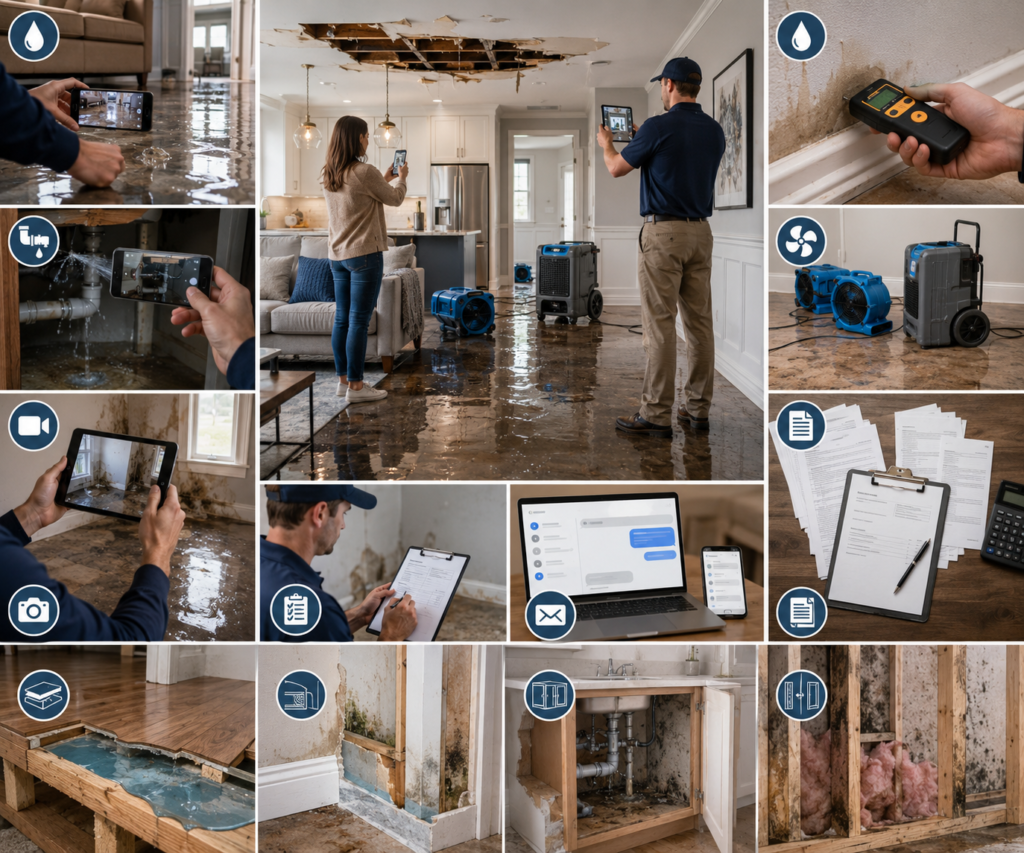
Good documentation may include:
- Photos of standing water.
- Photos of the source of the damage.
- Videos of affected rooms.
- Moisture readings.
- Drying equipment records.
- Cleanup invoices.
- Receipts for emergency repairs.
- A list of damaged personal items.
- Notes from restoration professionals.
- Emails or messages from the insurance company.
Do not throw away damaged materials too quickly unless safety requires removal. Take photos first and keep records. If possible, wait until the insurance adjuster or restoration professional reviews the damage.
Restoration professionals can also help identify hidden moisture. Water may move under flooring, behind baseboards, inside cabinets, and into wall cavities. If these areas stay wet, mold and structural damage may develop.
What About Mold After Water Damage?
Mold can start growing when water damage stays wet too long. This can happen after a pipe burst, roof leak, appliance leak, or flooded room. Mold may appear on drywall, trim, flooring, furniture, or hidden surfaces.
Does insurance cover mold from water damage? Sometimes. If mold results from a covered water event, your policy may provide limited mold coverage. However, many policies have limits or exclusions.
If you notice a musty smell, visible spots, or damp materials after a leak, do not ignore it. Restoration Services KC provides mold removal services for homes and businesses that need professional cleanup and moisture control.
Mold can also complicate a water damage insurance claim. If the insurance company believes the homeowner waited too long to dry the property, the claim may become harder. Fast mitigation, drying records, and moisture readings can help show that you acted responsibly.
Should You Call Restoration Before Insurance?
If water is actively spreading, yes, you should call restoration help right away. You should also contact your insurance provider, but you should not wait for claim approval while water continues damaging your home.
Most policies expect homeowners to reduce further damage when reasonable. Emergency water extraction, drying, and moisture control can help protect your home and may support your claim.
Calling a restoration company first does not mean you are skipping insurance. It means you are taking action to stop the damage. A professional restoration team can help document the affected areas, begin cleanup, and provide records your insurance company may request.
For urgent help, homeowners can reach Restoration Services KC through the Contact Us page or call (816) 286-5835.
Why Restoration Services KC Helps with Insurance Water Damage
Restoration Services KC understands that water damage cleanup and insurance documentation often go together. Their team can help homeowners with emergency drying, moisture control, damaged material review, cleanup, and restoration planning.
Water damage is not always visible. A floor may look dry while water remains underneath. Drywall may appear normal while moisture sits behind it. Cabinets may hide water that can lead to mold or odor problems. Professional moisture checks can help identify these hidden issues.
Restoration Services KC can also help when water damage creates mold concerns. Their mold testing and remediation services can help homeowners understand whether moisture has created a mold problem.
If your property has also suffered smoke, fire, or storm-related issues, you can review additional support through their fire damage restoration and storm restoration services.
FAQs About Does Homeowners Insurance Cover Water Damage
Does homeowners insurance cover burst pipes?
Often, yes. Homeowners insurance may cover burst pipe damage if the pipe burst was sudden and accidental. Coverage depends on the cause, policy terms, and whether the damage was preventable.
Is flood damage covered by homeowners insurance?
Usually no. Standard homeowners insurance usually does not cover outside flooding. Homeowners often need separate flood insurance for rising water, storm surge, or groundwater intrusion.
Does insurance cover mold from water damage?
Sometimes. If mold came from a covered water event, your policy may provide limited mold coverage. However, limits and exclusions may apply.
Should I call restoration before insurance?
If water is spreading, yes. Emergency mitigation can reduce damage and may help protect your claim. You should still contact your insurance provider as soon as possible.
What should I document for a water damage insurance claim?
Take photos, videos, moisture readings if available, receipts, damaged item lists, and notes about when the loss happened. Ask your restoration company for drying records and cleanup documentation.
Does homeowners insurance cover water damage from a leaking roof?
Sometimes. If a covered storm damages the roof and rain enters the home, coverage may apply. But if the roof leaked because of age, neglect, or poor maintenance, insurance may deny the claim.
Who can help document water damage in Kansas City?
Restoration Services KC can help with water damage cleanup, drying, moisture checks, and documentation. Call (816) 286-5835 or visit their Contact Us page.
Get Help with Water Damage in Kansas City
So, does homeowners insurance cover water damage? In many cases, yes, if the damage was sudden and accidental. But coverage depends on the source of the water, the condition of the home, policy language, and how quickly you respond.
Do not wait if your home has standing water, wet drywall, soaked flooring, ceiling stains, musty odors, or hidden moisture concerns. Fast cleanup can reduce damage, prevent mold, and help support your water damage insurance claim.
Restoration Services KC helps homeowners in Kansas City and surrounding areas with water extraction, drying, cleanup, moisture checks, mold concerns, and restoration planning.
Get in touch today for professional water damage help.
Restoration Services KC
Phone: (816) 286-5835
Email: service@restorationserviceskc.com
Serving Kansas City and surrounding areas