
Attics and crawl spaces are two of the most common places for hidden mold in Kansas City homes. These areas often have moisture, poor airflow, roof leaks, condensation, damp soil, or insulation problems. That is why attic and crawl space mold removal matters when you notice musty smells, damp wood, stained insulation, or indoor air concerns.
You may not visit your attic or crawl space often, so mold can grow for a long time before you notice it. A small roof leak, bathroom vent issue, or crawl space moisture problem can create the right conditions for mold. Once mold grows on wood, insulation, or stored materials, the issue can spread if moisture remains.
At Restoration Services KC, we help Kansas City homeowners inspect and address hidden moisture and mold in attics, crawl spaces, basements, and other hard-to-reach areas. With more than 30 years of local restoration experience, we understand how KC weather, humidity, storms, roof leaks, and foundation moisture affect homes.
This guide explains what causes attic mold, what causes crawl space mold, how professional cleanup works, and when to call a local mold removal team.
Why Attic and Crawl Space Mold Happens
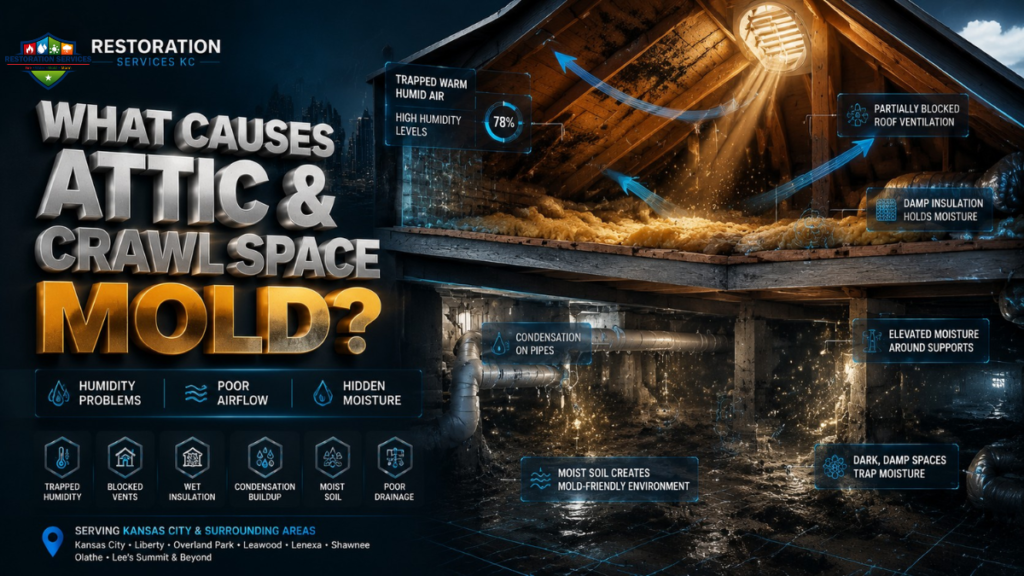
Attics and crawl spaces often have limited airflow and hidden moisture. In an attic, mold may start after roof leaks, poor ventilation, bathroom fans venting into the attic, or condensation on cold surfaces. In a crawl space, mold may grow because of damp soil, foundation seepage, poor vapor barriers, or plumbing leaks.
Professional attic and crawl space mold removal helps address the areas where mold can hide and spread. The goal is not only to remove affected growth. The goal is also to understand why moisture is present and what can reduce repeat problems.
In Kansas City homes, weather plays a major role. Heavy rain, humidity, freeze-thaw cycles, and storm damage can all create moisture concerns. If your home smells musty or your insulation looks stained, you may need a closer inspection.
What Causes Attic Mold in Kansas City Homes?
If you ask what causes attic mold in Kansas City homes, the answer often starts with moisture and airflow. Roof leaks, poor attic ventilation, blocked soffits, damaged flashing, and bathroom exhaust fans can all add moisture to attic spaces.
Warm indoor air can also rise into the attic. When that air meets cold roof decking, condensation may form. Over time, this moisture can support mold growth on wood sheathing, rafters, insulation, or stored items.
Attic mold often stays hidden because homeowners do not inspect the attic regularly. You may notice it during a roof repair, insulation project, home inspection, or after a musty smell reaches upper rooms.
What Causes Crawl Space Mold in Kansas City Homes?
Crawl space mold usually starts when damp air or water remains under the home. Moist soil, poor drainage, missing vapor barriers, plumbing leaks, foundation vents, and high humidity can all create a damp crawl space.
If you ask, What causes crawl space mold, the answer is usually trapped moisture. The crawl space may not flood, but it may stay humid enough for mold to grow on wood beams, insulation, subflooring, or stored materials.
A crawl space can also affect the rest of the home. Musty air may move upward into living areas. This is why crawl space moisture should not be ignored, especially if your home smells damp or your floors feel soft.
Common Signs You Need Attic and Crawl Space Mold Removal
Attic and crawl space mold can stay hidden until someone checks the area. You may not see the problem from the living space, but your home may show warning signs.
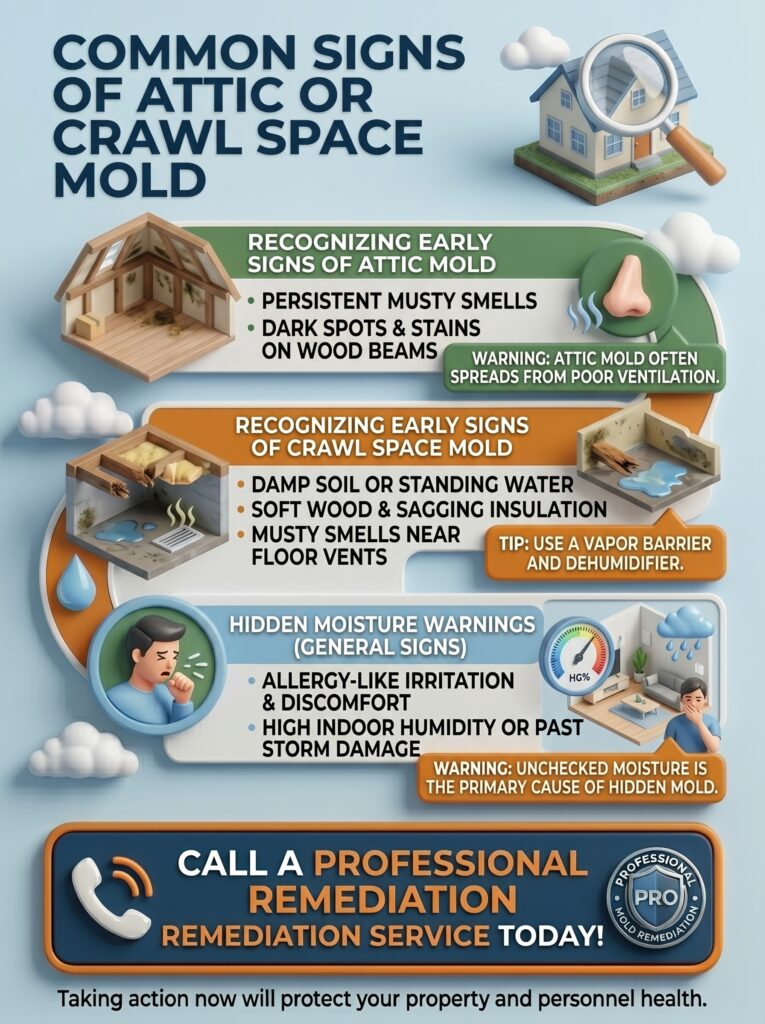
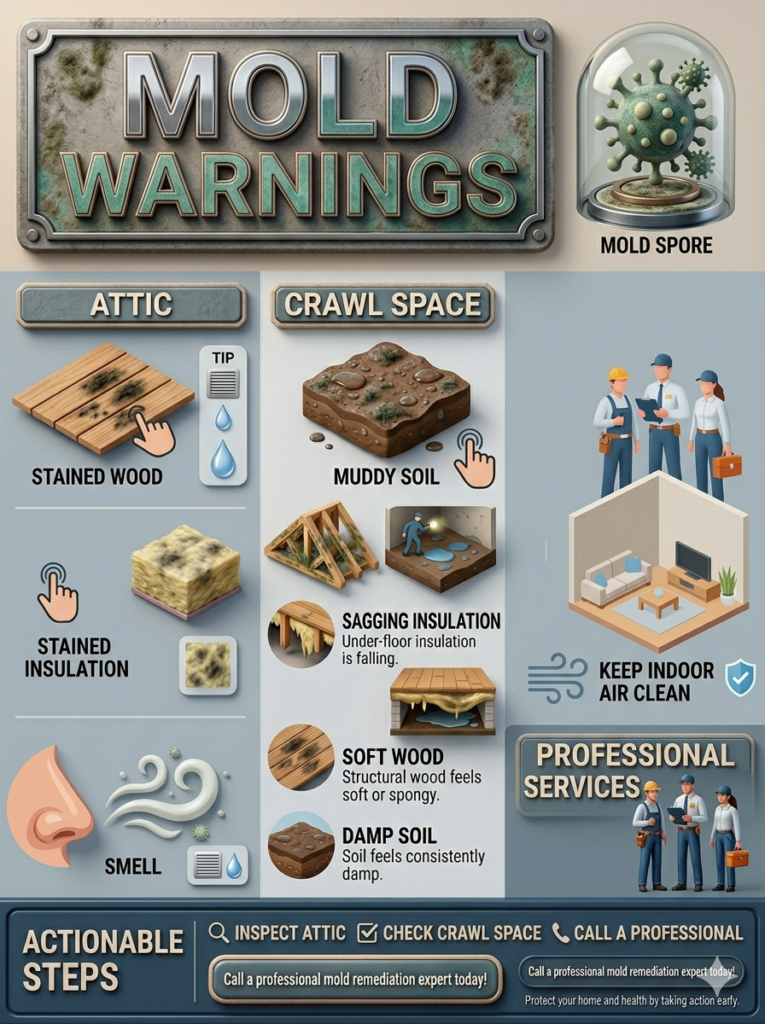
- Musty smells, stained insulation, dark spots on wood, roof leak history, condensation, or damp attic materials can point to attic mold.
- Damp crawl space soil, soft wood, sagging insulation, standing water, or musty air near floor vents can point to crawl space mold.
- Indoor odors, allergy-like irritation, high humidity, or past storm damage may mean hidden moisture needs inspection.
If you notice these signs, crawl space mold removal KC or attic mold remediation Kansas City services may help protect your home.
Attic and Crawl Space Mold Removal Process
The table below shows the main steps used during professional mold cleanup.
| Cleanup Step | What Happens | Why It Matters |
| Inspection | The attic or crawl space is checked for mold, moisture, leaks, and airflow problems | Finds the source of the issue |
| Moisture Review | Wood, insulation, vents, roof areas, and soil conditions are checked | Helps locate hidden moisture |
| Containment | Work areas may be controlled to reduce the spread | Protects nearby areas |
| Mold Removal | Affected surfaces or materials are cleaned or removed based on condition | Reduces mold contamination |
| Drying & Moisture Control | Airflow, drying, or dehumidification may be used | Helps prevent repeat growth |
| Prevention Guidance | Ventilation, drainage, leaks, or vapor barrier needs are explained | Helps protect the home long term |
What To Do Before Cleanup Starts
If you suspect attic or crawl space mold, avoid disturbing the area without proper protection. These spaces can contain dust, insulation, pests, sharp materials, and hidden moisture. It is safer to inspect carefully and avoid spreading particles into living areas.
- Do not pull down moldy insulation or scrape moldy wood without guidance.
- Look for moisture clues such as roof stains, damp soil, condensation, or plumbing leaks.
- Avoid storing clean belongings in damp attic or crawl space areas.
- Keep access clear so inspectors can check entry points, vents, rafters, joists, and insulation.
- Call a professional mold team for inspection, cleanup planning, and moisture-control guidance.
These steps help protect your home before cleanup starts. They also help the restoration team understand whether mold connects to roof damage, humidity, drainage, or plumbing.
Attic Mold Removal Near Me
When you search for attic mold removal near me, you likely want local help because the problem feels hidden and stressful. Attic mold can affect roof decking, rafters, insulation, and indoor air comfort. It should not be ignored.
A local restoration team understands Kansas City roof leaks, storm damage, attic ventilation problems, and seasonal humidity. These factors often work together. A roof may leak during storms, while poor ventilation keeps moisture trapped.
Restoration Services KC helps homeowners inspect attic spaces, understand moisture patterns, and plan the right cleanup. We focus on the source so the issue does not keep returning after surface cleaning.
Crawl Space Mold Remediation Near Me
A crawl space can hide moisture for months. You may not notice a problem until the home smells musty, floors feel damp, or a home inspection finds mold. This is common in homes with poor drainage, missing vapor barriers, or plumbing leaks.
When you search for crawl space mold remediation near me, you need a team that understands both mold and moisture control. Cleanup should include inspection, affected material review, drying, and prevention guidance.
Restoration Services KC helps inspect crawl spaces and explain what needs to change. If the crawl space stays damp, mold can return. The solution should address moisture, not just visible growth.
Moisture and Mold Cleanup KC
Moisture is the reason mold grows. Without moisture, mold cannot keep spreading. That is why moisture and mold cleanup KC services should focus on finding leaks, damp air, condensation, drainage issues, or humidity problems.
In attics, moisture may come from roof leaks, bathroom exhaust fans, blocked vents, or condensation. In crawl spaces, moisture may come from soil, plumbing, foundation seepage, or poor airflow. Each source needs a different fix.
A professional cleanup plan should include removal and prevention. Restoration Services KC can help identify the source, clean affected areas, and explain how to reduce moisture in the future.
Hidden Moisture Mold Cleanup Kansas City
Hidden moisture is one of the biggest reasons attic and crawl space mold returns. A surface may look dry while wood, insulation, or soil remains damp. If this moisture stays active, mold can grow again.
Hidden moisture mold cleanup in Kansas City support helps homeowners find the real problem. Moisture checks can help identify damp wood, wet insulation, condensation, or drainage concerns. This gives you a clearer plan before repairs begin.
Hidden mold should not be covered up with paint or insulation. If the source remains, the issue may come back and cost more later. Finding moisture early protects your property value and indoor comfort.
Related Services That May Help
Attic and crawl space mold often connects with roof leaks, storm damage, basement moisture, water damage, or poor drying. Add internal links naturally inside the content, not only in the footer.
Use professional mold remediation services when discussing confirmed mold cleanup. Use storm damage restoration services when discussing roof leaks or storm damage. Use water damage restoration in Kansas City when discussing leaks, moisture, or drying. Use the schedule attic and crawl space mold inspection with Restoration Services KC when inviting users to request help.
These anchor texts guide users naturally. They also help Google understand the relationship between your restoration pages.
Recommended Schema Markup
Schema helps search engines understand your service, location, business details, and FAQ content. It can support local SEO and AI Overview clarity.
For this page, add Service schema for attic and crawl space mold removal, LocalBusiness schema for Restoration Services KC, and FAQPage schema for the FAQ section. Keep your name, phone, email, website, address, and service area consistent.
Also use one H1, clear H2 headings, crawlable internal links, optimized image alt text, and self-referencing canonical. These details help your page send stronger SEO signals.
Service Areas Around Kansas City
Restoration Services KC helps homeowners with attic mold removal, crawl space mold cleanup, moisture inspection, and remediation support across Kansas City and nearby areas. Our service area includes Kansas City, Liberty, Overland Park, Leawood, Lenexa, Shawnee, Olathe, Lee’s Summit, and surrounding communities.
Local help matters because Kansas City homes face storms, roof leaks, humid summers, damp crawl spaces, and basement moisture. A local restoration team understands how these conditions affect attics and crawl spaces.
If your attic or crawl space has mold, damp insulation, a musty odor, or hidden moisture, early inspection can help protect your home and reduce future repair needs.
Contact Restoration Services KC
Attic and crawl space mold can stay hidden until it affects wood, insulation, air quality, or home comfort. A musty smell, roof leak history, or damp crawl space should not be ignored.
For professional attic and crawl space mold removal, contact Restoration Services KC. We can inspect hidden moisture areas, explain your options, and help with mold cleanup, drying, and remediation when needed.
Protect your home before hidden mold spreads. Schedule help with Restoration Services KC today and get local expert support.
FAQs About Attic and Crawl Space Mold Removal
What causes attic mold in Kansas City homes?
Attic mold often comes from roof leaks, poor ventilation, blocked soffits, bathroom vents, or condensation. Moisture allows mold to grow on wood, insulation, and roof decking.
What causes crawl space mold?
Crawl space mold usually comes from damp soil, poor drainage, missing vapor barriers, plumbing leaks, or high humidity. Moisture under the home can support mold growth.
Do I need professional attic mold removal near me?
Yes, you should call a professional if mold affects wood, insulation, or hidden attic areas. Proper cleanup should include moisture source inspection.
Can crawl space mold affect indoor air?
Yes, musty crawl space air can move into living areas. If your home smells damp or your floors feel humid, the crawl space may need inspection.
When should I call Restoration Services KC?
Call when you see attic mold, smell musty odors, find damp insulation, notice crawl space moisture, or suspect hidden mold after leaks or storms.
Official Contact Details
Phone: (816) 286-5835
Email: joe@restorationserviceskc.com
Website: https://restorationserviceskc.com
Headquarters: 406 N Clayview Dr, Liberty, MO 64068
Service Area: Kansas City and surrounding areas