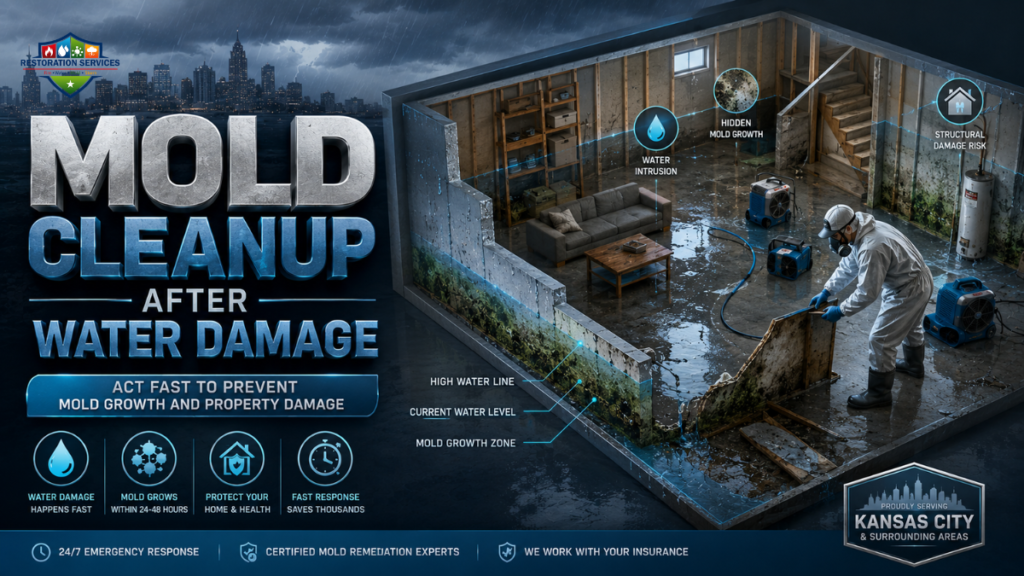
Mold can become a concern after water damage when wet materials do not dry quickly. A burst pipe, basement flood, roof leak, sump pump failure, or stormwater intrusion can leave moisture behind walls, under floors, inside carpet, and around insulation. That is why mold cleanup after water damage should start as soon as you suspect trapped moisture.
You may not see mold right away. The first signs may be a musty smell, damp drywall, soft flooring, staining, or high indoor humidity. If water damage happened in your Kansas City home or business, you should not wait for visible growth before getting help.
At Restoration Services KC, we help property owners across Kansas City, Liberty, Overland Park, Leawood, Lenexa, Shawnee, Olathe, Lee’s Summit, and surrounding areas respond after leaks, floods, and moisture damage. Our team handles water extraction, structural drying, mold inspection, cleanup, remediation support, and reconstruction when needed.
This guide explains how fast you should act, what mold cleanup includes, why drying matters, and when professional help can protect your property from more serious damage.
Why Mold Cleanup After Water Damage Matters
Water damage can affect more than the surface you see. Water can move behind drywall, under flooring, into carpet padding, inside cabinets, and around wood framing. If these areas stay damp, mold can begin growing and spreading into nearby materials.
Professional mold cleanup after water damage helps address both the mold concern and the moisture source. If you only remove visible mold but leave wet materials behind, the issue can return. That is why cleanup should connect with moisture checks, drying, and repair planning.
In our experience, the biggest mistake homeowners make is waiting because the room “looks dry.” A wall can look normal while the back side remains damp. Carpet can feel dry while the padding underneath holds water. A proper inspection helps you avoid that hidden risk.
How Fast Should You Act After Water Damage?
You should act quickly after water enters your home. The longer moisture stays inside materials, the higher the chance of mold, odor, staining, and material damage. Fast drying gives you a better chance of saving drywall, flooring, carpet, and trim.
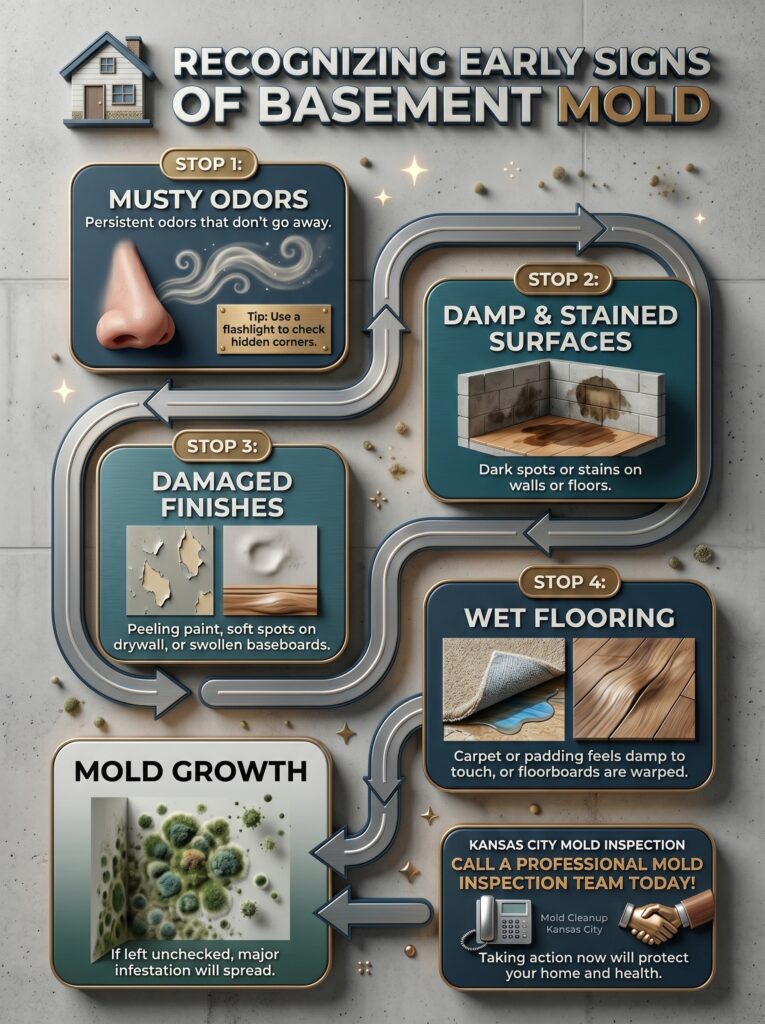
If you smell musty odors or notice stains after a leak, you may already have moisture trapped somewhere. This is common after mold after water damage in KC situations involving basements, bathrooms, kitchens, and utility rooms. The source may be fixed, but the moisture may still remain.
A professional inspection helps determine whether the space needs drying, cleaning, or remediation. You do not need to guess. You need to know where the moisture traveled and whether affected materials can be safely dried or cleaned.
Common Water Damage Events That Lead to Mold
Mold can follow many types of water damage. Some events create obvious flooding, while others create slow, hidden moisture that goes unnoticed. Both can lead to mold when the area is not dried properly.
- Burst pipes, water leaks, appliance leaks, roof leaks, and plumbing failures can soak walls, cabinets, flooring, and insulation.
- Basement flooding, stormwater, sump pump failure, and flood damage can leave moisture behind finished surfaces.
- High humidity, damp carpet, wet drywall, and poor airflow can create ideal conditions for mold growth.
If any of these happened in your property, water damage mold cleanup Kansas City services may help reduce the risk before the problem spreads.
Mold Cleanup After Water Damage Process
The table below shows the main steps used during professional cleanup.
| Cleanup Step | What Happens | Why It Matters |
| Moisture Inspection | The affected area is checked for hidden water and mold risk | Finds moisture behind surfaces |
| Water Damage Review | The source and affected materials are evaluated | Helps create the right cleanup plan |
| Containment | Work areas may be isolated when needed | Helps limit the spread during cleanup |
| Mold Cleanup | Affected materials are cleaned or removed based on condition | Reduces mold contamination |
| Drying | Airflow and dehumidification help remove moisture | Helps prevent repeat growth |
| Repair Guidance | Damaged materials are reviewed for repair or replacement | Helps restore the property safely |
What To Do Before Mold Cleanup Starts
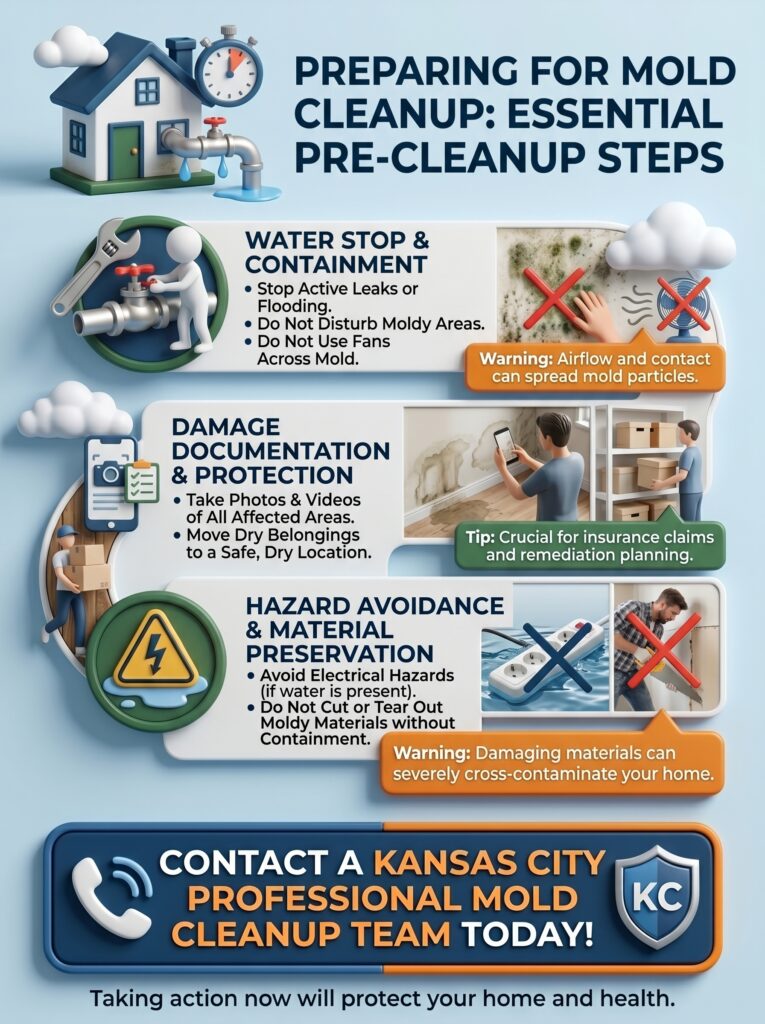
After water damage, safety and moisture control should come first. Do not disturb suspected mold, and do not use fans across moldy areas because airflow can spread particles. If water is still present, avoid electrical hazards.
- Stop the water source if the leak or flooding is still active.
- Document the damage with photos and videos before moving materials.
- Move dry belongings away from wet areas if you can do so safely.
- Avoid cutting or tearing out moldy materials without containment guidance.
- Call a restoration team quickly for water damage restoration and mold removal support.
These steps help protect your property before work begins. They also help the restoration team understand the water source, the timeline, and the materials affected.
Mold Removal After a Water Leak
A water leak can create mold even when the leak seems small. Water may drip under cabinets, behind baseboards, inside walls, or below flooring. If the leak continues for days or weeks, mold may grow in hidden areas.
Mold removal after a water leak should start with finding and fixing the moisture source. The affected area should then be checked for wet materials and visible growth. If mold is present, cleanup should happen before repairs cover the area again.
Restoration Services KC helps property owners inspect water-damaged areas and plan the right cleanup. If drying, removal, or reconstruction is needed, we can help connect the steps so the problem does not return.
Mold Remediation After Flood KC
Flooding creates a higher mold risk because water often reaches many materials at once. Basements, carpets, drywall, insulation, furniture, and stored items may all absorb moisture. If the water is contaminated, the cleanup may require extra care.
Mold remediation after flood KC services help address mold risk after basement floods, stormwater, sump pump failure, or major water intrusion. The process may include removal of damaged materials, drying, cleaning, and prevention steps.
If your property had a flood, you should not rely on surface drying alone. Hidden moisture can remain in wall cavities, carpet padding, baseboards, and framing. Professional moisture checks help confirm what needs attention.
Basement Flood Mold Cleanup KC
Basements are one of the most common places for mold after water damage in Kansas City. Heavy rain, sump pump failure, foundation seepage, and sewer backups can all leave moisture in lower-level spaces. Finished basements can be especially vulnerable.
Basement flood mold cleanup KC services should focus on both the flood damage and the mold risk. Wet carpet, drywall, trim, and insulation may need drying, removal, or replacement depending on the water source and how long the materials stayed wet.
Restoration Services KC can help with water extraction, drying, mold cleanup, and repair planning. If your basement smells musty after a flood, do not wait for visible mold before scheduling an inspection.
Water Damage Restoration and Mold Removal KC
Water damage and mold often need to be handled together. Water extraction removes standing water, drying removes trapped moisture, and mold cleanup addresses affected materials. When these steps work together, your property has a better chance of recovering fully.
Water damage restoration and mold removal KC support is helpful when a leak, flood, or burst pipe creates both moisture and mold concerns. A complete plan reduces the risk of repeat growth because it focuses on the source, not only the surface.
If the damage involves walls, floors, ceilings, cabinets, or insulation, professional help is usually safer than guessing. Restoration Services KC can inspect the affected area and explain what needs drying, cleaning, remediation, or repair.
Related Services That May Help
Mold cleanup after water damage often connects with other restoration services. These links should be placed naturally inside the content, not only in the footer.
Use water damage restoration in Kansas City when discussing extraction, drying, and moisture control. Use professional mold remediation services when discussing confirmed mold cleanup. Use storm damage restoration services when discussing roof leaks or stormwater. Use the schedule mold cleanup with Restoration Services KC when inviting users to request help.
These anchors help users find the right next step. They also help search engines understand how your restoration services connect.
Recommended Schema Markup
Schema helps Google and AI systems better understand the page. It can support local SEO, service clarity, and FAQ eligibility.
Add Service schema for mold cleanup after water damage, LocalBusiness schema for Restoration Services KC, and FAQPage schema for the FAQ section. Use consistent business details across the page, footer, schema, and online listings.
Also, keep one H1, clear H2 headings, crawlable internal links, optimized image alt text, and a self-referencing canonical tag. These details help prevent weak page signals.
Service Areas Around Kansas City
Restoration Services KC helps homeowners and businesses with mold cleanup, water damage restoration, drying, and remediation support across Kansas City and nearby areas. Our service area includes Kansas City, Liberty, Overland Park, Leawood, Lenexa, Shawnee, Olathe, Lee’s Summit, and surrounding communities.
Local service matters after water damage because timing matters. A nearby restoration team understands Kansas City basements, stormwater, humidity, sump pumps, and roof leak problems.
If your home has mold after water damage, wet drywall, musty odors, or moisture damage, early cleanup can protect your property and reduce repair stress.
Contact Restoration Services KC
Mold can spread after water damage when wet materials stay damp. A musty smell, a damp wall, a wet carpet, or a basement flood should not be ignored.
For professional mold cleanup after water damage, contact Restoration Services KC. We can inspect moisture-prone areas, dry affected materials, and help with mold cleanup and remediation when needed.
Stop mold before it spreads. Schedule a cleanup with Restoration Services KC today and get local expert help.
Top 5 FAQs About Mold Cleanup After Water Damage
How fast do I need mold cleanup after water damage?
You should act as soon as you notice water damage, musty odors, or damp materials. Fast cleanup and drying help reduce mold risk and material damage.
Can mold grow after a burst pipe?
Yes. Burst pipe mold cleanup may be needed when water reaches drywall, flooring, cabinets, carpet, or insulation, and the area does not dry properly.
Do I need mold cleanup after basement flooding?
Yes, you may need cleanup if your basement stayed wet or smells musty after flooding. Hidden moisture can remain under flooring and behind walls.
Can I clean mold after water damage myself?
Small surface spots may look simple, but mold after water damage often connects to hidden moisture. Professional inspection helps prevent repeat growth.
When should I call Restoration Services KC?
Call when water damage leaves musty smells, wet walls, damp carpet, basement moisture, or visible mold. Fast help can reduce damage and cleanup costs.
Official Contact Details
Phone: (816) 286-5835
Email: joe@restorationserviceskc.com
Website: https://restorationserviceskc.com
Headquarters: 406 N Clayview Dr, Liberty, MO 64068
Service Area: Kansas City and surrounding areas