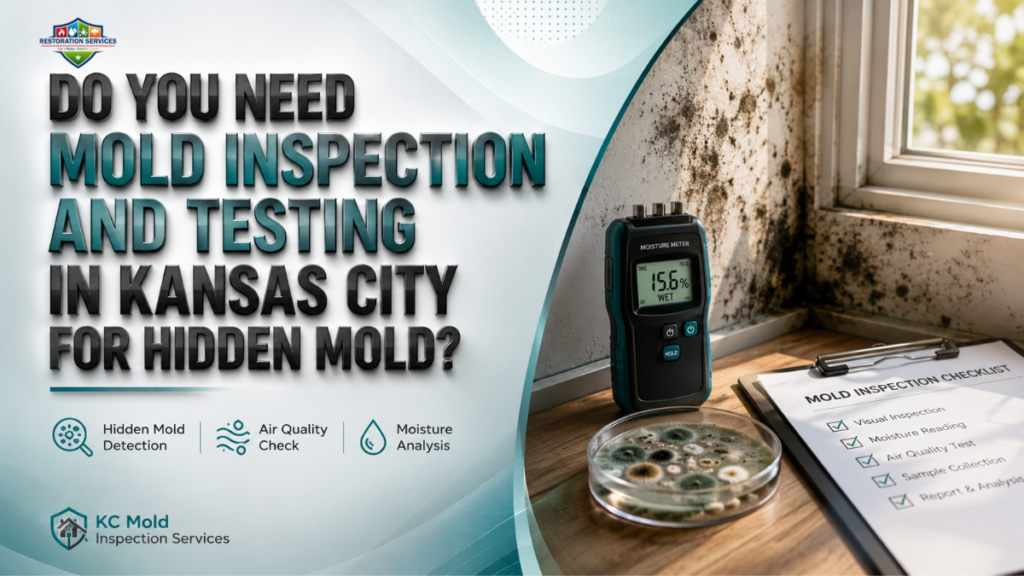
Hidden mold can grow in places you may not check every day, such as behind drywall, under floors, inside ceilings, around windows, in basements, or near old water damage. If your home has a musty smell, damp spots, stains, or past leaks, mold inspection and testing can help you find the source before the problem spreads.
Many Kansas City homeowners do not see mold right away. The first warning sign is often odor, humidity, water stains, or allergy-like irritation inside the home. A professional inspection helps you understand whether mold may be present, where moisture is coming from, and what steps you should take next.
At Restoration Services KC, we help homeowners in Kansas City, Liberty, Overland Park, Leawood, Lenexa, Shawnee, Olathe, Lee’s Summit, and nearby areas check for hidden mold and moisture problems. Our team brings over 30 years of local restoration experience, so we understand how KC weather, basements, storms, roof leaks, and water damage can create mold issues inside homes.
This guide explains when you need mold inspection and testing, what the process includes, how indoor mold testing works, what hidden mold signs to watch for, and how to protect your family, indoor comfort, and property value before damage gets worse.
Why Mold Inspection and Testing Matter
Mold is not always visible. It can grow behind walls, under flooring, inside cabinets, above ceilings, in crawlspaces, or around old water damage. Many homeowners only notice a musty smell before they see any visible mold growth.
That is why mold inspection and testing matter. It helps you stop guessing and gives you a clearer picture of what may be happening inside your home. Instead of covering the odor or cleaning the surface, you can find the moisture source and decide the right next step.
In our experience, mold problems often return when the cause is not fixed. A homeowner may clean a stain, repaint a wall, or use an air freshener, but the smell comes back because moisture is still trapped somewhere. A proper inspection helps find both the mold concern and the reason it started.
For Kansas City homes, this is especially important because heavy rain, basement moisture, roof leaks, plumbing problems, humidity, and storm damage can all create mold-friendly conditions. A timely inspection can help protect your home before the issue becomes more expensive.
What Is Mold Inspection and Testing?
Mold inspection and testing is the process of checking your home for visible mold, hidden moisture, musty odors, and possible indoor mold concerns. The inspection helps identify where mold may be growing and what moisture problem may be feeding it.
A professional inspector may check basements, bathrooms, kitchens, crawlspaces, attics, HVAC areas, window areas, wall surfaces, ceilings, and rooms with past water damage. These areas often hold moisture longer than other parts of the home. If needed, the inspector may recommend air or surface testing.
Testing can help confirm whether mold spores are present in the air or on a specific surface. It can also help when mold is suspected but not easy to see. However, testing works best when it is combined with a full inspection because results alone do not show where the moisture is coming from.
A strong inspection should answer simple questions. Is there a moisture problem? Is there visible or suspected mold? What areas need attention? What should you do before the issue spreads?
When Should You Get Mold Testing in Kansas City?
You should consider mold testing when you smell mold but cannot see it. You should also schedule an inspection after water damage, roof leaks, plumbing leaks, basement flooding, sump pump failure, or long periods of high indoor humidity. These conditions can allow mold to grow behind surfaces.
Many homeowners ask, When should I get mold testing in Kansas City? A good answer is this: if a musty smell keeps returning after cleaning and ventilation, you should not ignore it. The smell may point to moisture behind drywall, under flooring, inside cabinets, or near HVAC areas.
You may also need testing before buying a home, after a major leak, or after cleanup when you want documentation. If your family notices indoor irritation that improves when they leave the home, an inspection may also help you understand whether moisture or mold could be part of the problem.
Professional testing gives you facts before you spend money on repairs. It helps you avoid unnecessary demolition, wrong cleaning methods, or incomplete mold cleanup. It also helps you protect your home’s indoor comfort and long-term value.
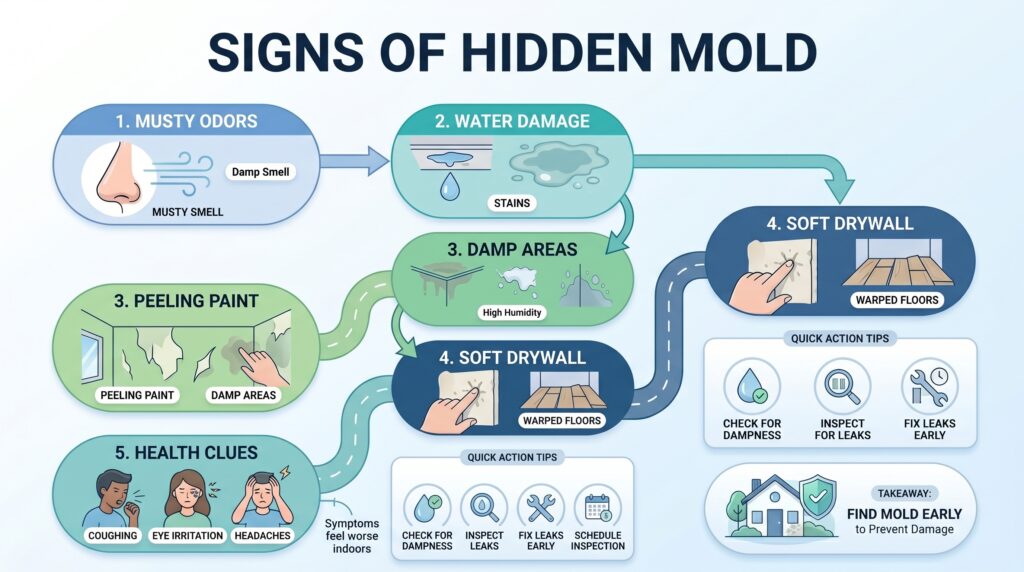
Common Signs You May Have Hidden Mold
Hidden mold often gives small warning signs before it becomes obvious. You may not see black spots or visible growth right away. Instead, your home may show odor, stains, dampness, soft materials, or changes in indoor comfort.
- Musty smells, damp rooms, bubbling paint, soft drywall, warped flooring, ceiling stains, or moisture around windows can point to hidden mold.
- Past leaks, roof damage, basement flooding, sump pump failure, appliance leaks, or water damage can create mold-friendly conditions.
- Coughing, eye irritation, headaches, or allergy-like symptoms that feel worse indoors may be a reason to inspect your home.
If you notice these signs, a home mold inspection in Kansas City can help find the source. You do not need to panic, but you should act before moisture spreads deeper into walls, flooring, cabinets, or insulation.
Mold Inspection and Testing Process
The table below shows what usually happens during a professional mold inspection.
| Inspection Step | What Happens | Why It Matters |
| Initial Review | The inspector asks about odors, leaks, stains, and past water damage | Helps identify likely mold sources |
| Visual Inspection | Walls, ceilings, floors, basements, attics, and moisture-prone areas are checked | Finds visible mold and warning signs |
| Moisture Check | Moisture meters may be used near walls, floors, and affected areas | Helps locate hidden water problems |
| Air or Surface Testing | Samples may be collected when testing is needed | Helps confirm mold concerns |
| Report & Guidance | Findings are explained clearly with next-step recommendations | Gives you a clearer plan before the damage gets worse |
What To Do Before a Mold Inspection
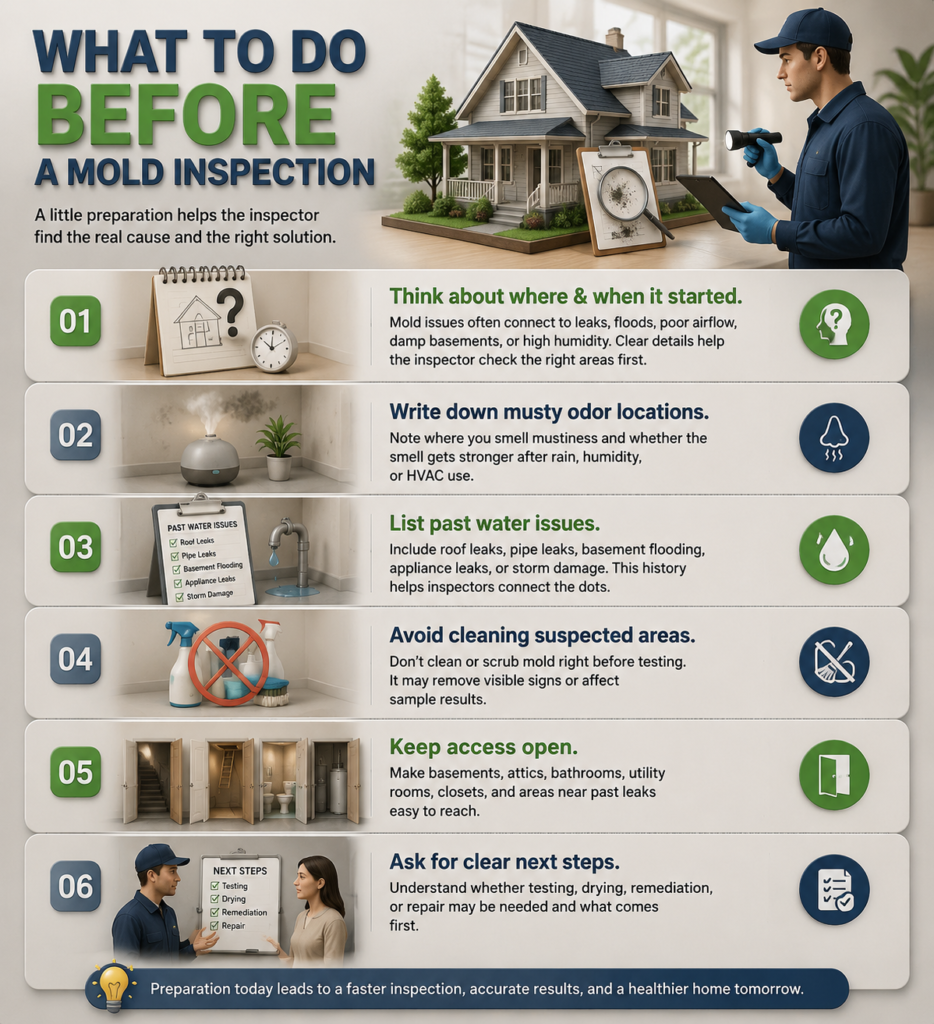
Before your appointment, think about where the problem started and when you first noticed it. Mold issues often connect to leaks, floods, poor airflow, damp basements, or high humidity. Clear details help the inspector check the right areas first.
- Write down musty odor locations and note whether the smell gets stronger after rain, humidity, or HVAC use.
- List past water issues such as roof leaks, pipe leaks, basement flooding, appliance leaks, or storm damage.
- Avoid cleaning suspected mold areas right before testing because it may affect visible signs or sample results.
- Keep access open to basements, attics, bathrooms, utility rooms, closets, and areas near past leaks.
- Ask for clear next steps so you know whether testing, drying, remediation, or repair may be needed.
These steps make the inspection more useful. They also help you avoid paying for the wrong solution. A better inspection starts with better information.
Why Musty Smells Should Not Be Ignored
A musty smell often means moisture is trapped somewhere inside the property. It may come from a basement, crawlspace, attic, bathroom, HVAC system, wet carpet, wall cavity, or old water-damaged material. Even when the room looks clean, the odor can still point to a hidden issue.
If you search for musty smell mold inspection KC, you are likely dealing with this exact concern. Many homeowners clean the room, open windows, or use air fresheners, but the smell returns. That usually means the source is still active.
In Kansas City homes, musty smells often show up after heavy rain, basement seepage, roof leaks, plumbing leaks, or poor ventilation. These issues can create damp areas where mold grows quietly. The longer the moisture remains, the harder the cleanup can become.
A professional inspection helps find whether the odor comes from mold, moisture, poor airflow, or past water damage. Once you understand the source, you can choose the right repair or remediation plan instead of guessing.
Why Professional Mold Inspection KC Services Are Better Than Guessing
DIY mold checks can help you spot obvious stains, but they rarely show the full problem. Mold can hide behind cabinets, under flooring, inside wall cavities, above ceiling materials, or near HVAC components. These areas are easy to miss without a closer inspection.
A professional mold inspection KC service gives you a clearer view of the home. The inspector checks moisture patterns, airflow issues, past water intrusion, visible staining, and areas that commonly hide mold. This helps you avoid cleaning the wrong spot while the real source keeps spreading.
From real restoration work, one thing is clear. Mold cleanup does not last if the moisture source stays active. You need to know where the moisture is coming from before you can solve the mold concern properly.
Professional inspection also helps protect your family’s comfort. If you have children, older family members, or anyone sensitive to indoor air problems, getting clear answers early can give you peace of mind and help you act before the issue grows.
Hidden Mold Inspection Kansas City: Where Mold Often Hides
Hidden mold often grows where moisture stays trapped. In Kansas City homes, common areas include basements, bathrooms, kitchens, attics, crawlspaces, laundry rooms, window areas, and spaces around plumbing lines. These areas often hold humidity or hidden moisture longer than open living spaces.
A hidden mold inspection Kansas City service may focus on places with past leaks, storm damage, high humidity, poor ventilation, or damp building materials. The inspector may check around baseboards, drywall seams, cabinets, exterior walls, and utility areas. These checks help find moisture before it becomes a larger repair issue.
Finished basements need special attention. Carpet, drywall, baseboards, and insulation can hold moisture after a leak or flood. A basement may smell musty even when the surface looks clean, which is why moisture checks are important.
If mold started after water damage, you may also need professional water damage restoration services or mold remediation services. Restoration Services KC can help connect the inspection results with the right next step.
Indoor Mold Testing Kansas City: What Testing Can Tell You
Indoor mold testing Kansas City homeowners request can help check whether mold spores are present in the indoor air or on specific surfaces. Air samples may compare indoor and outdoor conditions. Surface samples may help confirm suspected mold growth in one area.
Testing can be helpful when mold is suspected but not clearly visible. It may also help after remediation when you need documentation. For buyers, sellers, landlords, and property owners, testing can provide clearer information before making a decision.
Testing should not stand alone. If you only collect samples but never inspect moisture sources, the problem may return. A complete approach includes inspection, moisture checks, testing when needed, and a clear plan for cleanup or repair.
A reliable mold testing company should explain results in simple words. You should understand what was tested, what the results mean, and what action may be needed next.
Mold Inspection Near Me: Why Local Experience Matters
When you search for mold inspection near me, you want someone who understands local homes and local moisture risks. Kansas City properties often deal with heavy rain, basements, storm damage, humidity, and freeze-thaw conditions. These local factors can create hidden moisture issues.
Local experience matters because mold problems often connect to building style and weather. A home in Liberty may have different moisture concerns than a home in Overland Park, Leawood, or Lee’s Summit. A local team can inspect the areas that commonly cause problems in this region.
Restoration Services KC serves Kansas City, Liberty, MO, and the surrounding areas. Our restoration background helps us look beyond the stain and understand how water, moisture, mold, and building materials connect.
This matters because mold is often a symptom of a bigger moisture issue. Finding the cause early can help protect your property value and reduce the chance of repeat damage.
How Much Does Mold Testing Cost in Kansas City?
Many homeowners ask, how much does mold testing cost in Kansas City before they schedule service. The cost depends on property size, inspection scope, number of samples, testing type, and whether multiple areas need review. A small concern may need less work than a large home with several moisture issues.
A simple inspection may cost less than an inspection with multiple air or surface samples. Testing may also cost more when HVAC areas, basements, post-remediation checks, or multiple rooms are involved. This is why the inspection goal should be clear before samples are collected.
A trusted mold testing company near me should explain pricing before work begins. You should know what is included, whether samples are needed, and how results will be reported. You should not feel pressured into unnecessary testing.
The best value comes from testing that answers a real question. If the concern is hidden mold, odor, or moisture after water damage, the inspection should focus on finding the source first.
Is Mold Testing Worth It?
Mold testing is worth it when you need clear answers. It can help when mold is suspected but not visible, when a musty smell will not go away, or when you need documentation after water damage. It can also support decisions before buying or selling a home.
Testing can also help after remediation. If the cleanup was completed, testing may provide additional information about indoor conditions. This can help property owners feel more confident about the next step.
However, testing should have a purpose. A good inspector should not recommend unnecessary samples if a visual inspection and moisture check already answer the concern. The goal is clarity, not confusion.
For many homeowners, the biggest benefit is peace of mind. You get better information before mold spreads, before repairs become larger, and before indoor comfort gets worse.
Can Mold Grow Behind Drywall?
Yes, mold can grow behind drywall when moisture gets trapped inside the wall. This often happens after pipe leaks, roof leaks, basement flooding, appliance leaks, or repeated humidity problems. The front of the wall may look normal, while the back side stays damp.
You may notice a musty smell, soft drywall, bubbling paint, stains, peeling paint, or recurring moisture near the same area. These signs should not be ignored. They may mean water has moved into the wall cavity.
Do not cut into a suspected mold area without guidance. Opening the wall the wrong way can spread dust or particles into the room. A professional inspection can help check the area and decide the safest next step.
If moisture is confirmed, drying, repair, or remediation may be needed. Restoration Services KC can help you understand what action makes sense for your home.
Does Homeowners Insurance Cover Mold Inspection?
Homeowners’ insurance may cover mold-related costs when mold comes from a sudden and covered water event. For example, a sudden pipe burst may be treated differently from long-term humidity or a slow leak. Coverage depends on your policy and the cause of the mold.
Gradual leaks, maintenance problems, or long-term moisture may not be covered. This is why documentation matters. Photos, inspection notes, moisture readings, and testing results can help you explain the situation to your insurance company.
You should contact your insurance provider to confirm coverage. A restoration company cannot guarantee coverage, but it can help provide clear documentation of visible conditions, moisture concerns, and recommended next steps.
Restoration Services KC can help you understand what information may be useful for your claim. Clear records make the process easier to follow.
Mold Inspection vs. Mold Remediation
Mold inspection and remediation are different services. Inspection helps find the mold concern, moisture source, and affected areas. Remediation removes or treats mold-damaged materials after the issue is confirmed.
You may need an inspection first if you are unsure whether mold is present. You may need remediation if mold is visible, confirmed by testing, or affecting building materials. In many cases, the best plan starts with identifying moisture before cleanup begins.
If moisture remains, drying or repair may also be needed. Removing mold without fixing the water problem can lead to the same issue again. That is why the inspection step is important.
Restoration Services KC offers mold testing and remediation support when mold is present or suspected. Our goal is to help you move from uncertainty to a clear plan.
Related Services That May Help
Mold problems often connect with water damage, storm damage, roof leaks, plumbing leaks, or poor indoor drying. These links should be placed naturally inside the content, not only in the footer.
- Use professional mold remediation services when discussing confirmed mold, cleanup, and prevention.
- Use water damage restoration in Kansas City when discussing leaks, flooding, moisture, and drying.
- Use storm damage restoration services when discussing roof leaks, rain intrusion, or storm-related moisture.
- Use the schedule a mold inspection with Restoration Services KC when inviting users to ask questions or request help.
These anchors sound natural and help users find the right service faster. They also help search engines understand how your service pages connect.
Recommended Schema Markup
Schema can help Google and AI systems understand the page better. It does not guarantee ranking, but it can improve clarity and help search engines understand the service, location, business, and FAQ structure. This is useful for local SEO and AI Overview visibility.
For this page, add FAQPage schema for the FAQ section, LocalBusiness schema for Restoration Services KC, and Service schema for mold inspection and testing in Kansas City. These schema types match the page intent and business service.
Use the same business name, phone number, email, website, headquarters address, and service area across the website. Consistency helps local trust and avoids confusion between page content, footer, schema, and business listings.
Also, make sure the page has one H1, clean H2 sections, crawlable internal links, optimized image alt text, and a self-referencing canonical tag. These technical details help the page send clearer signals.
Service Areas Around Kansas City
Restoration Services KC helps homeowners and property owners with mold inspection, testing guidance, and remediation support across Kansas City and nearby communities. Our service area includes Kansas City, Liberty, Overland Park, Leawood, Lenexa, Shawnee, Olathe, Lee’s Summit, and surrounding areas.
Local help matters when you suspect hidden mold. A nearby restoration company understands Kansas City homes, basement moisture, storm damage, heavy rain, roof leaks, and water-related mold problems. This can make the inspection more useful.
If your home has a musty smell, visible staining, past water damage, or indoor air concerns, an inspection can help you protect your property. It can also help you make a confident decision before the issue grows.
Your home should feel safe, clean, and comfortable. If something smells wrong or feels damp, getting a professional opinion early can prevent greater stress later.
Contact Restoration Services KC
Hidden mold can spread quietly when moisture remains inside your home. A musty smell, water stain, damp wall, or past leak should not be ignored. Your family’s comfort and your property value can depend on finding the source early.
For professional mold inspection and testing in Kansas City, contact Restoration Services KC. We can inspect moisture-prone areas, explain your options, and help with mold testing and remediation when needed.
Protect your home before mold spreads. Schedule your inspection with Restoration Services KC today and get local expert help now.
Top 5 FAQs About Mold Inspection and Testing
Do I need mold inspection and testing if I only smell mold?
Yes. A musty smell can mean hidden moisture or mold behind walls, under floors, in basements, or near HVAC areas. Inspection helps find the source before the problem spreads.
When should I get mold testing in Kansas City?
You should get testing after water damage, when musty odors continue, before buying a home, or when you suspect hidden mold but cannot see it clearly.
How much does mold testing cost in Kansas City?
The cost depends on property size, number of samples, inspection scope, and testing type. A professional company should explain the price before testing begins.
Can mold grow behind drywall?
Yes. Mold can grow behind drywall when moisture remains after leaks, flooding, or humidity problems. Musty smells, stains, soft drywall, and bubbling paint are common warning signs.
Does homeowners’ insurance cover mold inspection?
It depends on your policy and the cause of the mold. Insurance may help when mold comes from a sudden covered water event, but gradual moisture issues may not be covered.
Official Contact Details
Phone: (816) 286-5835
Email: joe@restorationserviceskc.com
Website: https://restorationserviceskc.com
Headquarters: 406 N Clayview Dr, Liberty, MO 64068
Service Area: Kansas City and surrounding areas