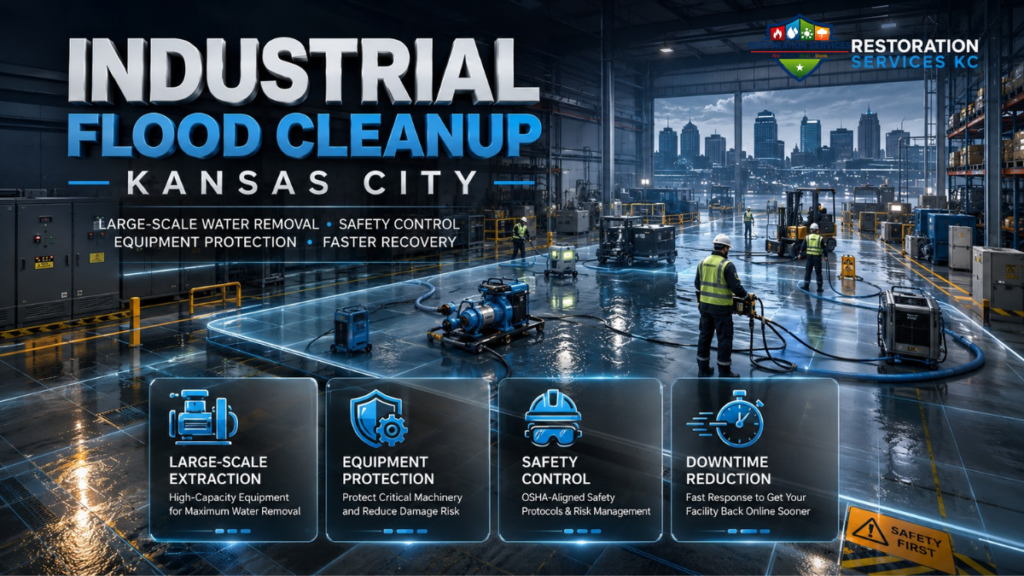
Industrial flooding is different from a small office leak or a home basement flood. When water enters a factory, warehouse, production area, loading dock, or large commercial facility, the damage can affect equipment, inventory, electrical systems, concrete floors, and daily operations. This is why professional industrial flood cleanup needs a fast, organized, and safety-focused response.
At Restoration Services KC, we help businesses respond to large-scale water damage with industrial water removal, moisture inspection, structural drying, equipment-area cleanup, and restoration planning. Our team understands that business downtime, safety risks, and property damage must be handled together during an industrial flood.
This guide explains what makes industrial flood cleanup different, how the process works, what facility managers should do first, and when to call a professional restoration company. It is written to help Kansas City businesses protect their buildings, equipment, staff, and operations after flooding.
Why Industrial Flood Cleanup Matters
Industrial facilities often have wide floor areas, high ceilings, complex drainage systems, electrical panels, machinery, inventory, and multiple work zones. When flooding happens, water can spread quickly across concrete slabs, storage areas, production lines, and utility rooms. A slow response can increase damage and make cleanup more difficult.
Professional industrial flood cleanup helps reduce standing water, control moisture, protect building materials, and create a safer recovery plan. The process may include high-volume extraction, desiccant drying, air movement, moisture mapping, debris removal, and coordination around active business operations.
Kansas City industrial buildings may face flooding from storms, roof leaks, plumbing failures, sprinkler system discharge, sewer backups, loading dock drainage issues, or sump system failure. Each source creates a different cleanup risk, so the response should be based on inspection, water type, affected materials, and facility use.
Common Industrial Flood Damage Risks
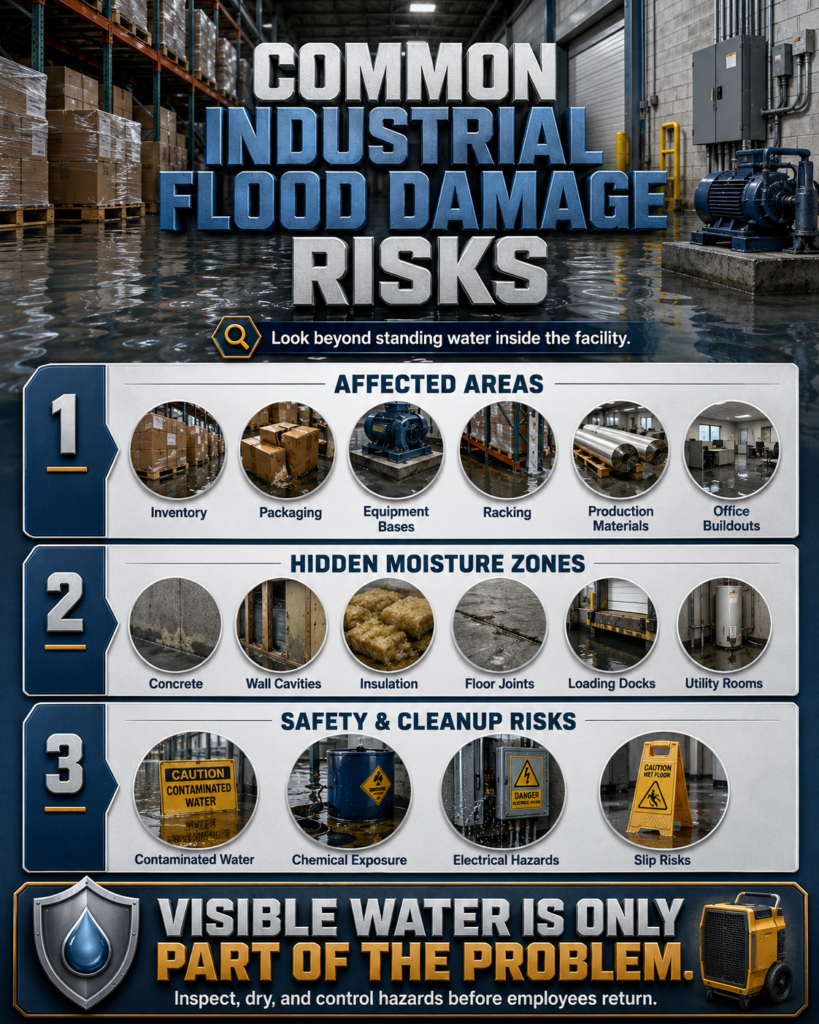
Industrial flooding can affect more than the floor surface. Water may reach wall systems, stored materials, machinery bases, electrical areas, concrete joints, office sections, and HVAC zones. Facility managers should look beyond visible standing water.
- Water can damage inventory, packaging, equipment bases, racking areas, production materials, and office buildouts inside the facility.
- Moisture can remain in concrete, wall cavities, insulation, floor joints, loading docks, and utility rooms after visible water is removed.
- Contaminated water, chemical exposure, electrical hazards, and slip risks may require controlled cleanup before employees return.
Industrial Flood Cleanup Process
The table below explains the main stages of professional industrial flood cleanup.
| Cleanup Step | What Happens | Why It Matters |
| Emergency Site Review | The affected facility areas are inspected for water source, safety risks, and damage zones | Helps create a safe cleanup plan |
| Water Extraction | Standing water is removed from floors, loading areas, storage zones, and workspaces | Reduces moisture spread and asset damage |
| Moisture Mapping | Concrete, walls, base areas, and hidden zones are checked for moisture | Finds water that is not visible |
| Structural Drying | Air movers, dehumidifiers, and drying systems are used based on facility size | Helps reduce odor, mold, and material damage |
| Cleaning & Safety Control | Affected areas are cleaned, and unsafe debris is removed | Supports safer business recovery |
| Documentation & Planning | Damage notes, drying progress, and repair needs are recorded | Helps with insurance and continuity planning |
What To Do First After an Industrial Flood
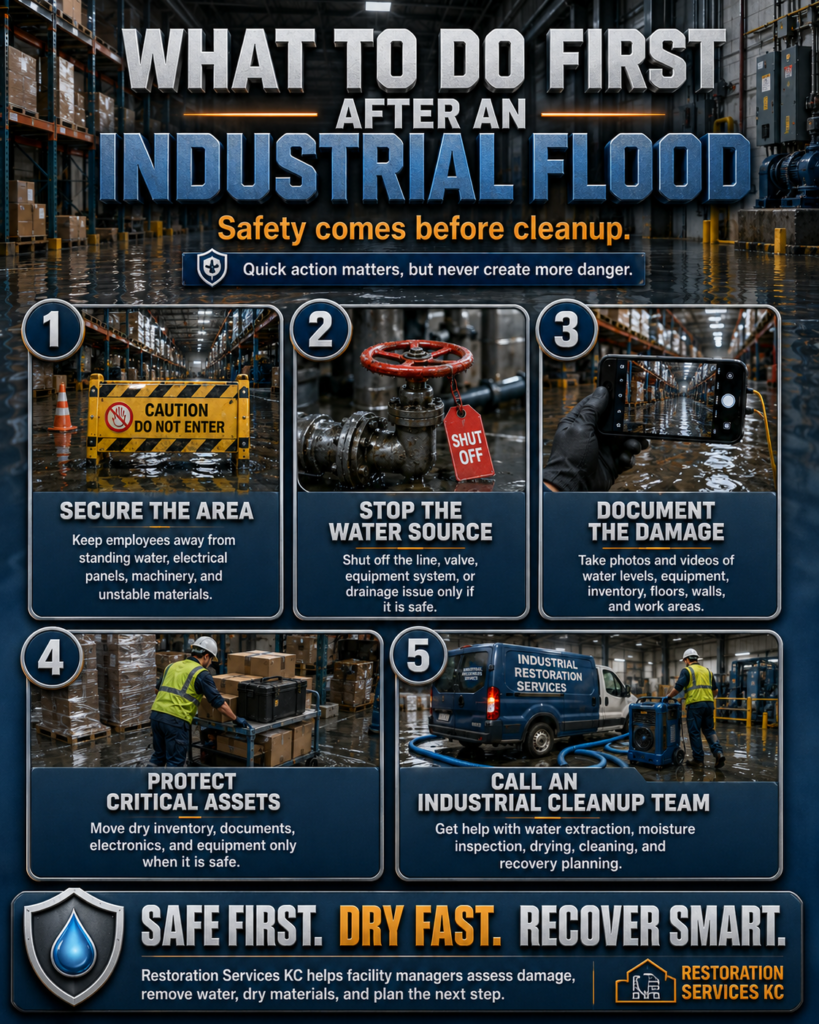
After an industrial flood, safety should come before cleanup. Do not send staff into flooded areas until electrical risks, water contamination, structural concerns, and slip hazards have been reviewed. Quick action matters, but it should never create more danger.
- Secure the affected area and keep employees away from standing water, electrical panels, machinery, and unstable materials.
- Stop the water source if possible by shutting off the line, valve, equipment system, or drainage issue when it is safe.
- Document the damage with photos and videos of water levels, equipment, inventory, floors, walls, and affected work areas.
- Protect critical assets by moving dry inventory, documents, electronics, and equipment only when it is safe.
- Call an industrial cleanup team quickly for water extraction, moisture inspection, drying, cleaning, and recovery planning.
Restoration Services KC can help facility managers assess the affected area, remove water, dry materials, and plan the next step. If the flood also affected offices, walls, or finished spaces, this page should internally link to the main Water Damage Restoration service page.
High-Volume Water Extraction
Industrial water removal usually requires more capacity than a standard residential cleanup. Large floor areas, deep standing water, dock areas, and storage zones may need pumps, extraction equipment, and a clear drainage plan. The goal is to remove water quickly without disrupting safe access or spreading contamination.
Fast extraction helps protect concrete floors, wall bases, machinery areas, inventory, and office sections inside the facility. It also reduces humidity and makes the drying process more effective. The longer the standing water remains, the harder it becomes to control moisture and odor.
A professional team should inspect where the water traveled before and during extraction. In industrial buildings, water can move under racks, behind walls, into floor joints, around equipment bases, and through connected rooms. This is why extraction and inspection must work together.
Drying Large Industrial Spaces
Drying an industrial facility is not the same as drying a small room. Large spaces may need controlled airflow, dehumidification, moisture tracking, and staged drying zones. Concrete, steel, masonry, insulation, drywall, and stored materials all respond differently to moisture.
Desiccant dehumidification may be useful for large open spaces where humidity needs to be reduced efficiently. Air movers may be positioned to support evaporation across floors and wall bases. Moisture readings help confirm whether drying is working or whether hidden areas still need attention.
Proper drying helps reduce mold risk, corrosion concerns, odors, and material breakdown. It also supports safer reopening because a building can look dry while moisture remains inside concrete, walls, or storage materials.
Safety, Contamination, and Compliance Concerns
Industrial floodwater may be more complicated than clean rainwater. It can mix with oils, chemicals, wastewater, debris, dust, or production materials, depending on the facility. This makes safety review an important part of industrial flood cleanup.
If water may be contaminated, cleanup should follow proper containment, handling, and disposal procedures. Staff should avoid contact with unknown water sources until the situation is reviewed. Electrical areas, panels, machinery, and energized equipment should also be treated carefully after flooding.
Restoration Services KC helps businesses understand the cleanup needs after industrial water damage. If contamination, mold, or stormwater is involved, this content should internally link to Mold Testing & Remediation and Storm Damage Restoration where relevant.
Industrial Flood Cleanup Cost Factors
The cost of industrial flood cleanup depends on water volume, facility size, water source, affected materials, drying time, equipment needs, contamination concerns, and repair scope. A small contained leak in a warehouse costs less than a large flood affecting production lines and storage areas.
Costs can increase when cleanup requires multi-zone drying, high-volume extraction, contaminated water handling, inventory documentation, after-hours work, or repair planning. Because every facility is different, a site inspection is needed before a clear estimate can be given.
A reliable restoration company should explain the scope in clear terms. Facility managers should understand what areas are being extracted, what materials need drying, what safety controls are required, and what documentation may support insurance or business interruption claims.
Commercial Flood Recovery and Business Continuity
For industrial properties, recovery is not only about drying the building. It is also about reducing downtime, protecting assets, and helping the business return to safe operations. A clear plan can help prioritize critical areas first.
Some facilities may need phased restoration, where one area is cleaned and dried while another area remains isolated. This can help protect staff, equipment, and inventory while reducing disruption. The right approach depends on the flood source, building layout, production needs, and safety risks.
Restoration Services KC helps businesses with commercial flood recovery, warehouse water damage restoration, factory flood cleanup, and large-scale water damage repair planning. The goal is to support safe recovery while keeping the process organized.
Machinery, Inventory, and Structural Protection
Industrial flooding can affect expensive assets. Machinery bases, electrical controls, storage racks, inventory, raw materials, finished goods, and packaging can all be exposed to water or high humidity. These assets should be reviewed quickly after flooding.
Moisture can also affect concrete slabs, wall bases, insulation, office buildouts, and structural materials. Even if the main floor looks clear, water may remain in joints, corners, under materials, or around equipment. This can create odor, corrosion, or mold concerns over time.
A professional inspection helps identify what needs drying, cleaning, documentation, or repair. This makes the recovery plan more accurate and helps business owners avoid damage.
When to Call an Industrial Flood Cleanup Company
Facility managers should call for professional help when water affects production areas, warehouses, loading docks, storage rooms, mechanical rooms, electrical areas, or large floor spaces. Industrial flooding is usually too complex for basic cleanup methods.
Call quickly if there is standing water, contaminated water, wet inventory, equipment exposure, basement or dock flooding, roof leak flooding, or moisture in wall systems. Delays can increase damage and make the recovery process more expensive.
Restoration Services KC provides industrial water removal, moisture inspection, drying, cleaning, and recovery support for Kansas City businesses. A fast response can help reduce risk and give your team a clearer plan.
Related Restoration Services
Industrial flood cleanup often connects with other restoration services. Storm damage may cause roof leaks, water damage may spread into offices, and moisture may create mold concerns if drying is delayed.
- Link to Water Damage Restoration when discussing extraction, drying, and structural water damage.
- Link to Storm Damage Restoration when flooding comes from heavy rain, roof leaks, or severe weather.
- Link to Mold Testing & Remediation when moisture remains in walls, insulation, or storage areas.
- Link to Fire Damage Restoration if sprinkler discharge or fire-response water caused the flood.
These internal links should be placed naturally inside the article body. They should not appear only in the footer, because contextual links help users and search engines understand the page relationship.
Service Areas Around Kansas City
Restoration Services KC helps industrial, commercial, and warehouse properties across Kansas City and nearby areas. Our service area includes Kansas City, Liberty, Overland Park, Leawood, Lenexa, Shawnee, Olathe, Lee’s Summit, and surrounding communities.
Local response matters when a facility has flooding. Kansas City businesses may face stormwater, drainage problems, roof leaks, plumbing failures, and warehouse water damage. A local team can inspect the property faster and help facility managers move into recovery.
If your facility has standing water, wet inventory, affected machinery, contaminated water, or moisture inside structural materials, early inspection can help reduce damage and protect operations.
Contact Restoration Services KC
Industrial flooding can interrupt operations, damage materials, and create safety concerns. Fast cleanup, drying, and documentation can help protect your facility and support a smoother recovery.
For professional industrial flood cleanup in Kansas City, contact Restoration Services KC for industrial water removal, moisture inspection, structural drying, commercial flood recovery, and large-scale cleanup support.
Call Restoration Services KC at (816) 286-5835 for industrial flood cleanup in Kansas City and surrounding areas.
Frequently Asked Questions About Industrial Flood Cleanup
How is industrial flood cleanup different from residential cleanup?
Industrial flood cleanup usually involves larger spaces, more water volume, business assets, machinery, safety risks, and operational concerns. It often needs higher-capacity extraction, drying, documentation, and a phased recovery plan.
What should a facility manager do first after flooding?
Secure the affected area, keep staff away from hazards, stop the water source if safe, document the damage, and call a professional cleanup team. Electrical and contamination risks should be reviewed before employees re-enter flooded areas.
Can industrial floodwater be contaminated?
Yes. Industrial floodwater may mix with oils, chemicals, debris, wastewater, or production materials. If contamination is possible, the cleanup plan should include proper safety controls, handling, and disposal steps.
How long does industrial drying take?
The timeline depends on water volume, facility size, affected materials, humidity levels, and drying equipment needs. Some areas may dry in days, while larger or more complex facilities may take longer.
Can flooding damage machinery and inventory?
Yes. Water and high humidity can affect machinery, electrical components, inventory, packaging, raw materials, and stored goods. Fast extraction and moisture control help reduce the risk of more serious damage.
When should I call Restoration Services KC?
Call when flooding affects a warehouse, factory, production area, loading dock, storage room, mechanical room, or large commercial space. Fast response helps reduce damage and supports business recovery.
Official Contact Details
Emergency Phone: (816) 286-5835
Email: joe@restorationserviceskc.com
Website: restorationserviceskc.com
Service Area: Kansas City and surrounding areas