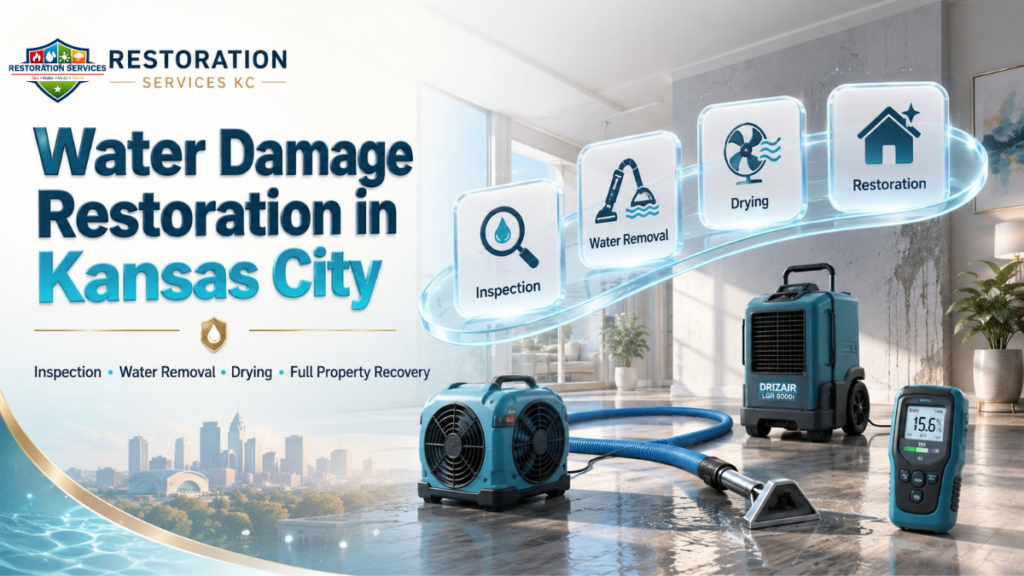
Water damage can affect your home quickly, especially when moisture reaches flooring, drywall, carpet, insulation, cabinets, or basement materials. A small leak can spread behind surfaces before the full damage becomes visible. This is why professional residential water damage restoration in Overland Park is important when your home has flooding, leaks, or hidden moisture.
At Restoration Services KC, we help homeowners respond to water damage caused by burst pipes, sump pump failure, basement flooding, storm water, appliance leaks, plumbing problems, roof leaks, and moisture issues. Our team focuses on water extraction, moisture inspection, structural drying, cleanup, mold prevention, and repair guidance.
This guide explains what homeowners should expect from a restoration service, how the process works, what affects cost, and when to call for help. It is written to help you make a clear decision without confusion during a stressful water damage situation.
Why Residential Water Damage Restoration in Overland Park Matters
Overland Park homes can face water damage from storms, frozen pipes, basement seepage, sump pump failure, roof leaks, appliance leaks, and plumbing failures. Water can move fast through porous materials and create damage that is not always visible right away. A finished basement, hardwood floor, or drywall wall can hold moisture even after the surface looks dry.
Professional residential water damage restoration in Overland Park helps reduce hidden moisture and long-term repair problems. A trained restoration team checks where the water traveled, which materials were affected, and whether drying or removal is needed. This makes the restoration process more accurate and safer for the home.
Fast action matters because moisture can lead to odors, stains, mold concerns, warped flooring, and structural damage. The earlier the extraction and drying begin, the better the chance of saving materials and reducing repair needs.
Common Water Damage Problems in Overland Park Homes
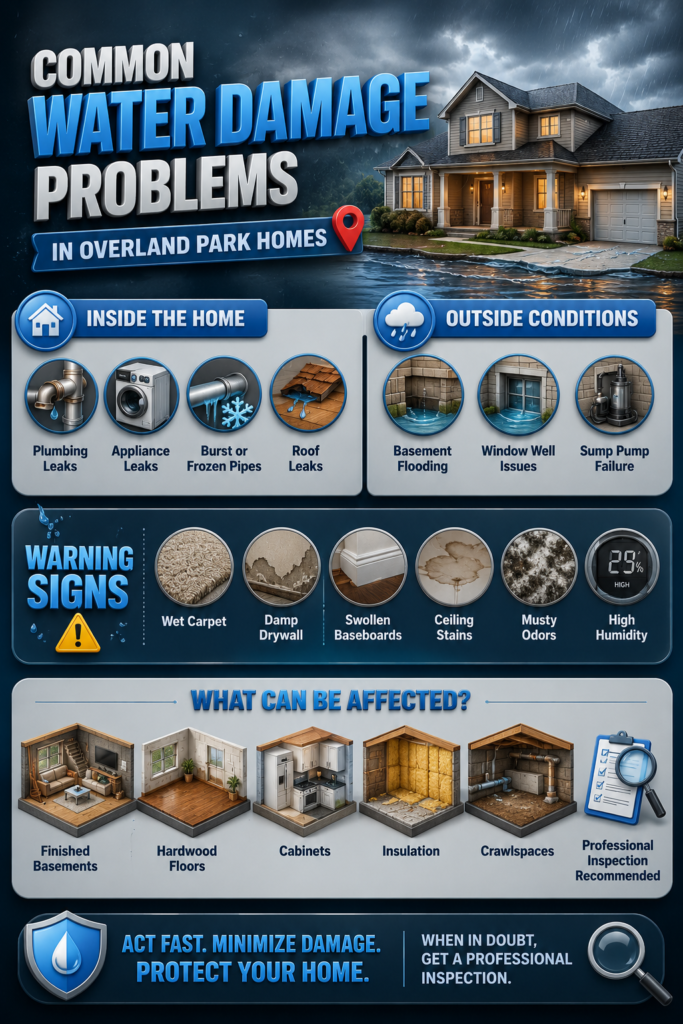
Water damage can start from inside the home or from outside weather conditions. Plumbing leaks may affect kitchens, bathrooms, laundry rooms, and utility areas. Storm, water, and drainage problems may affect basements, window wells, foundations, and lower-level living spaces.
- Burst pipes, frozen pipes, appliance leaks, roof leaks, basement flooding, and sump pump failure can all damage residential materials.
- Wet carpet, damp drywall, swollen baseboards, ceiling stains, musty odors, and high humidity often point to hidden moisture.
- Finished basements, hardwood floors, cabinets, insulation, and crawlspaces may need professional inspection after water exposure.
Residential Water Damage Restoration Process
The table below shows the main steps homeowners can expect during a professional restoration service.
| Restoration Step | What Happens | Why It Matters |
| Inspection | The home is checked for water source, moisture, and affected materials | Creates a clear restoration plan |
| Water Extraction | Standing water is removed from floors, carpet, and basement areas | Helps reduce deeper material damage |
| Moisture Detection | Walls, floors, cabinets, and hidden areas are checked | Finds moisture that is not visible |
| Drying & Dehumidification | Air movers and dehumidifiers remove trapped moisture | Helps reduce mold and odor risk |
| Cleaning & Sanitizing | Affected areas are cleaned when needed | Improves safety and comfort |
| Repair Planning | Damaged drywall, flooring, trim, or materials are reviewed | Helps restore the home properly |
What To Do Before the Restoration Team Arrives
If your home has water damage, safety should come first. Do not enter standing water if electricity may be involved, and do not handle contaminated water without proper protection. If the source is a burst pipe or plumbing line, stopping the water quickly can reduce damage.
- Shut off the water source if the damage comes from a burst pipe, supply line, or appliance leak.
- Avoid electrical hazards and keep people away from wet areas near outlets, wiring, or appliances.
- Take photos and videos before cleanup, so you have records for insurance and restoration planning.
- Move valuables safely if documents, furniture, rugs, or electronics are at risk.
- Call a restoration company quickly for water extraction, moisture inspection, drying, and cleanup.
A plumber repairs the water source, but a restoration company handles the property damage. Restoration Services KC helps remove water, dry affected materials, check hidden moisture, and guide the next steps after water enters your home.
Water Extraction and Moisture Inspection
Water extraction is one of the first steps in residential water damage restoration. Standing water should be removed quickly from basements, carpet, flooring, and lower-level rooms. This helps reduce the amount of moisture absorbed by drywall, wood, trim, and structural materials.
Moisture inspection is just as important as extraction. Water often moves behind baseboards, under flooring, inside cabinets, or into wall cavities. A surface may look dry while hidden areas still hold moisture, which can cause later damage if ignored.
Restoration Services KC uses moisture inspection to understand where drying is needed. This helps homeowners avoid guessing and gives the restoration team a clear plan for drying, cleaning, and repair support.
Structural Drying and Dehumidification
After water extraction, the drying process begins. Drying is not only about using fans. Professional drying uses airflow, dehumidification, and moisture monitoring to remove trapped moisture from building materials and indoor air.
Drywall, subfloors, carpet padding, framing, and insulation can hold moisture after a leak or flood. If these areas are not dried correctly, the home may develop musty odors, mold concerns, or material damage. This is why drying should be monitored until the affected areas reach proper moisture levels.
For residential water damage restoration in Overland Park, drying is especially important in finished basements and rooms with wood flooring or built-in cabinets. These materials can be expensive to replace, so fast drying and careful inspection can make a major difference.
Mold Prevention After Home Water Damage
Mold prevention starts with moisture control. When water reaches drywall, carpet, wood, insulation, or cabinets, the affected materials should be dried quickly and properly. If moisture remains trapped, mold concerns can develop and spread to nearby areas.
Homeowners should watch for musty odors, staining, soft drywall, damp carpet, or recurring humidity after water damage. These signs may mean moisture is still present. If mold is suspected, professional mold testing and remediation may be needed.
Restoration Services KC helps with drying, moisture checks, cleanup, and mold prevention support. When water damage connects with mold concerns, linking this page to the Mold Testing & Remediation service page can also help users find the right next step.
Residential Water Damage Restoration Cost Factors
The cost of residential water damage restoration depends on the size of the affected area, the water source, the materials damaged, drying time, and whether repairs are needed. A small clean-water leak usually requires less work than a large basement flood or contaminated water loss.
Hidden moisture can also affect the cost. Water behind walls, under flooring, inside insulation, or around cabinets may require extra drying, removal, or repair. This is why a professional inspection is needed before a clear estimate can be given.
Insurance may help with sudden and accidental water damage, depending on the policy and cause of loss. Restoration documentation, photos, moisture readings, and inspection notes can help homeowners understand the claim process.
Equipment Used During Home Restoration
The right equipment helps dry a home more safely and effectively. Equipment should be selected based on the damage level, affected materials, room layout, and moisture readings. Using too little equipment can slow drying, while unnecessary equipment can increase disruption.
Common restoration equipment may include extraction units, air movers, dehumidifiers, moisture meters, thermal imaging tools, and air filtration equipment when needed. Each tool supports a different part of the drying and cleanup process.
A professional restoration team should explain why equipment is being used and how long it may be needed. This helps homeowners understand the process instead of feeling overwhelmed by machines in the home.
When to Call a Professional
Some small spills can be cleaned by the homeowner, but larger water damage should not be ignored. If water has reached walls, carpet, flooring, ceilings, insulation, cabinets, or basement areas, professional help is usually the safer choice. Hidden moisture is difficult to confirm without proper tools.
Call a professional if you notice wet carpet, ceiling stains, swollen trim, basement water, musty odors, soft drywall, warped flooring, or high indoor humidity after a leak. These signs can point to moisture that has moved deeper into the home.
Restoration Services KC provides residential water damage restoration support for Overland Park homeowners. Our team helps inspect the damage, remove water, dry affected materials, and plan the next step.
Related Restoration Services
Water damage often connects with other home restoration needs. A storm may cause a roof leak, a wet basement may create mold concerns, and a fire response may leave water damage from firefighting efforts. These related problems should be connected naturally within the content.
- Link to Water Damage Restoration when discussing extraction, drying, and repair support.
- Link to Mold Testing & Remediation when discussing hidden moisture and mold concerns.
- Link to Storm Damage Restoration when discussing roof leaks, heavy rain, and storm-related flooding.
- Link to Contact Restoration Services KC when the user needs inspection or emergency help.
These links should be placed inside the article body, not only in the footer. This improves user experience and helps search engines understand the relationship between service pages.
Service Areas Near Overland Park
Restoration Services KC helps homeowners in Overland Park and nearby communities with water extraction, structural drying, moisture inspection, cleanup, and restoration support. Our service area includes Overland Park, Leawood, Lenexa, Shawnee, Olathe, Kansas City, Liberty, Lee’s Summit, and surrounding areas.
Local experience matters because Johnson County and Kansas City homes can face stormwater, basement flooding, frozen pipe damage, and sump pump problems. A local team can respond faster and understand common property conditions in the area.
If your home has water damage, hidden moisture, or mold concerns, early inspection can help protect the property and reduce long-term repair needs.
Contact Restoration Services KC
Water damage inside a home should not be ignored. Wet flooring, basement water, ceiling stains, soaked drywall, and hidden moisture can become more expensive when drying is delayed. Fast response helps reduce damage and gives homeowners a clearer recovery plan.
For professional residential water damage restoration in Overland Park, contact Restoration Services KC for water extraction, moisture inspection, structural drying, cleanup, and repair guidance. Our team helps homeowners understand the damage and take the right next step.
Call Restoration Services KC at (816) 286-5835 for residential water damage restoration in Overland Park and nearby areas.
FAQs About Residential Water Damage Restoration in Overland Park
How long does home water damage recovery take?
The timeline depends on the size of the damage, the water source, the materials affected, and whether repairs are needed. Many drying projects take a few days, while larger restoration work may take longer.
Does insurance cover residential water damage?
Insurance may cover sudden and accidental water damage, such as burst pipes or water heater failures. Coverage depends on the policy and cause of loss, so documentation and inspection notes are important.
Is it safe to stay in the house during drying?
It depends on the water source, affected areas, equipment noise, and safety risks. If the water is contaminated or structural areas are affected, temporary relocation may be safer until cleanup is complete.
Can wet hardwood floors be saved?
Sometimes, wet hardwood can be saved if drying begins quickly and the water source is clean. The result depends on how long the floor stayed wet and how deeply moisture entered the wood.
Why choose a local restoration company in Overland Park?
A local company understands Overland Park homes, basement issues, storm patterns, and regional water damage risks. Local response also helps when fast inspection and drying are needed.
When should I call Restoration Services KC?
Call when water reaches floors, walls, ceilings, carpet, basement areas, cabinets, insulation, or hardwood. Fast inspection and drying can help reduce hidden damage and mold concerns.
Official Contact Details
- Emergency Phone: (816) 286-5835
- Email: joe@restorationserviceskc.com
- Website: restorationserviceskc.com