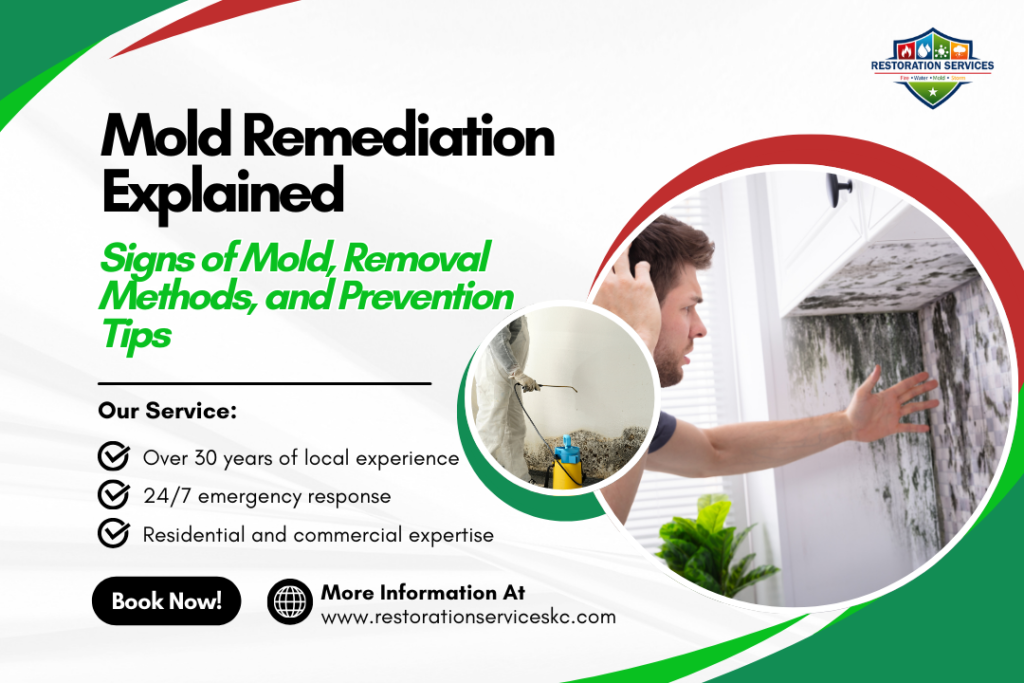
Mold is a biological contaminant that requires more than just surface cleaning; it demands a comprehensive, multi-stage intervention to ensure that spores are not only removed but prevented from returning. Mold remediation explained is the process of identifying, containing, and eliminating fungal growth while addressing the underlying moisture source that fueled the infestation. At Restoration Services KC, we follow strict industry standards (IICRC S520) to ensure that every remediation project in Kansas City is handled with the highest level of technical precision. From our facility at 9202 Barton St, Overland Park, we provide expert solutions that protect your property’s value and your family’s respiratory health.
The Difference Between Mold Cleaning and Professional Remediation
One of the most common misconceptions among homeowners is that mold can be fully resolved with a simple application of bleach or over-the-counter sprays. In reality, mold often extends its roots (hyphae) deep into porous materials like drywall and wood, where topical cleaners cannot reach.
During my 30 years in the mold testing and remediation industry, I have seen many DIY attempts lead to even larger outbreaks. I recall a project in Shawnee, KS, where a homeowner tried to scrub mold off a basement wall without containment. This action released millions of microscopic spores into the air, which were then pulled into the HVAC system and spread throughout the entire house. Professional mold remediation involves creating negative air pressure environments and using HEPA filtration to ensure that the cleaning process itself does not cause cross-contamination.
The Step-by-Step Mold Remediation Protocol
To provide a clear understanding of the process, we have outlined the professional stages of a successful mold cleanup:
| Phase | Primary Action | Technical Goal | Equipment Used |
| 1. Assessment | Moisture Mapping & Inspection | Identify the moisture source and the extent of growth | Infrared Cameras & Moisture Meters |
| 2. Containment | Physical Barriers | Prevent spores from spreading to unaffected areas | 6-mil Polyethylene Sheeting |
| 3. Air Filtration | Negative Air Pressure | Scrub the air of microscopic spores and VOCs | HEPA Air Scrubbers |
| 4. Removal | Source Material Disposal | Safely remove heavily infested porous materials | HEPA Vacuums & Sealed Bags |
| 5. Cleaning | Structural Sanitization | Clean non-porous surfaces and apply antimicrobials | EPA-Registered Biocides |
| 6. Verification | Final Clearance Testing | Ensure the spore count has returned to safe levels | Third-Party Air Sampling |
Phase 1: Identifying the Moisture Source
The first rule of mold remediation is that mold will always return if the water issue is not resolved.
Leak Detection: We use advanced thermal imaging to find hidden leaks behind walls or under floors that are feeding the mold.
Humidity Control: In many Kansas City basements, high relative humidity is the culprit. We provide industrial dehumidification solutions as part of the remediation plan.
Phase 2: Advanced Containment and Air Scrubbing
To protect the rest of your home, we isolate the work area.
Negative Air Pressure: By using specialized fans, we ensure that air only flows into the contaminated area, never out. This prevents spores from escaping into your living room or kitchen.
HEPA Filtration: Our air scrubbers cycle the air through high-efficiency filters that capture 99.97% of particles as small as 0.3 microns, effectively “washing” the air during the mold cleanup process.
Phase 3: Safe Removal and Sanitization
Once the area is secure, we begin the physical removal of the mold.
Porous Material Disposal: Materials like insulation or carpet that are heavily infested must be carefully bagged and removed from the site.
Abrasive Cleaning: For structural wood or studs, we use specialized techniques such as wire brushing or HEPA sanding to remove the mold roots.
Antimicrobial Treatment: We apply a final layer of professional-grade antimicrobial sealant to prevent any remaining microscopic spores from germinating in the future.
Frequently Asked Questions: Mold Remediation Explained
How do I know if I need professional mold remediation?
If the affected area is larger than 10 square feet, or if you smell a strong musty odor without seeing the mold, you likely need a professional. Hidden mold behind wallpaper or under flooring requires specialized detection tools.
Is mold remediation expensive?
The cost varies based on the size of the area and the materials involved. However, ignoring the problem often leads to much more expensive structural repairs and potential health liabilities. We assist with insurance documentation to help cover these costs.
How long does the remediation process take?
Most standard projects take between 3 and 5 days. This allows time for containment setup, physical cleaning, and the necessary drying time for antimicrobials.
Is it safe to stay in the house during remediation?
If the mold is isolated in a basement or attic with proper containment, you can usually stay. However, for whole-house issues or if someone has a compromised immune system, temporary relocation may be advised.
Does the mold smell go away after remediation?
Yes. Since we neutralize the mold at the source and “scrub” the air, the musty VOCs (volatile organic compounds) are removed, leaving your home smelling fresh and clean.
Protect Your Home with Restoration Services KC
Understanding mold is the first step toward a healthier home. At Restoration Services KC, we don’t just “clean” mold; we provide a scientific solution that ensures long-term safety. With 30 years of experience serving the Kansas City metro area, we are the trusted choice for homeowners who want the job done right the first time.
Official Contact Details
Emergency Line: (816) 286-5835
Office Address: 9202 Barton St, Overland Park, KS 66214, United States
Email: joemarshall339@gmail.com
Website: restorationserviceskc.com