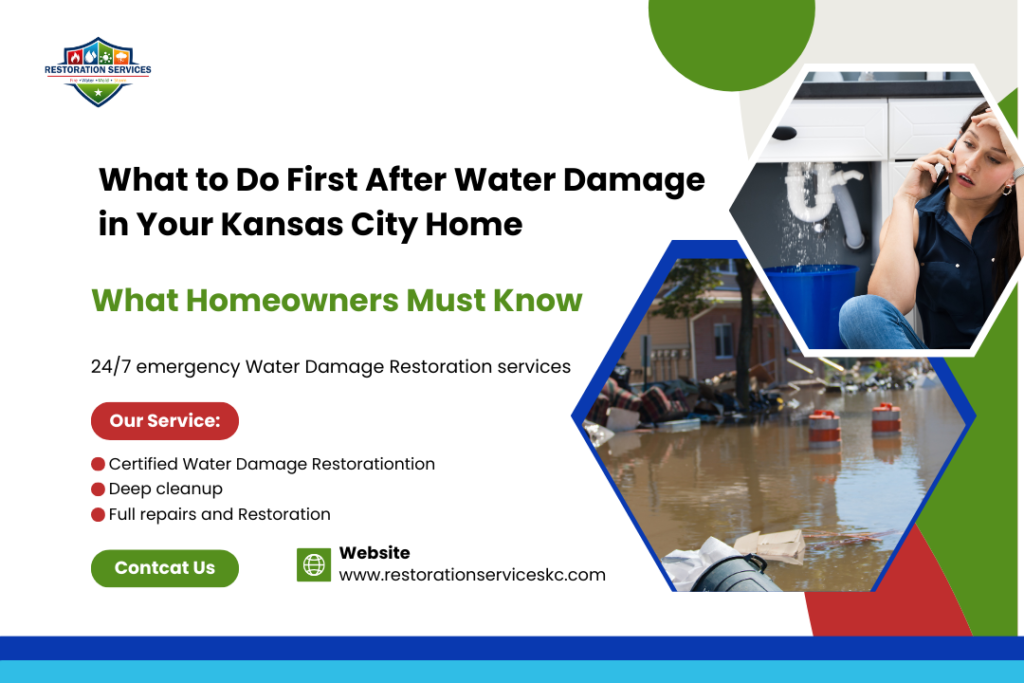
The moments immediately after water damage occurs are the most critical in determining whether your property will undergo a simple drying process or require a massive, expensive reconstruction. Water is a progressive contaminant that infiltrates building materials and weakens structural integrity with every passing minute. At Restoration Services KC, we leverage over 30 years of localized expertise to help Kansas City homeowners navigate the chaos of post-disaster recovery. Operating from our central hub at 9202 Barton St, Overland Park, we specialize in providing emergency water damage restoration that prioritizes asset salvage and family safety.
The Science of Progressive Damage: Why the Clock Matters
When you are dealing with the aftermath of a flood or pipe burst, understanding the timeline of destruction is vital for effective restoration services after damage. Within minutes, water spreads into floors and furniture; within hours, drywall begins to swell and disintegrate; and within 24 to 48 hours, mold remediation usually becomes a necessity as fungal spores begin to colonize.
In my three decades as a professional restoration expert, I have seen how a single day’s delay can turn a “Category 1” (clean water) event into a “Category 3” (grossly contaminated) nightmare. I recall a project in Mission Hills where a homeowner discovered a slow leak after water damage had already saturated their subfloor. Because they called us for immediate fast water extraction, we were able to save their custom cabinetry through pressurized drying. This guide emphasizes that the right actions taken immediately after water damage are the key to a successful water damage restoration process.
Immediate Checklist: What to Do After Water Damage
To protect your property and ensure a smooth insurance claim, follow these strategic steps:
| Immediate Action | Strategic Purpose | Professional Resource |
| Stop the Source | Prevent further liquid intrusion | Emergency Contact |
| Safety Assessment | Identify electrical and structural hazards | Safety Guide |
| Photo Documentation | Create proof for insurance adjusters | Insurance Tips |
| Call Professionals | Start fast water extraction protocols | View Services |
| Airflow Initiation | Open windows (if humidity is low) | Drying Protocol |
Avoiding Common Mistakes After Water Damage
Many property owners unintentionally worsen the situation by following outdated advice.
Avoid Household Vacuums: Never use a standard shop-vac for deep flooding, as it lacks the lift capacity for heavy water extraction services and can be an electrical hazard.
Don’t Ignore Odors: A musty smell immediately after water damage is a sign that bacteria or mold are already active, requiring professional sanitization.
HVAC Caution: Do not turn on your furnace or AC if you suspect water has entered the air duct cleaning system, as this can spread contaminants and moisture throughout the entire home.
The Role of Professional Dehumidification
Simply “feeling” that a surface is dry is not enough. We use scientific measurements to ensure your home is restored.
Moisture Mapping: Using infrared cameras, we find water hidden behind baseboards and under tiles that typical DIY methods miss.
Structural Drying: Our industrial-grade air movers create high-velocity airflow that pulls moisture out of dense materials like framing and subfloors.
LGR Dehumidification: We utilize Low Grain Refrigerant dehumidifiers to remove water vapor from the air, which is essential for maintaining indoor air quality.
Frequently Asked Questions: Life After Water Damage
How long does it take for mold to grow after water damage?
Mold can begin to germinate in as little as 24 to 48 hours if the environment remains humid and the materials are not professionally dried.
Will my insurance pay for restoration services?
Most “sudden and accidental” events are covered. We provide the documentation and blog resources your insurance company needs to process the claim efficiently.
Can I stay in my home after water damage occurs?
If the damage is localized and the water is clean (Cat 1), you may be able to stay. However, if the flood cleanup tips indicate Category 3 water, relocation is safer.
What is the difference between mitigation and restoration?
Mitigation is the immediate cleanup and drying to stop further damage, while home restoration repair services involve rebuilding and making the home look new again.
What is the very first thing I should do?
Turn off the water and call Restoration Services KC at (816) 286-5835 for an immediate emergency assessment.
Choose Kansas City’s Trusted Restoration Partner
Property damage doesn’t have to be a permanent loss. At Restoration Services KC, we bring 30 years of passion and expertise to every home we touch. From the first gallon extracted to the final reconstruction detail, we are here to guide you through every phase of the recovery. We are more than just a licensed restoration company; we are your neighbors, dedicated to restoring your peace of mind.
Contact us today at (816) 286-5835 for 24/7 support and expert guidance after water damage!
Official Contact Details
Emergency Line: (816) 286-5835
Office Address: 9202 Barton St, Overland Park, KS 66214, United States
Email: joemarshall339@gmail.com
Website: restorationserviceskc.com